Product Overview
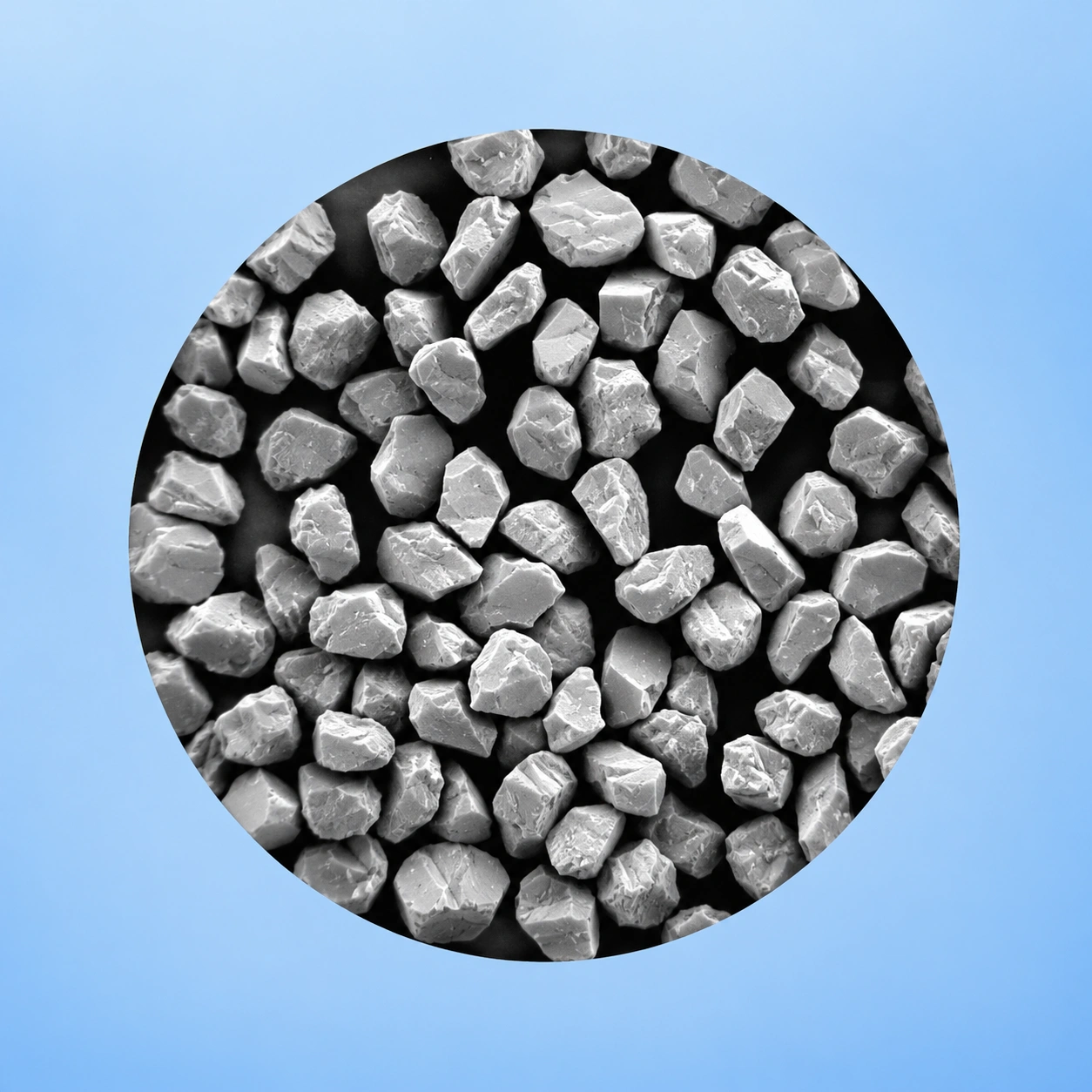
SND-M/PCD Synthetic Micron Diamond Powder for PCD & PDC Manufacturing is a specialty industrial diamond powder in SinoDiam’s Micron Diamond product family. It is intended for manufacturers evaluating diamond feedstock for polycrystalline diamond (PCD), polycrystalline diamond compact (PDC) and selected polycrystalline wear-material production.
Unlike general-purpose diamond micron powders used primarily for grinding, lapping or polishing, SND-M/PCD is positioned for polycrystalline material manufacturing, where powder cleanliness, particle-size distribution, crystal morphology and interaction with the intended sintering system are important selection factors.
The product is described in SinoDiam’s existing catalogue as a synthetic diamond micron powder with a purity-focused, blocky-grain design. The specific diamond feedstock characteristics, impurity limits, crystal-shape distribution and particle-size specifications should be confirmed using current grade-specific technical documentation.
In suitable PCD and PDC manufacturing routes, diamond powder may be consolidated under high-pressure, high-temperature (HPHT) conditions. The resulting structure depends on the diamond powder, particle packing, catalyst or binder chemistry, pressure-temperature cycle, substrate system and overall manufacturing process.
Potential applications include PCD machining materials, PDC diamond-table manufacturing and selected polycrystalline wear components. Suitability for a specific product construction must be established through the customer’s sintering and finished-material evaluations.
SND-M/PCD is supplied as an abrasive-material feedstock candidate. It is not a pre-sintered PCD cutting insert, PDC cutter or finished diamond composite. Finished products require separate processing and qualification.
When requesting technical information, please provide the required particle-size fraction, impurity limits, intended sintering process, binder or catalyst system, target finished material and expected quantity.
Technical Specifications
This specification overview distinguishes product positioning from verified numerical test data. The current available size fractions, impurity concentrations, crystal morphology, cleanliness levels and sintering compatibility must be confirmed using actual SND-M/PCD technical records. No universal processing temperature, pressure, finished compact density or performance improvement is guaranteed.
Diamond Feedstock Characteristics & Quality Control
For PCD and PDC manufacturers, raw diamond powder selection can influence powder processing and the resulting polycrystalline material. The following characteristics provide a practical framework for evaluating SND-M/PCD.
Crystal Morphology & Particle Shape
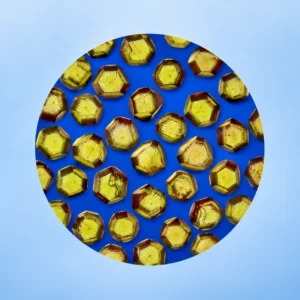
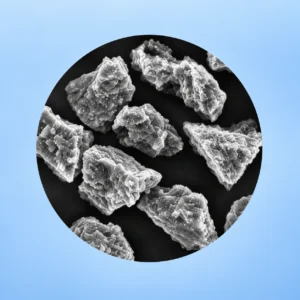
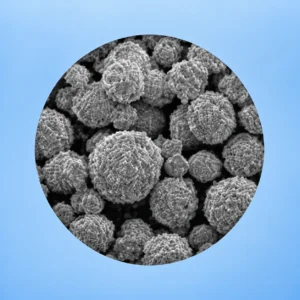
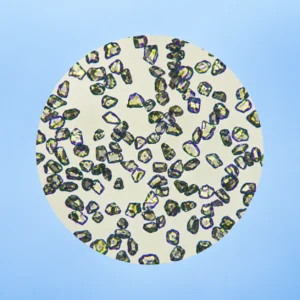
Crystal shape influences particle packing, contact geometry and the interaction between powder particles during processing. Representative microscopy can help characterize the proportion of blocky, angular or fractured grains in a specified batch.
Particle Size Distribution
Powder grading affects particle packing and the distribution of different grain sizes in the feedstock. The required PSD should be selected according to the intended PCD or PDC microstructure and sintering route.
Metallic Impurity Control
Elements originating from diamond synthesis, grinding, crushing or purification may matter to a particular manufacturing process. Customers should specify relevant impurity limits and request analytical data where available.
Silicon & Other Nonmetallic Elements
Silicon and other nonmetallic species may be relevant to a customer’s catalyst, binder or sintering chemistry. Acceptable limits depend on the process and should be established from measured composition rather than assumed from a grade name.
Surface Cleanliness
Residual processing materials, contamination and surface conditions can affect powder preparation and binder interactions. Cleaning requirements should be defined for the intended manufacturing route and verified with suitable analysis.
Batch Consistency & Traceability
PCD/PDC manufacturing may require consistent incoming powder specifications. Relevant controls can include batch identification, particle grading, inspection criteria and available analytical reports.
The characteristics above are recommended feedstock-selection criteria. They do not imply that a specific impurity concentration, PSD width, crystal-shape percentage or quality certification has already been verified for every SND-M/PCD batch.
Micron Size Selection for PCD & PDC Manufacturing
Particle size is an important variable in polycrystalline diamond feedstock selection. The appropriate micron fraction depends on the required finished-material microstructure, particle packing, processing conditions and end-use requirements.
What Should Be Evaluated in the PSD?
Nominal Micron Fraction: Specify the requested particle-size designation and grading standard. A nominal size does not fully describe the complete powder population.
Distribution Width: Review the measured spread of particle sizes. A narrower distribution is not automatically optimal for every sintering application; the appropriate grading depends on the target compact formulation.
D10, D50 and D90: Where available, these values help describe particle-size distribution under a stated test method. Compare data using compatible measurement procedures and reporting conventions.
Fine and Coarse Tails: The presence of significantly smaller or larger particles can influence feedstock packing and the resulting grain population. Acceptable limits should be defined for the actual manufacturing process.
Mixed-Size Formulations: Some polycrystalline manufacturing routes may use multiple particle fractions. The appropriate mixture requires process development and should not be inferred from a single nominal particle size.
Representative Particle Shape: PSD data alone cannot describe crystal morphology. Microscopy or particle-shape characterization may be useful when assessing powder packing and sintering behavior.
The current SND-M/PCD catalogue includes historical particle-size examples, but a complete verified supply list has not been established for this update. Request grade-specific micron fractions and the corresponding PSD information before ordering.
HPHT Sintering & Binder-System Considerations
PCD and PDC production involves more than selecting diamond hardness or powder size. The complete manufacturing system determines whether a particular diamond feedstock is suitable for consolidation into the intended polycrystalline material.
High-Pressure, High-Temperature Processing
PCD/PDC manufacturing routes can involve HPHT sintering to consolidate diamond particles. The appropriate pressure-temperature cycle, hold time and process environment are determined by the equipment, formulation and target material.
Catalyst or Binder Chemistry
Cobalt-containing and other binder or catalyst systems may be used in certain polycrystalline manufacturing processes. Powder impurities, surface condition and process chemistry should be assessed for the selected system.
Particle Packing & Grain Structure
Particle shape and size distribution can influence the arrangement of diamond particles before sintering. The resulting microstructure also depends on sintering, material transport and the specific manufacturing route.
Substrate & Composite Construction
Selected PDC constructions involve a diamond table associated with a supporting substrate. Feedstock suitability must be considered alongside substrate materials, interface design and the complete processing cycle.
Process-Induced Defects
Porosity, cracking, delamination or other defects may arise from multiple manufacturing variables. Powder selection is one factor in process optimization, but feedstock quality alone cannot guarantee a defect-free finished compact.
Finished-Material Qualification
Evaluation may include microstructural examination, abrasion performance, thermal behavior, strength and other tests appropriate to the final PCD or PDC application. The finished-material manufacturer determines the acceptance criteria.
No single HPHT pressure, temperature or cycle is specified as universally suitable for SND-M/PCD. Finished PCD or PDC strength, density, wear life and thermal stability cannot be guaranteed solely from the loose diamond feedstock.
Recommended Manufacturing Applications
SND-M/PCD is positioned primarily for manufacturers evaluating specialty micron diamond feedstock for polycrystalline materials. The applications below refer to possible manufacturing uses and require separate product and process qualification.
PCD Cutting Material Manufacturing
Diamond feedstock evaluation for polycrystalline cutting materials used in suitable non-ferrous machining and abrasive-material processing. Final tool applications depend on PCD grade, microstructure, cutting-edge geometry and workpiece.
PDC Diamond-Table Manufacturing
Evaluation as a diamond powder component in selected polycrystalline diamond compact manufacturing routes. Feedstock grading, binder chemistry, substrate compatibility and the sintering cycle are important.
Polycrystalline Wear Components
Potential use in developing selected wear-resistant polycrystalline diamond materials. The required microstructure and finished component properties should be established through manufacturing trials.
Wire Drawing Die Materials
For evaluation in suitable polycrystalline diamond materials intended for wire drawing die applications. The finished material must satisfy the specific wear, surface and dimensional requirements of the die producer.
Metal-Bond Abrasive Tools
Selected metal-bond grinding-tool formulations may be assessed separately. Suitability depends on particle characteristics, matrix chemistry, manufacturing conditions, retention and the intended application.
Vitrified & Electroplated Abrasives
Specialized bonded-tool applications require separate validation of particle geometry, bond chemistry, production temperatures or plating conditions and actual abrasive-tool performance.
PCD/PDC feedstock is the primary product direction. Other abrasive-tool applications are separate evaluation routes, not evidence of universal bond compatibility. SND-M/PCD should not be confused with ready-to-use PCD inserts, PDC cutters or PCBN cutting materials.
How to Compare SND-M/PCD with Other PCD Diamond Feedstocks
For PCD and PDC manufacturers, supplier qualification should be based on relevant powder specifications and comparable sintering results. A claimed purity value or similar product designation is not sufficient to establish direct equivalence.
01 / Chemical Composition
Compare total and individual elemental impurities using equivalent analytical methods. Identify the elements that are critical to the customer’s selected catalyst, binder and sintering process.
02 / Particle Size & Morphology
Review individual micron fractions, PSD, particle-shape characteristics and representative microscopy. Confirm whether the specified powder population is appropriate for the intended material structure.
03 / Cleanliness & Handling
Evaluate powder surface condition, potential process residues, contamination-control requirements, packaging and batch traceability. Handling procedures should match the manufacturer’s quality system.
04 / Comparable Sintering Trials
Compare candidate powders using a consistent manufacturing route, including the same formulation, processing cycle and evaluation method wherever possible. Finished-material results should guide substitution decisions.
The above comparison method does not establish equivalence between SND-M/PCD and any particular Engis, Hyperion, Huifeng or other supplier grade. Comparative specifications and results must be reviewed individually.
SinoDiam Micron Diamond Product Selection
Choose a micron diamond product according to the intended manufacturing process. General-purpose grades focus on grinding, lapping and polishing, while specialty grades address specific feedstock, wire-tool or precision-finishing requirements.
General-Purpose Micron Diamond Grades
Specialty Micron Diamond Products
Specialty products are distinguished by their technical application rather than by an implied quality ranking. Product-specific powder characteristics and process compatibility must be evaluated separately.
SND-M/PCD is specialized manufacturing feedstock rather than a finished PCD or PDC component. Other micron grades should not be substituted for PCD/PDC feedstock solely on the basis of nominal particle size or grade position.
Frequently Asked Questions
1. What is SND-M/PCD micron diamond powder?
2. Is SND-M/PCD a finished PCD insert or PDC cutter?
3. Is SND-M/PCD made from synthetic diamond?
4. What is the difference between SND-M/PCD and SND-M15?
5. Why is impurity control important in PCD/PDC manufacturing?
6. What is the role of silicon content in PCD diamond powder?
7. What micron sizes are available for SND-M/PCD?
8. Is a narrow particle-size distribution always better for PCD sintering?
9. Can SND-M/PCD be used with cobalt-containing binder systems?
10. Does SND-M/PCD require a specific HPHT pressure or temperature?
11. Does high-purity diamond powder guarantee defect-free PCD?
12. Can SND-M/PCD be used in metal-bond, vitrified or electroplated tools?
13. How can SND-M/PCD be compared with another PCD feedstock supplier?
14. What technical information should I request before ordering?
15. What should I provide for an SND-M/PCD quotation?
SINODIAM INTERNATIONAL · PCD / PDC DIAMOND FEEDSTOCK SUPPORT
Request SND-M/PCD Specifications & Quotation
Looking for specialty synthetic micron diamond powder for PCD cutting-material production, PDC diamond-table manufacturing or other polycrystalline diamond applications?
Share your required particle-size fractions, PSD requirements, impurity limits, intended sintering process, catalyst or binder system, target finished material and expected order volume.
SinoDiam can discuss current SND-M/PCD product specifications, available technical documentation and an appropriate feedstock evaluation approach for your manufacturing requirements.