
Product Overview
SND-M05 Economy Micron Diamond Powder is SinoDiam’s economy-grade micron diamond abrasive for general-purpose grinding, lapping and polishing applications. It is intended for manufacturers evaluating a cost-conscious abrasive grade for stone finishing, ceramic tile processing, selected gemstone polishing and suitable hard-and-brittle materials.
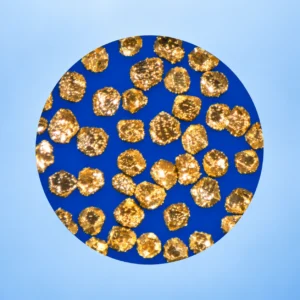
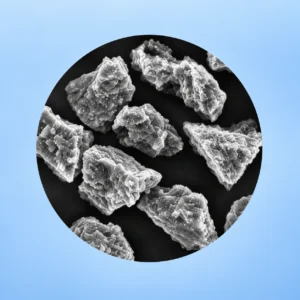
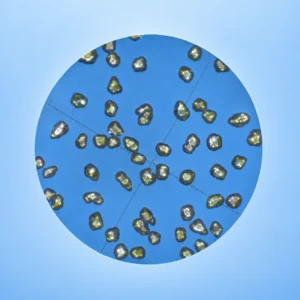
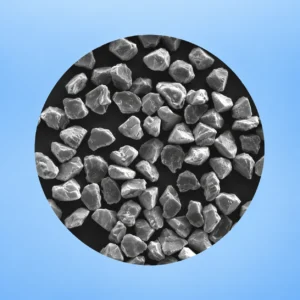
SND-M05 is characterized by irregular, angular abrasive particles. Particle morphology influences how diamond grains contact the workpiece, engage in material removal and interact with a resin bonding matrix or free-abrasive formulation.
Micron diamond powders are selected primarily by their particle-size distribution, abrasive shape, surface condition and intended processing method. A nominal micron size alone does not establish the achievable surface finish, removal rate or tool life.
Within the SinoDiam SND-M product family, SND-M05 occupies the Economy Grade position, followed by SND-M10 Standard Grade and SND-M15 Premium Grade. These positions support application-based selection; they do not represent quantified performance rankings or direct equivalence to competitor grades.
SND-M05 is recommended as a candidate for resin-bond abrasive tools and suitable grinding or polishing formulations. For diamond paste and slurry applications, particle grading, liquid carrier, dispersion and sedimentation behavior should be evaluated separately.
Contact SinoDiam with the target particle-size range, grading requirements, workpiece material, bond or carrier system and process conditions for grade-specific technical information.
Technical Specifications
SND-M05
Micron Diamond Powder
Economy Grade
Irregular / Angular
Micron-Size Diamond Powder
Confirm Individual Micron Fraction
Request Grade-Specific PSD Data
Grinding / Lapping / Polishing
Stone / Ceramic / Gemstone Finishing
Resin-Bond Abrasives
Paste / Slurry – Formulation Trials
Application-Specific Validation
SND-M05’s grade positioning and application categories are based on the current SinoDiam product description. Exact available micron fractions, particle-size distributions, oversize limits, feedstock specifications and impurity values should be confirmed using current grade-specific technical documentation. No fixed performance percentage or universal bond compatibility is claimed.
Particle Characteristics & Abrasive Behavior
Irregular Particle Morphology
Angular and irregular diamond particles provide different contact geometries in grinding and lapping. Their effective cutting action depends on particle size, workpiece properties, abrasive exposure and operating conditions.
Particle Size Distribution
Particle size distribution can influence material removal, surface consistency and abrasive behavior. Oversize particles may be particularly important in fine finishing where isolated scratches are unacceptable.
Grain Fracture & Retention
In bonded tools, diamond performance depends on both particle characteristics and matrix retention. Premature particle pull-out, excessive fracture or glazing can affect finished-tool results.
Economy-Oriented Selection
SND-M05 is positioned for manufacturers balancing abrasive cost, target finish and acceptable processing performance. The final grade should be evaluated using the actual workpiece and production process.
Recommended Applications
SND-M05 is an economy-grade candidate for general grinding, lapping and polishing. The following applications require appropriate particle-size selection and tool or compound formulation.
Natural Stone Finishing
For evaluating micron diamond abrasives used in suitable stone grinding, lapping and polishing systems. Stone mineralogy, previous processing stages and required finish influence abrasive selection.
Ceramic Tile Grinding
For selected ceramic tile edge processing and finishing tools. Particle size, resin formulation and process parameters should be matched to the removal rate and edge-quality requirements.
Gemstone Pre-Polishing
For evaluation in gemstone grinding and pre-polishing operations where economical micron diamond abrasives are suitable. The specific gemstone and required surface finish must guide the abrasive size.
Resin-Bond Grinding Tools
A candidate for resin-bond wheels and polishing products where abrasive particle shape, concentration, grain retention and bond hardness are important formulation factors.
Diamond Paste Formulation
Micron diamond may be evaluated in diamond paste or polishing compounds. Compatibility depends on the carrier, diamond concentration, particle dispersion and required processing conditions.
General Lapping & Finishing
For selected hard-and-brittle workpieces where the abrasive size distribution and lapping process provide an appropriate balance of material removal and surface condition.
Applications are suggested evaluation directions, not guaranteed suitability for every workpiece. For highly demanding optical or semiconductor surfaces, dedicated finer-controlled or specialty grades may be more appropriate after technical assessment.
Micron Size Selection & Particle Size Distribution
Micron diamond powders should be specified using an agreed particle-size designation and grading method. A broad product-series size range should not be mistaken for the availability of every fraction within an individual grade.
Evaluate for greater material removal, preliminary lapping or grinding stages.
Consider when removal rate, finish and abrasive wear must be balanced.
Evaluate for controlled finishing with particular attention to oversize particles and dispersion.
What should be compared in a PSD report?
Particle-Size Distribution: Request the relevant size distribution limits for the selected micron fraction. Where available, D10, D50 and D90 provide useful descriptors of the measured distribution, although test methods and definitions must be consistent when comparing suppliers.
Oversize Particles: For fine lapping and polishing, the presence of oversized abrasive particles may influence scratch risk. The required limits and detection method should be agreed for the application.
Measurement Method: Particle-sizing techniques differ across fine and coarse micron fractions. A cross-supplier comparison should consider the test method as well as the nominal size name.
The current individual SND-M05 size list and numerical PSD limits still require confirmation. Do not interpret the previous whole-series range as a verified SND-M05 supply list.
Bond Compatibility & Polishing Formulations
Selection of the same micron diamond powder for different tool or polishing systems requires technical validation of how particles are retained, dispersed and presented to the workpiece.
Resin-Bond Abrasive Tools
SND-M05 may be evaluated in resin-bond grinding and polishing tools. Wheel hardness, abrasive concentration, grain exposure, retention and processing conditions should be considered together.
Diamond Paste & Compound
Paste formulation requires suitable carrier selection, abrasive loading, mixing and storage stability. The powder grade alone does not determine finished-paste performance.
Water-Based & Oil-Based Slurries
Wetting, dispersibility, sedimentation and agglomeration must be checked in the intended liquid system. Compatibility with either carrier type should not be assumed without formulation trials.
Other Bonded Abrasive Systems
Vitrified, metal-bonded and electroplated tools have different requirements for particle retention, processing temperature and surface chemistry. Their suitability requires separate evaluation.
How to Compare SND-M05 with Other Micron Diamond Powders
Compare the Same Particle Size
Use comparable micron fractions and grading definitions. Different supplier labels can conceal differences in particle-size distribution and oversize content.
Compare Crystal Morphology
Irregular, blocky and agglomerated particles may interact differently with a workpiece. The correct morphology depends on the removal rate and finished-surface requirements.
Compare Surface & Dispersion
Cleaning, surface condition and particle agglomeration can affect wetting and suspension stability. These parameters are especially relevant to paste and slurry formulations.
Compare Finished-Process Results
Evaluate removal rate, surface roughness, visible scratches, abrasive consumption and cost per part using comparable workpieces and processing conditions.
These are technical evaluation criteria, not published numerical SND-M05 performance results or a claim of equivalence to any competitor’s economy-grade micron diamond powder.
SinoDiam Micron Diamond Product Selection
Explore SinoDiam micron diamond powders by grade and manufacturing application. SND-M05, SND-M10 and SND-M15 provide general-purpose economy-to-premium selection options, while specialty micron products address specific abrasive-tool and precision-processing requirements.
General-Purpose Micron Diamond Grades
Specialty Micron Diamond Products
These specialty products are organized by their intended manufacturing processes. They are not simply higher-quality versions of the general-purpose SND-M grades. Select according to particle specifications, process requirements and application trials.
General-purpose grades and specialty products describe different selection criteria. Exact micron sizes, particle-size distributions, material specifications, surface characteristics and application performance must be confirmed for each product. No direct competitor-grade equivalence or guaranteed scratch-free performance is implied.
Frequently Asked Questions
1. What is SND-M05 Micron Diamond Powder?
2. What is the difference between micron diamond powder and mesh diamond grit?
3. What particle sizes are available for SND-M05?
4. How does SND-M05 differ from SND-M10 and SND-M15?
5. Which materials are suitable for SND-M05?
6. Can SND-M05 be used in resin-bond grinding tools?
7. Can SND-M05 be used for diamond paste or slurry?
8. Does SND-M05 guarantee scratch-free polishing?
9. What particle-size information should be compared between suppliers?
10. Is SND-M05 equivalent to an economy-grade micron diamond from another manufacturer?
11. What information is required for an SND-M05 quotation?
SINODIAM INTERNATIONAL · MICRON DIAMOND TECHNICAL SUPPORT
Request SND-M05 Specifications & Quotation
Looking for an economy-grade micron diamond abrasive for stone finishing, ceramic grinding, gemstone polishing or general abrasive-tool manufacturing?
Share your target micron size, particle-size distribution requirements, workpiece, bonding or polishing-compound system, trial quantity and delivery destination. SinoDiam can discuss appropriate SND-M05 specifications and grade-selection requirements.