Product Overview
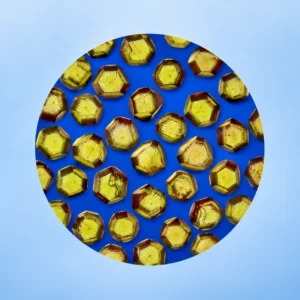
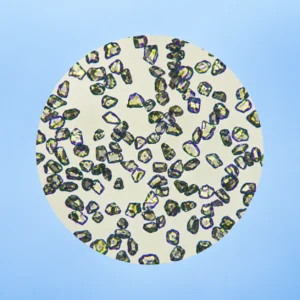
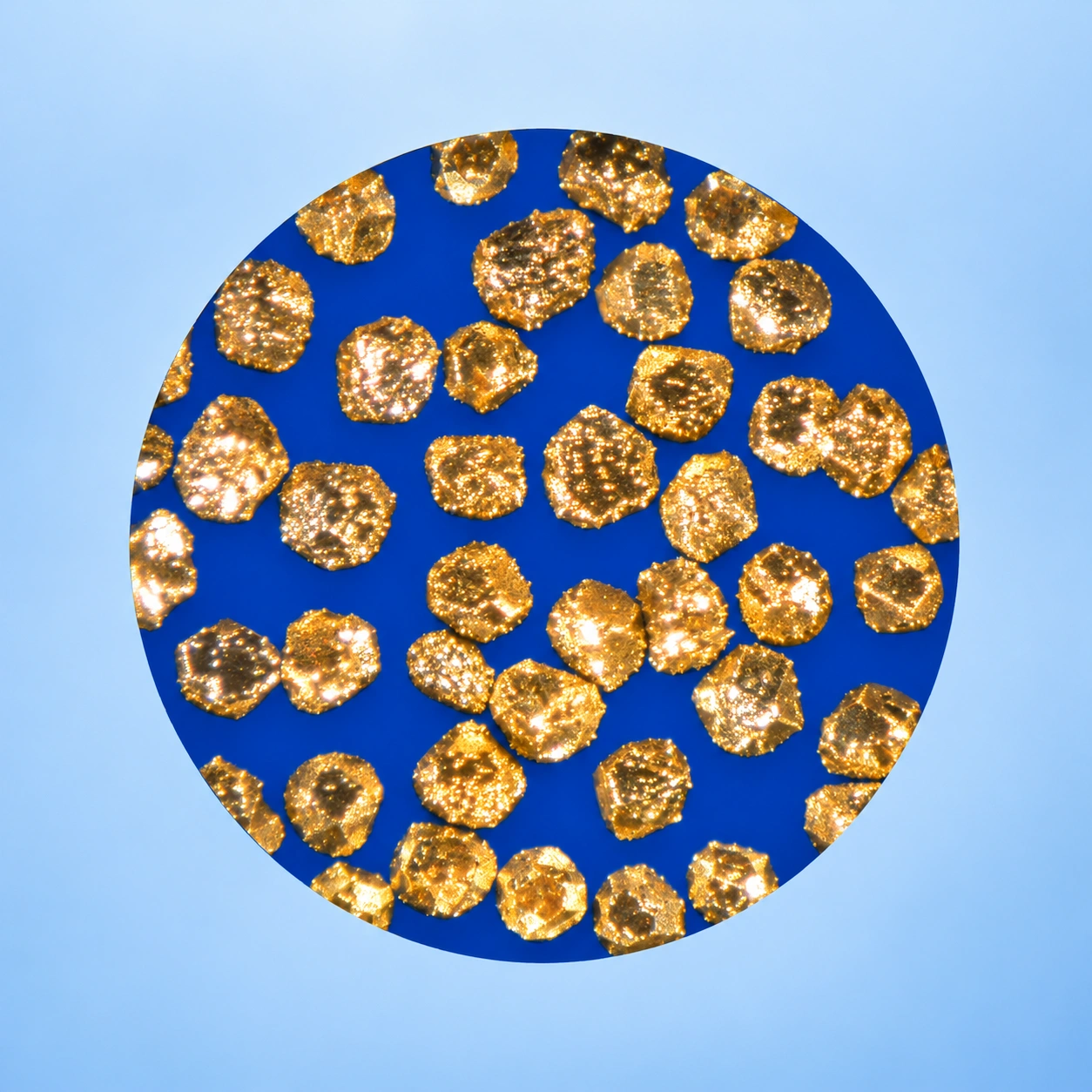
SinoDiam Nickel-Coated Diamond N56 is a specialty nickel-coated industrial diamond abrasive positioned for manufacturers evaluating improved particle retention in resin-bond grinding wheels, selected polishing tools and other compatible fixed-abrasive systems.
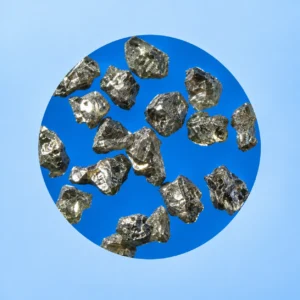
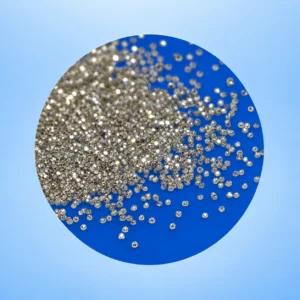
The existing SinoDiam catalogue describes N56 as having a spiny, textured nickel surface. This surface morphology is intended to provide additional mechanical engagement between the coated diamond grain and the surrounding tool matrix, making it relevant to applications where abrasive pull-out and bond retention are important.
In resin-bond grinding tools, abrasive performance depends on the interaction between the base diamond crystal, nickel coating, resin formulation and operating conditions. A suitable coating may help maintain diamond retention while allowing the wheel matrix to expose active abrasive cutting points as required by the process.
The N56 designation belongs to SinoDiam’s nickel-coated diamond product family. In the wider superabrasives industry, 56 wt% nickel coatings are a recognized specification. However, the actual nickel mass fraction, measurement basis, coating morphology and manufacturing method for SinoDiam N56 should be confirmed using current technical documentation.
Primary application directions include phenolic and polyimide resin-bond diamond grinding wheels for selected cemented carbide, technical ceramic, cermet and hard-and-brittle workpieces. Specialty polishing tools may also be evaluated where the coating, particle size and resin matrix are appropriate.
Selected ceramic or vitrified-bond and hybrid-bond abrasive tools are additional application-evaluation directions. They require separate verification because their manufacturing temperatures, matrix chemistry and abrasive-retention mechanisms may differ significantly from resin-bond systems.
The historical SinoDiam catalogue references 500/600 mesh and coarser N56 diamond grit. The present product should not be assumed available in every individual mesh fraction, particularly finer fractions mentioned elsewhere in the former product FAQ, until a current size list is confirmed.
Nickel coating should not be considered a universal barrier against oxidation, graphitization or excessive grinding temperatures. The actual performance must be assessed within the complete wheel-manufacturing and grinding process.
Contact SinoDiam with the requested diamond size, base grit grade, resin or tool matrix, intended workpiece, manufacturing cycle and estimated quantity for specification review and technical support.
Technical Specifications
The N56 name and spiny surface description reflect SinoDiam’s product catalogue. Actual nickel content, coating thickness, weight-reporting basis, particle-size availability, coating uniformity and applicable bond systems require product-specific confirmation. Historical numerical claims concerning 700°C temperature resistance, 50% reduced pull-out or guaranteed surface roughness are not treated as verified specifications.
Spiny Nickel Coating & Abrasive Retention Mechanisms
A textured nickel coating can change the geometry of the diamond surface and its interaction with a surrounding bond matrix. The following characteristics are relevant to evaluating the suitability of N56 in abrasive tools.
Spiny Surface Morphology
The existing catalogue identifies a spiny nickel surface. Surface protrusions may create additional mechanical engagement points in an appropriate resin matrix. Actual protrusion shape, density and uniformity should be evaluated using representative microscopy.
Mechanical Anchoring in Resin
A textured coating may allow the resin matrix to engage more effectively with the coated abrasive particle. Effective anchoring depends on coating-to-diamond adhesion, resin penetration, curing conditions and wheel design.
Nickel Coating Coverage
The amount and distribution of deposited nickel may influence the external particle geometry and its interaction with the bond. Coating continuity, local thickness and coverage should be characterized for the selected size fraction.
Coating-to-Diamond Adhesion
Mechanical retention in the wheel also depends on whether the nickel coating remains attached to the diamond crystal. A strong resin-to-nickel interface does not compensate for inadequate coating-to-diamond attachment.
Heat Transfer During Grinding
A metallic nickel layer can influence local heat-transfer behavior in a bonded abrasive system. The result depends on coating geometry, resin properties, coolant, contact conditions and the grinding process; no specific temperature reduction is implied.
Abrasive Exposure & Renewal
Effective grinding requires an appropriate balance of grain retention, abrasive exposure, fracture and bond wear. Excessive retention without cutting-edge renewal may be undesirable in some operations, even when pull-out resistance is improved.
Spiny nickel coatings are established in the superabrasives industry, but the actual N56 surface structure and its effect on finished-tool performance must be verified with SinoDiam material characterization and application-specific testing.
Recommended Applications
N56 is primarily positioned for resin-bond abrasive-tool evaluations where particle anchoring, abrasive retention and wheel-wear behavior are important. The workpiece and complete wheel formulation determine the correct abrasive choice.
Phenolic Resin-Bond Grinding Wheels
Evaluate textured nickel-coated diamond in phenolic resin wheels where improved mechanical engagement between abrasive grains and the matrix may be beneficial. Consider resin chemistry, grain concentration, curing cycle and grinding conditions.
Polyimide Resin-Bond Tools
For selected polyimide-bond grinding wheels requiring evaluation of coating integrity and grain retention. The resin cure schedule, coating characteristics and intended cutting action must be matched to the tool design.
Cemented Carbide Grinding
For resin-bond diamond tools used to grind or finish selected tungsten carbide and other cemented carbide components. Diamond size, wheel formulation, material removal and edge-quality requirements should be assessed together.
Technical Ceramic Grinding
For evaluating suitable resin-bond wheels used on selected engineering ceramics. Surface damage, grinding force, abrasive exposure and wheel wear are important indicators of process suitability.
Cermet Component Finishing
For selected cermet and composite workpieces where diamond grinding is appropriate to the material. Grain retention, grinding conditions and workpiece integrity should be validated through trials.
Resin-Bond Polishing Tools
For evaluating specialty polishing pads and bonded abrasive products where the required nickel-coated particle size and surface texture are compatible with the resin formulation. Fine particle sizes should be confirmed before specifying them.
Selected Ceramic-Bond Tools
Potential application in suitable ceramic or vitrified-bond systems. Coating stability, firing temperature, oxidation conditions and interaction with the ceramic matrix must be evaluated independently.
Hybrid-Bond Grinding Tools
Hybrid formulations may be assessed where the matrix chemistry, manufacturing cycle and desired abrasive-retention characteristics are compatible with the selected N56 specification.
Recommended applications are technical evaluation directions, not confirmed suitability for every workpiece or wheel construction. For hardened ferrous steels, CBN abrasives may be more appropriate than diamond depending on the grinding process.
Mesh Size Selection, Nickel Content & Coating Morphology
The appropriate N56 specification must account for the original diamond grain, the nickel coating and the finished coated-particle geometry. Mesh size, coating content and spiny surface characteristics should not be treated as interchangeable specifications.
What Does N56 Mean?
In industrial superabrasives, 56 wt% nickel coating is a recognized coating category. The exact definition used for a specific N56 product must nevertheless be verified through the supplier’s technical specification, including the measurement basis.
Nickel Weight Fraction: Nickel may be reported as a percentage of the total mass of the finished coated abrasive. A verified 56 wt% final nickel mass fraction would imply that 44 wt% of the total mass consists of the remaining material, primarily diamond, subject to the actual composition.
Coating Weight Gain: Another convention reports the mass of added nickel relative to the original uncoated diamond. A 56% weight gain and a 56% final nickel mass fraction are different specifications. The reporting basis must be stated explicitly.
Coating Thickness: Thickness and weight fraction are not interchangeable. The actual surface layer thickness and protrusion shape may vary across grains or particle-size fractions.
Spiny Surface Texture: The presence, density and geometry of surface protrusions should be characterized separately from the total coating mass. A higher coating percentage alone does not prove a stronger mechanical anchoring effect.
Historical Mesh Scope: SinoDiam’s existing catalogue references 500/600 mesh and coarser N56 diamond grit. Finer mesh sizes appearing in historical application guidance require separate availability confirmation.
Base Diamond Selection: The toughness, morphology, size and fracture behavior of the underlying diamond remain important. N56 coating does not make all base diamond grades interchangeable.
Tool Formulation Calculations: Manufacturers should establish whether abrasive concentration is calculated using coated particle mass or actual diamond content. Coating mass may affect both formulation and commercial comparisons.
Current N56 coating composition, measurement basis, available size fractions and surface morphology must be confirmed through production or quality-control records. No unsupported coating percentage, finished mesh range or surface-texture measurement is presented as guaranteed data.
Bond Compatibility & Tool Manufacturing Considerations
The N56 coating should be selected around the tool matrix, abrasive-grain requirements and production process. Nickel-coated grains behave differently in resin curing, ceramic firing and other manufacturing conditions.
Phenolic Resin Bonds — Primary Focus
Spiny nickel-coated diamond is relevant to evaluating mechanical particle retention in phenolic resin matrices. The coating geometry, resin penetration, abrasive concentration and curing conditions should be considered together.
Polyimide Resin Bonds — Primary Focus
Selected polyimide-bond grinding wheels may benefit from evaluating textured nickel-coated particles. The actual coating and resin system must be tested against the intended cure cycle and grinding temperatures.
Ceramic / Vitrified Bonds — Separate Trials
Vitrified tools can involve firing temperatures and chemical environments different from resin systems. The nickel coating may react, oxidize or change during processing, so compatibility should not be assumed from resin-bond experience.
Hybrid Bonds — Separate Trials
Hybrid wheel formulations require evaluation of coating compatibility with their combined matrix components, manufacturing process and required abrasive exposure.
Metal-Bond Tools — Separate Selection
N56 is not automatically the preferred choice for metal-bond tools. Titanium-coated or other diamond grades may be more relevant in selected reactive metal matrices. Any use of N56 should be supported by process-specific trials.
Grinding Process Qualification
Test comparable coated and uncoated diamond wheels for material removal, abrasive pull-out, wheel wear, surface finish, workpiece damage and processing cost under defined operating conditions.
No universal temperature limit, chemical compatibility, reduced grinding force or longer tool life can be guaranteed solely from the N56 designation. Tool-manufacturing temperature and working-zone temperature are separate quantities.
How to Compare N56 with N30 & Other Nickel-Coated Diamonds
Technical supplier comparisons should focus on equivalent base diamond grades, verified nickel coating characteristics, bond systems and actual grinding results.
01 / Base Diamond & Grit Size
Compare the same or technically equivalent diamond substrate, grit size and particle-size distribution. Differences in diamond toughness or friability can strongly influence wheel performance independently of the coating.
02 / Nickel Coating Specification
Confirm the actual nickel mass fraction or weight gain, coating thickness, deposition method and the corresponding test protocol. Do not compare numerical percentages without establishing their reporting basis.
03 / Surface Texture & Anchoring
Examine the nickel surface using representative microscopy. Spiny, dendritic and relatively smooth coatings can provide different mechanical engagement characteristics in a resin matrix, but the result is formulation-dependent.
04 / Resin-Bond Tool Performance
Compare coated abrasives under matched wheel formulation, abrasive concentration, curing cycle and grinding conditions. Evaluate pull-out, wheel wear, grinding rate, surface quality and total cost per finished workpiece.
Nickel N30 vs. Nickel N56 vs. Other Surface Treatments
| Treatment | Surface Approach | Main Evaluation Focus | ||
|---|---|---|---|---|
| Nickel N30 | Nickel-coated diamond; catalogue-described relatively uniform layer | Resin and selected multi-bond applications; coating and process compatibility | ||
| Nickel N56 | Catalogue-described spiny / textured nickel surface | Resin-bond abrasive retention, mechanical surface anchoring and wheel performance | ||
| Titanium (Ti) | Titanium-based metallic surface layer | Selected metal-bond interfaces and compatible hot-processing systems | ||
| Titanium Carbide (TiC) | Specified titanium-carbide surface layer | Specialized interfacial chemistry and bond-system selection | ||
| Surface-Etched | Modification of diamond crystal surface texture without a metal coating | Surface morphology and possible matrix-engagement effects | ||
This comparison is based on product classification and intended evaluation directions. N56 is not automatically superior to N30, and neither coating is a universal substitute for titanium or surface-etched grades. Actual coating morphology and performance must be established by product-specific characterization and tool trials.
SinoDiam Coated & Surface-Treated Diamond Selection
Choose the coating or surface treatment according to the underlying diamond grade, the intended bond system, manufacturing cycle and abrasive-retention requirements.
Current Product
Explore Other Coatings & Treatments
The five surface treatments represent different material technologies rather than a single quality ranking. Their current particle sizes, coating characteristics and tool-system compatibility must be confirmed individually. Surface-etched diamond is not a metallic coating.
Frequently Asked Questions
1. What is Nickel-Coated Diamond N56?
2. What does the N56 designation mean?
3. Is SinoDiam N56 guaranteed to contain exactly 56 wt% nickel?
4. What is a spiny nickel coating?
5. How does N56 differ from Nickel-Coated Diamond N30?
6. Is N56 suitable for phenolic resin-bond wheels?
7. Can N56 be used in polyimide resin-bond tools?
8. Is N56 suitable for ceramic or vitrified bonds?
9. What materials can be ground with N56 resin-bond diamond wheels?
10. What mesh sizes are available for N56?
11. Why does nickel coating percentage matter?
12. Does N56 have stronger adhesion than N30?
13. Does N56 reduce diamond pull-out by 50%?
14. Can N56 withstand a working temperature of 700°C?
15. Does N56 guarantee a smoother surface finish or longer wheel life?
16. Can N56 replace titanium-coated diamond in metal-bond tools?
17. How can N56 be compared with another spiny nickel-coated diamond?
18. What information should I provide for an N56 quotation?
SINODIAM INTERNATIONAL · NICKEL-COATED DIAMOND TECHNICAL SUPPORT
Request N56 Nickel-Coated Diamond Specifications & Quotation
Looking for spiny nickel-coated diamond grit for resin-bond grinding wheels, cemented carbide grinding, technical ceramic processing or specialty polishing and fixed-abrasive tools?
Share your required mesh size, base diamond grade, nickel coating requirements, resin or matrix formulation, manufacturing process, workpiece material, estimated quantity and destination country.
SinoDiam can discuss current N56 specifications and the technical information required to evaluate coating morphology, abrasive retention and compatibility with your manufacturing process.