SINODIAM INTERNATIONAL · INDUSTRIAL DIAMOND POWDERS

Industrial Diamond Powders for Your Process.

Explore five synthetic diamond material families for cutting-tool manufacturing, bonded abrasive grinding, lapping and precision finishing. Compare grades by crystal characteristics, bond system and the workpiece you need to process.

Saw Grit & Mesh GradesResin / Metal BondMicron DiamondChina & Thailand Operations
Industrial diamond crystals for metal-bond abrasive manufacturingIndustrial Diamond Abrasive Grains
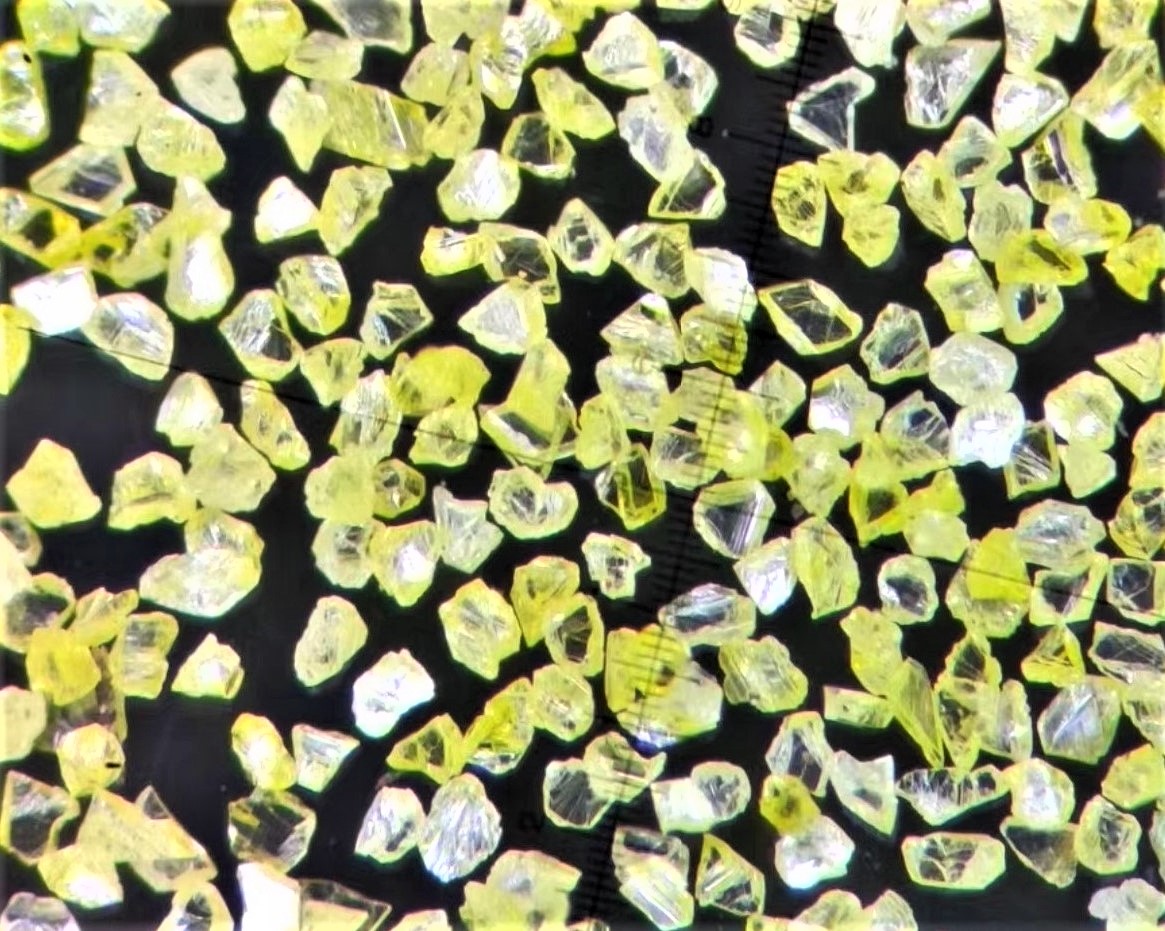
Yellow crystalline synthetic saw grit diamondSaw Grit Diamond
Micron diamond powder under magnificationMicron Diamond Powder
01 / INDUSTRIAL DIAMOND POWDER PORTFOLIO

Five material families. Different manufacturing needs.

Start with the tool design, abrasive bond and surface-finish requirements. The right diamond grade cannot be selected by nominal particle size alone.

SinoDiam saw grit diamond yellow synthetic crystals
CUTTING & TOOLMAKING

Saw Grit Diamond

Mesh-size synthetic diamond crystals for manufacturing saw-blade segments, core bits and other cutting tools. Review crystal shape, toughness, impact load and metal-bond formulation.

Grades: SND815 / 820 / 830 / 840 / 860 / 880 / 890
Mesh: commonly 18/20–70/80; SND890 range may differ
Explore Saw Grit Grades →
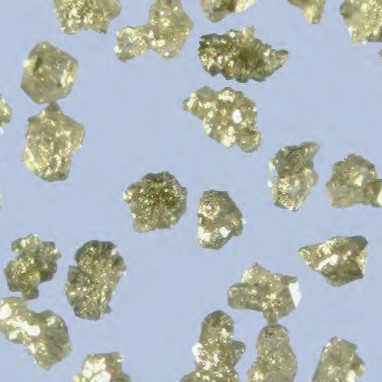
Synthetic metal bond mesh diamond abrasive particles
METAL-BONDED ABRASIVES

Metal Bond Mesh Diamond

Diamond mesh grades for metal-bond grinding wheels, glass processing, carbide sharpening and abrasive shaping tools. Compare grit strength and retention needs.

Grades: SND-G20 / G30 / G40 / G60
Reference: MBD4 / MBD6 / MBD8 / MBD10 equivalents; 80/100–325/400 mesh
Explore Metal Bond Grades →
SinoDiam resin-bond synthetic diamond abrasive grains
RESIN-BONDED GRINDING

Resin Bond Diamond

RVG-style friable diamond grits for resin-bond grinding and fine finishing. Choose the fracture and self-sharpening characteristics for your wheel and material.

Grades: SND-R05 / R10 / R15 / R20
Typical range: 60/70–325/400 mesh
Explore Resin Bond Grades →
Irregular fractured crushed RVD diamond granules
CRUSHED DIAMOND ABRASIVES

Crushed RVD Diamond

Angular, crushed particles for selected grinding, polishing and electroplated or resin-bond abrasive applications. Distinct from manufactured RVG resin-bond mesh grades.

Grades: SND-G05 / G10 / G15
Range: approximately 80–500 mesh, depending on grade
Explore Crushed RVD →
Micron-size synthetic industrial diamond powder particles
PRECISION LAPPING & POLISHING

Micron Diamond Powder

Controlled micron-size diamond particles for fine grinding, lapping, polishing and specialist manufacturing. Applications include optics, hard materials, wire-saw formulations and selected PCD/PDC feedstock.

Core grades: SND-M05 / M10 / M15
Specialized: MAG / MPL / M/PCD / MDW; size availability varies
Explore Micron Diamond Grades →
02 / UNDERSTANDING MATERIAL DIFFERENCES

The bond system changes what you need from the diamond.

Several powder families may be described as grinding abrasives. They are not automatically interchangeable: crystal structure, friability, particle size and retention requirements must be considered together.

Metal Bond vs. Resin Bond

Metal Bond Mesh is typically evaluated for grit strength and retention in metal-matrix tools. Resin Bond Diamond is commonly selected for its controlled friability and self-sharpening behavior in resin wheels. Neither selection is based on the workpiece alone; the bond, tool design and operating regime matter.

Resin Bond vs. Crushed RVD

RVG-style Resin Bond grades emphasize a defined friability profile for bonded grinding. Crushed RVD describes fractured diamond particles with angular morphology, used in a range of abrasive systems. Confirm particle shape, mesh and tool requirements before choosing between them.

Saw Grit vs. Micron Diamond

Saw Grit supplies larger crystals for cutting-tool segments and related tooling. Micron Diamond supports finer abrasive processes where particle-size distribution, dispersion, contamination and surface finish become more prominent selection variables.

Core Micron Grades vs. Specialty Micron

M05 / M10 / M15 serve general-to-higher-precision micron powder requirements. MAG, MPL, MDW and M/PCD address narrower process or manufacturing needs. Their suitability needs to be checked against the target substrate and production method.

03 / GRADE FAMILY REFERENCE

A practical starting point for grade selection.

These families help narrow the discussion. Actual grades, mesh/micron distributions and proposed use should be confirmed against the corresponding product specification.

Material familySinoDiam seriesTypical evaluation focus
Saw Grit DiamondSND815 / 820 / 830 / 840 / 860 / 880 / 890Crystal shape, relative toughness, cutting impact, segment bond, mesh and tool design. SND815 may be considered for blending.
Metal Bond MeshSND-G20 / G30 / G40 / G60Metal-bond grit retention, grinding duty, workpiece, shape and MBD-equivalent grade reference.
Resin Bond DiamondSND-R05 / R10 / R15 / R20Friability, self-sharpening, wheel bond, removal rate and desired finish.
Crushed RVD DiamondSND-G05 / G10 / G15Fractured particle morphology, toughness level, mesh and abrasive-tool construction.
Micron DiamondSND-M05 / M10 / M15Micron size distribution, surface requirements, dispersion and purity needs.
Specialty MicronMAG / MPL / M/PCD / MDWAgglomeration, precision finishing, polycrystalline feedstock or wire-saw tool design as applicable.

Grade descriptions are selection guidance, not guaranteed performance values or a substitute for technical validation. Mesh and micron availability can vary by grade and processing route.

04 / MATERIAL SELECTION WORKFLOW

Start with the workpiece and tool, not the grade code.

Two customers machining the same material may require different diamond powders because their bond systems, production conditions and quality targets differ.

01

Define the workpiece. Stone, concrete, carbide, ceramic, glass, sapphire, SiC or other hard substrates.

02

Describe the operation. Sawing, drilling, grinding, lapping, polishing, wire-saw production or PCD/PDC feedstock.

03

Match the abrasive system. Metal or resin bond, mesh/micron size, crystal morphology, coating and tooling conditions.

04

Validate in production. Evaluate removal rate, finish, tool wear, process stability and overall economics.

05 / PRODUCTION & PROCESSING

Industrial diamond capabilities in China and Thailand.

Our operations support material selection, specialized processing and international supply discussions across a range of synthetic industrial diamond products.

ZHENGZHOU · CHINA

SinoDiam International

Activities in China include industrial diamond product development, manufacturing and specialized material processing, together with technical coordination for international customers.

Discuss saw grit, bonded abrasive grades, micron powder requirements and related superabrasive materials with our team.

PATHUM THANI · THAILAND

Thaimond Superabrasives Co., Ltd.

The Thailand operation focuses on production and processing related to crushed diamond, micron diamond powders and selected coated diamond materials.

The two-country structure offers additional options when reviewing manufacturing origin, processing requirements and supply arrangements.

Actual country of manufacture, grade availability, supporting documentation and commercial terms depend on the product, process and individual order. Please confirm any specific origin requirements before purchase.
06 / TECHNICAL QUESTIONS

Questions from powder buyers and tool manufacturers.

These answers are general starting points for a technical discussion, not guarantees of performance in a particular tool.

Which diamond powder is best for manufacturing saw-blade segments?

Saw Grit Diamond is commonly considered for segment and core-tool production. The grade selection depends on crystal toughness and shape, mesh size, bond composition, cutting load and the stone or concrete being processed.

What is the difference between metal-bond and resin-bond diamond?

Metal-bond mesh diamonds are selected for metal-matrix abrasive systems where grit strength and retention matter. Resin-bond grades may emphasize controlled fracture and self-sharpening. The same workpiece can call for different grits depending on bond and grinding conditions.

Are crushed RVD and resin-bond diamond the same product?

Not necessarily. Crushed RVD refers to irregular diamond particles produced by crushing, while resin-bond/RVG grades are selected around the fracture behavior required by the resin tool system. There may be overlapping uses, but they should not be treated as identical specifications.

When should I select micron diamond instead of mesh diamond?

Consider micron diamond when finer abrasive particle control is required for lapping, polishing, fine grinding, selected wire-saw formulations or specialized feedstock. Confirm the target particle-size distribution and process conditions before choosing a grade.

Can SinoDiam recommend a grade from a workpiece name alone?

The workpiece is a starting point, not a complete specification. Share the bond or carrier, tooling method, existing grit or micron size, target finish and operating conditions so the selection can be evaluated more meaningfully.

What should I include in a diamond powder quotation request?

Include the material family, intended application, grade or mesh/micron size if known, bond or process, estimated quantity, destination and relevant evaluation requirements. If you do not know the grade, describe your current tool and manufacturing process.

07 / TALK TO SINODIAM

Find a diamond powder matched to your manufacturing process.

Whether you're comparing saw grit grades, formulating a grinding wheel or selecting micron diamond for precision finishing, tell us what you need to manufacture. We can review relevant material families and quotation requirements.

Scroll to Top