Product Overview
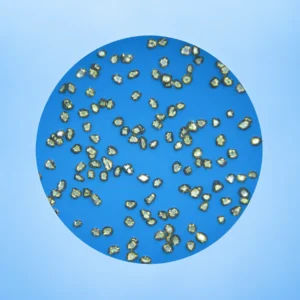
SinoDiam Nickel-Coated Diamond N30 is a nickel-plated industrial diamond abrasive positioned for manufacturers evaluating diamond particle retention and diamond–matrix interaction in resin-bond grinding wheels, polishing tools and selected multi-bond abrasive systems.
Nickel coating modifies the external surface of a diamond grain by adding a metallic layer. In suitable bonding formulations, the coating can support mechanical engagement between the abrasive particle and the surrounding matrix, influencing particle retention, abrasive exposure and the working behavior of the finished tool.
The N30 designation identifies a product in SinoDiam’s nickel-coated diamond range. Nickel coatings around 30% by weight are common industry specifications, but the actual nickel content, measurement basis and coating process for SinoDiam N30 must be confirmed from current technical documentation.
The existing SinoDiam catalogue describes N30 as a relatively uniform nickel-coated diamond product intended for multiple bonding systems. The new product positioning emphasizes resin-bond abrasive tools as an important evaluation direction, while retaining hybrid, metal and ceramic bonds as additional applications requiring separate validation.
Potential tool applications include resin-bond diamond grinding wheels, precision abrasive products, selected polishing pads, hybrid-bond grinding wheels and specialized cutting or grinding tools where nickel coating is compatible with the manufacturing system.
Actual performance depends on the base diamond grade, particle size, coating coverage, surface texture, diamond concentration, matrix chemistry and manufacturing conditions. A nickel layer alone does not establish guaranteed tool life, thermal stability or universal bonding compatibility.
The historical product catalogue refers to 500/600 mesh and coarser diamond grit. Current availability should be confirmed for the required base diamond product and mesh designation.
For technical selection, please provide the intended workpiece, diamond mesh size, base diamond grade, tool bond, manufacturing temperature or curing conditions, expected quantity and delivery destination.
Technical Specifications
The N30 model designation should not be used as a substitute for a verified nickel-content measurement. Current coating content, particle-size availability, deposition method, coating uniformity and bonding compatibility require confirmation. Historical temperature ratings and fixed adhesion or tool-life improvements are not presented as certified product data.
Nickel Coating Functions & Abrasive Retention
Nickel-coated diamond should be evaluated through the relationship between the base abrasive particle, metallic coating and surrounding tool bond. The following factors are particularly relevant to manufacturers of fixed-abrasive tools.
Mechanical Grain Retention
A suitable nickel layer can change how the diamond grain engages with the surrounding bond. Retention depends on coating texture, coating-to-diamond attachment, resin or matrix chemistry and the tool-manufacturing process.
Coating Surface Morphology
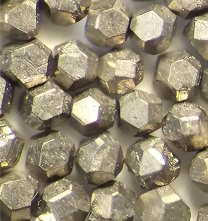
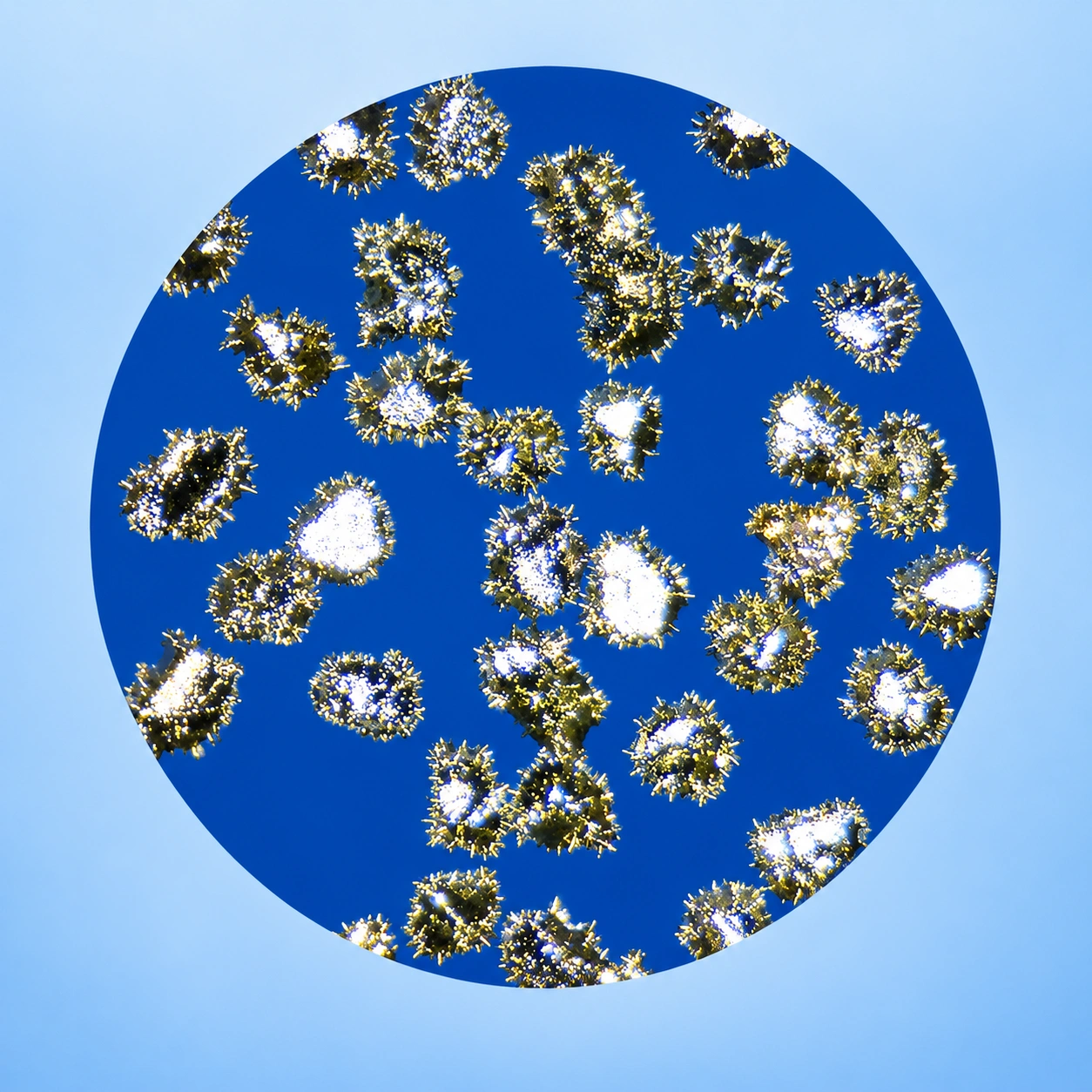
Nickel coating may produce smooth, granular or textured surface features depending on the deposition process. Surface morphology can influence mechanical anchoring, but the actual N30 texture should be established by microscopy rather than assumed.
Metallic Layer Coverage
The degree of surface coverage and the consistency of the deposited layer may influence bonding and abrasive behavior. Representative coated-particle inspection is useful when qualifying a coating supplier.
Heat Transfer Considerations
A metallic nickel layer can influence thermal transport around an abrasive particle in a bonded tool. The practical effect depends on layer structure, coating content, matrix composition and grinding conditions; no fixed temperature reduction is guaranteed.
Coating Integrity During Tool Production
Coating adhesion, deformation or degradation may be affected by mixing, pressing, curing, firing and other manufacturing steps. The selected tool process must be compatible with the actual coated abrasive.
Diamond Exposure & Bond Wear
Grinding performance depends on the balance between abrasive retention and exposure of active cutting points. Excessively strong retention, premature pull-out and inappropriate bond wear can all affect the performance of the finished wheel.
These are coating-selection mechanisms applicable to nickel-coated diamond technology. The existence or magnitude of any improvement must be established through SinoDiam N30 material characterization and comparative tool testing.
Recommended Applications
SND N30 is positioned for the technical evaluation of nickel-coated diamond in fixed-abrasive manufacturing. Resin-bond systems are an important application direction; other tool systems should be qualified individually.
Resin-Bond Diamond Grinding Wheels
Evaluate N30 in suitable resin-bond wheels where abrasive grain retention and bond wear are important. Consider the base diamond grade, nickel coating, resin chemistry, diamond concentration and working conditions.
Cemented Carbide Grinding
For selected diamond wheel formulations used in grinding or finishing tungsten carbide and related cemented carbide components. The abrasive and tool formulation should be chosen according to removal rate, edge quality and grinding conditions.
Glass & Technical Ceramic Grinding
For evaluating bonded diamond tools used on selected glass and technical ceramics. Particle size, abrasive concentration, bond hardness and surface-damage requirements should guide tool selection.
Resin-Bond Polishing Tools
Selected polishing pads and precision abrasive products may benefit from evaluating nickel-coated diamond retention. The appropriate particle size and coating specification must be confirmed for the tool construction.
Hybrid-Bond Grinding Wheels
Hybrid matrices combine characteristics of multiple bonding systems. N30 may be assessed where the coating is compatible with the proposed matrix composition, curing or sintering cycle and abrasive-retention requirements.
Selected Metal & Ceramic-Bond Tools
Additional application evaluations can include specialized metal-bond and ceramic or vitrified-bond abrasive tools. Processing temperature, atmosphere and coating interaction require separate validation and must not be inferred from resin-bond behavior.
Application directions are not universal suitability statements. For hardened ferrous materials, CBN-based abrasives may be more appropriate than diamond depending on the workpiece and operating conditions. A nickel coating does not remove that material-selection consideration.
Mesh Size, Nickel Content & Base Diamond Selection
Purchasing specifications for nickel-coated diamond should identify both the abrasive grain size and the actual coating specification. The base diamond grade and nickel layer should be assessed as two separate material attributes.
What Does the N30 Coating Designation Mean?
In the wider superabrasives industry, N30 commonly refers to a nickel-coating specification associated with approximately 30% nickel by weight. However, product codes and reporting conventions may differ between manufacturers. The nominal N30 designation alone does not establish the measured nickel content or coating specification of an individual SinoDiam batch.
Coating Weight Fraction: A supplier may report nickel mass as a percentage of the final coated abrasive mass. The exact reporting basis should be identified in the specification.
Coating Weight Gain: Other suppliers may report the increase in particle mass relative to the original uncoated diamond. A numerical percentage quoted on this basis is not interchangeable with nickel content as a fraction of the coated material.
Coating Thickness: A coating thickness measurement describes the physical layer and is not the same as a weight percentage. Actual thickness may vary across particles and with abrasive size or morphology.
Base Diamond Grade: The mechanical and cutting characteristics of the original diamond remain important. A coating does not make all underlying diamond grades equivalent.
Historical Mesh Reference: The existing SinoDiam catalogue lists 500/600 mesh and coarser N30 grit. Current size availability, grading and coating specification should be confirmed before ordering.
Finished Coated-Particle Size: The metal layer changes particle mass and external geometry. Tool formulators should clarify whether their specification refers to the uncoated diamond size or the final coated-particle size.
No specific nickel content, thickness, size range or coating uniformity is guaranteed on this page without current grade-specific documentation. Please request the applicable N30 product specification before preparing a production formulation.
Bond Compatibility & Manufacturing Requirements
The behavior of nickel-coated diamond depends on the bond system and processing route. The same N30 particle may require different validation procedures in resin, hybrid, metal and ceramic matrices.
Phenolic Resin Bonds
Phenolic resin grinding wheels are a relevant evaluation direction for nickel-coated diamond. The coating may support particle retention when its surface characteristics are suitable for the resin and manufacturing process.
Polyimide Resin Bonds
Polyimide-bond tools may be considered for selected higher-temperature resin processing applications. Coating integrity, resin chemistry, cure schedule and grinding performance should be validated for the actual tool formulation.
Hybrid Bond Systems
Hybrid formulations require evaluation of the individual matrix components and their interaction with the coated particle. No universal compatibility is established solely by the N30 grade name.
Metal-Bond Tools
Metal-bond use requires a separate assessment of matrix composition, processing atmosphere, pressing or sintering schedule and diamond–matrix interaction. A nickel coating should not automatically be regarded as equivalent to titanium coating in reactive metal systems.
Ceramic / Vitrified Bonds
Vitrified processing may expose the coating to firing conditions substantially different from resin curing. Suitable temperature, atmosphere, coating chemistry and grain retention must be evaluated for the particular bond.
Finished-Tool Evaluation
Compare coated and uncoated diamond using equivalent tool designs. Evaluate abrasive pull-out, wheel wear, grinding performance, workpiece integrity, possible thermal damage and cost per finished component.
Nickel coating is not a universal high-temperature barrier. Claims that N30 remains effective at a fixed forming or working temperature require tests performed on the actual coating and tool formulation.
How to Compare N30 with Uncoated & Other Coated Diamonds
Technical purchasing should compare equivalent abrasive grades, coating specifications and tool manufacturing conditions. The same coating name can describe different deposition methods, surface textures or weight specifications.
01 / Base Diamond Grade & Mesh
Compare the same underlying diamond grit, nominal particle size and relevant size distribution wherever possible. Different crystal properties can affect tool results independently of the nickel layer.
02 / Coating Content & Coverage
Request coating percentage together with its measurement basis. Compare surface coverage, coating continuity, representative morphology and the available quality-control method.
03 / Bond-System Compatibility
Use comparable resin, hybrid, metal or ceramic bond formulations and manufacturing conditions. A test in one matrix does not establish suitability for every other system.
04 / Finished-Tool Retention & Wear
Evaluate particle pull-out, wheel wear, diamond protrusion, removal rate and workpiece surface condition under matched conditions. The objective is to establish actual processing value rather than rely on a nominal adhesion percentage.
Nickel N30 vs. Nickel N56 vs. Titanium (Ti)
| Treatment | Surface Characteristic | Selection Focus | ||
|---|---|---|---|---|
| Nickel N30 | Nickel-coated grit; actual coating content and morphology to confirm | Resin-bond retention and selected multi-bond tool evaluations | ||
| Nickel N56 | Catalogue-described textured / spiny nickel layer | Selected resin and ceramic tools requiring surface anchoring | ||
| Titanium (Ti) | Titanium-based metallic layer | Selected metal-bond interfaces and compatible thermal manufacturing processes | ||
| Titanium Carbide (TiC) | Specified carbide-based surface layer | Specialized matrix chemistry and coating-interaction requirements | ||
The table provides an application-based selection framework. It does not imply that N30 is universally more heat-resistant than N56, that one treatment is always superior, or that SinoDiam coating specifications are equivalent to another manufacturer’s products.
SinoDiam Coated & Surface-Treated Diamond Selection
Select the surface treatment according to the abrasive-tool manufacturing process, the base diamond grade, matrix chemistry and the required diamond-retention behavior.
Current Product
Explore Other Coatings & Treatments
The five products represent different surface-treatment approaches, not a single numerical performance ranking. Their available sizes, coating characteristics and tool-system compatibility must be confirmed individually. Surface-etched diamond is not a metallic coating.
Frequently Asked Questions
1. What is Nickel-Coated Diamond N30?
2. What does N30 mean in nickel-coated diamond?
3. Is N30 the same as a verified 30 wt% nickel coating?
4. Is N30 electroplated or electroless nickel coated?
5. What is the main purpose of nickel coating on diamond?
6. Is N30 suitable for resin-bond diamond grinding wheels?
7. Can N30 be used in phenolic or polyimide resin bonds?
8. Can N30 be used in metal-bond or ceramic-bond tools?
9. What is the difference between N30 and N56?
10. Is nickel coating better than titanium coating?
11. What particle sizes are available for N30?
12. Does N30 guarantee 900°C manufacturing resistance or 750°C working resistance?
13. Does N30 prevent diamond oxidation or graphitization?
14. Does N30 guarantee stronger adhesion or longer tool life?
15. How should N30 be compared with another nickel-coated diamond?
16. What information is needed for an N30 quotation?
SINODIAM INTERNATIONAL · NICKEL-COATED DIAMOND TECHNICAL SUPPORT
Request N30 Nickel-Coated Diamond Specifications & Quotation
Looking for nickel-coated industrial diamond grit for resin-bond grinding wheels, carbide grinding, glass or ceramic processing, polishing tools or specialized multi-bond abrasive manufacturing?
Share your required diamond mesh size, base grit, nickel coating requirements, resin or matrix formulation, manufacturing process, workpiece material, estimated order quantity and delivery destination.
SinoDiam can discuss available N30 specifications and the technical information needed to evaluate coating content, abrasive retention and compatibility with your manufacturing process.