Product Overview
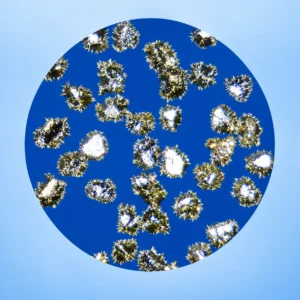
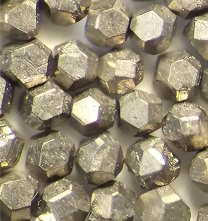
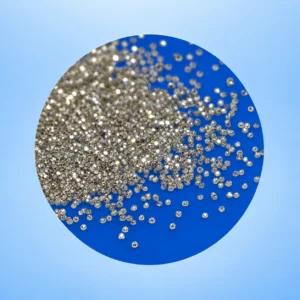
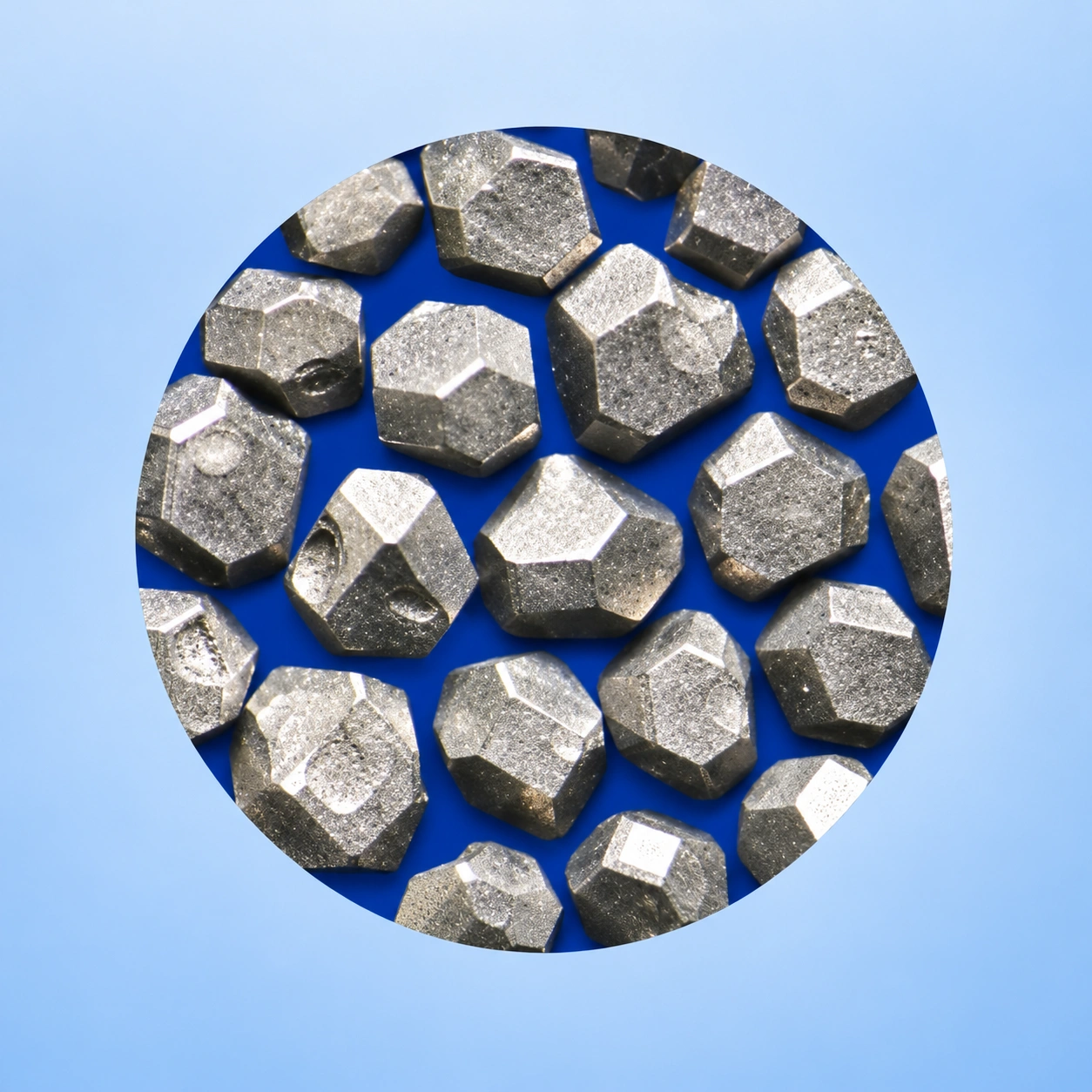
SinoDiam Titanium Carbide-Coated Diamond Grit is a surface-engineered industrial diamond abrasive designed for manufacturers evaluating the interaction between a carbide-based diamond surface layer and selected bonded abrasive-tool matrices.
The product is characterized by a titanium carbide (TiC) surface treatment. Titanium carbide is a hard ceramic compound that can participate in different interface mechanisms from an uncoated diamond surface or a metallic titanium coating. The actual behavior depends on its phase composition, coating integrity and contact with the selected tool bond.
For suitable manufacturing systems, a TiC-based layer may influence diamond–matrix bonding, abrasive retention and the response of diamond crystals to certain processing conditions. The existence and magnitude of these effects must be verified for the specific diamond grade, coating and tool formulation.
Primary application directions include selected metal-bond diamond segments, sintered cutting and grinding tools. Ceramic or vitrified-bond formulations are additional evaluation directions where coating chemistry, firing atmosphere and thermal cycle require separate assessment.
TiC-coated diamond should not be confused with metallic titanium-coated diamond. A Ti coating may form titanium carbide at an interface during certain manufacturing processes, but this does not establish that the two products have the same surface composition, coverage, thickness or application behavior.
The historical SinoDiam product catalogue references 325/400 mesh and coarser diamond grit. Current availability, coating composition, coating thickness and base diamond options should be confirmed before the material is specified for production.
A TiC coating does not automatically prevent oxidation, graphitization, contamination or surface scratching. It also does not make diamond the preferred abrasive for every workpiece. Hardened ferrous steels, for example, often require separate consideration of CBN or PCBN materials.
SinoDiam recommends selecting TiC-coated diamond through the complete tool system: diamond grade, particle size, coating specification, matrix chemistry, processing conditions and target workpiece. Comparative tool trials should be used to confirm suitability and economic value.
Technical Specifications
The historical mesh scope does not guarantee every individual size or base diamond grade. The exact TiC coating composition, thickness, coverage, processing limit and performance data require confirmation. This overview does not establish a universal 850°C temperature rating, a 35% adhesion improvement or a 30% tool-life increase.
TiC Coating Technology & Diamond–Matrix Interface
Titanium carbide is a hard carbide compound that can be incorporated into diamond-surface engineering. Its usefulness depends on how the coating is formed, its final structure and the conditions encountered during tool manufacturing and operation.
Titanium Carbide Surface Chemistry
A TiC-based layer presents a carbide surface rather than the original bare diamond crystal. Its interaction with a tool matrix depends on phase composition, surface oxidation, matrix chemistry and manufacturing conditions.
Coating-to-Diamond Interface
Coating effectiveness depends on attachment to the diamond substrate. Relevant factors can include chemical bonding, interface structure, residual stresses, coating defects and thermal-expansion differences.
Diamond–Matrix Interaction
The carbide surface may influence abrasive retention in selected tool formulations. The actual benefit depends on the surrounding bond materials, processing atmosphere and interfacial reactions rather than TiC hardness alone.
Thermal-Process Behavior
TiC-coated diamond may behave differently from bare diamond under certain heating conditions. However, coating continuity, oxygen exposure, temperature and holding time determine whether a protective effect is achieved.
Coating Integrity & Coverage
Abrasive performance may be affected by local coating thickness, pores, cracks, exposed diamond regions or delamination. Representative microscopy and phase analysis can support supplier qualification.
Particle Retention & Tool Wear
Effective retention requires both a suitable coating-to-diamond interface and a suitable coating-to-matrix interface. Tool performance must also balance diamond exposure, matrix wear, abrasive fracture and cutting conditions.
These mechanisms describe technical evaluation factors for TiC-coated diamond. They are not confirmed performance measurements for every SinoDiam grade. The coating should not be described as perfectly inert, oxidation-proof or universally compatible with all matrices.
Recommended Applications
TiC-coated diamond can be evaluated for industrial abrasive-tool manufacturing when a carbide-based diamond surface is relevant to the tool matrix and thermal processing conditions.
Metal-Bond Diamond Segments
Evaluate TiC-coated grit in suitable metal-bond cutting and grinding segments. The coating must be assessed with the selected metal powders, sintering atmosphere, diamond concentration and intended abrasive exposure.
Sintered Grinding Wheels
For selected diamond grinding wheels requiring evaluation of carbide-surface interactions with the tool matrix. Compare grinding performance and grain retention with equivalent uncoated or differently coated diamond.
Stone Cutting & Processing Tools
Potential application in compatible diamond segments for natural and engineered stone processing. Select the base diamond toughness and bond wear characteristics according to the workpiece and operating conditions.
Concrete & Construction Tools
For technical trials in selected cutting or grinding tools used on concrete and other construction materials. Tool performance depends on aggregate composition, bond hardness, reinforcement, cooling and processing conditions.
Technical Ceramic Grinding
Selected bonded diamond wheels for suitable engineering ceramics may be evaluated where coating chemistry and particle retention are relevant. Surface damage and workpiece quality require separate testing.
Glass Grinding Applications
Suitable glass-processing tools may be evaluated when the abrasive grit size, wheel bond and manufacturing cycle are appropriate. TiC coating alone does not guarantee a scratch-free finish or contamination-free surface.
Ceramic / Vitrified-Bond Tool Trials
Additional evaluation direction for selected vitrified or ceramic matrices. Coating oxidation, chemical reactions, firing atmosphere and abrasive-grain stability must be established under the intended production cycle.
Specialized Abrasive Composites
TiC-coated diamond may be investigated in selected diamond-containing composites where a carbide-based interface is relevant. Qualification requires testing the complete composite formulation and its manufacturing process.
These are application-evaluation directions rather than certified end-use approvals. Do not infer suitability for hardened steel grinding solely from the TiC coating. CBN or PCBN should be considered separately for suitable ferrous-material applications.
Mesh Size Selection & TiC Coating Characterization
The correct TiC-coated diamond specification must define both the base diamond grit and the coating characteristics. A nominal mesh size alone is insufficient to qualify a surface-engineered abrasive.
What Should Be Specified?
01 / Base Diamond Grade: Identify the underlying industrial diamond grade, toughness and particle morphology. A TiC layer does not remove differences between base diamond products.
02 / Nominal Mesh Size: State the required grading convention and mesh fraction. Historical SinoDiam information refers to 325/400 mesh and coarser material; current available fractions require confirmation.
03 / TiC Phase Composition: Verify the nature of the titanium-carbide surface layer. Depending on processing, coatings may contain different phases or surface oxidation products. The model name alone does not establish phase purity.
04 / Coating Thickness: Request relevant size-specific thickness information. Coating thickness and coating weight percentage are different measurements and should not be used interchangeably.
05 / Surface Coverage & Defects: Review representative coating uniformity, exposed substrate regions, cracks, pores and possible coating delamination.
06 / Coating Weight Content: Clarify whether the stated percentage refers to the finished coated-particle mass or the weight increase relative to the uncoated diamond.
07 / Characterization Methods: Relevant techniques may include SEM imaging, EDS elemental analysis, XRD phase identification and cross-sectional coating assessment. The specific tests provided should match the purchasing specification.
08 / Finished Coated-Particle Size: Coating changes particle mass and dimensions. Where size grading is critical, confirm whether the specified size is measured before or after coating.
SinoDiam has not established one universal TiC coating thickness, composition or measurement tolerance in this public product description. Customers should request applicable grade-specific production specifications or inspection records.
Bond Compatibility & Tool Manufacturing Requirements
The suitability of TiC-coated diamond depends on its interaction with the tool matrix and the manufacturing environment. A coating that behaves well in one bond system may perform differently in another.
Metal-Bond Systems — Primary Evaluation
Selected metal-bond formulations are a relevant application direction. Evaluate the matrix alloy, coating chemistry, sintering conditions and abrasive retention together rather than assuming universal bonding improvement.
Hot Pressing & Sintering
Peak temperature, holding time, pressure and processing atmosphere can affect TiC coating behavior and the diamond substrate. The suitable manufacturing window must be confirmed for the actual product and tool formulation.
Ceramic & Vitrified Bonds
Firing chemistry, oxygen exposure and bond composition can change coating behavior. Ceramic-bond compatibility must be assessed independently of metal-bond results.
Brazed Diamond Tools
Any use in brazed tools requires evaluation of filler-metal wetting, surface chemistry, oxide condition and brazing atmosphere. A TiC coating is not automatically interchangeable with an active metallic titanium coating.
Resin-Bond Systems
TiC is not automatically the preferred coating for resin-bond grinding wheels. Nickel-coated grades may offer different surface textures for mechanical anchoring; selection should follow the resin formulation and tool requirements.
Comparative Tool Qualification
Use matched base diamond grades, size fractions and tool formulations when comparing TiC-coated and uncoated abrasives. Measure cutting or grinding rate, grain pull-out, matrix wear, surface finish and cost per workpiece.
Neither TiC hardness nor a nominal coating description establishes a universal 850°C working limit, chemical inertness, scratch prevention or tool-life extension. Validate performance under relevant manufacturing and operating conditions.
TiC vs. Ti & Other Diamond Surface Treatments
Different coatings modify different aspects of the diamond surface. Choose the treatment according to the intended matrix, coating specification and tool-manufacturing process.
01 / Coating Phase & Chemistry
Distinguish a specified TiC surface layer from metallic Ti, nickel coating or etched diamond. Where required, use phase characterization rather than relying on appearance alone.
02 / Interface & Matrix Compatibility
Consider the coating-to-diamond interface and coating-to-matrix interface separately. Wetting, chemical reactions and mechanical retention may vary between metal, ceramic and resin systems.
03 / Manufacturing Atmosphere
Compare the thermal cycle and oxygen exposure. The behavior of titanium-containing coatings can change under different atmospheres, even when the nominal coating material is unchanged.
04 / Finished-Tool Results
Measure abrasive pull-out, cutting or grinding performance, matrix wear and workpiece condition. Performance claims require matched comparative trials using the actual tool formulation.
Five Surface Treatments — Technical Comparison
| Treatment | Surface Approach | Primary Evaluation Focus | ||
|---|---|---|---|---|
| Titanium (Ti) | Metallic titanium-based coating | Metal-bond wetting, reactive interfaces and suitable thermal processes | ||
| Nickel N30 | Nickel-coated diamond, relatively uniform surface in catalogue | Selected resin and multi-bond particle-retention requirements | ||
| Nickel N56 | Textured or spiny nickel coating in catalogue | Mechanical grain anchoring in selected resin-bond tools | ||
| Titanium Carbide (TiC) | Carbide-based surface layer | Selected carbide-interface chemistry and bond compatibility | ||
| Surface-Etched | Modified diamond surface texture without added metal coating | Surface morphology and potential matrix-engagement effects | ||
This comparison describes different material technologies, not a ranking of thermal stability, tool life or surface quality. The chemical phases, coating thickness and manufacturing processes for each grade must be confirmed before direct substitution.
SinoDiam Coated & Surface-Treated Diamond Selection
SinoDiam’s surface-treatment portfolio includes metallic titanium, two nickel-coated grades, titanium carbide and surface-etched diamond. Each option should be evaluated against the actual abrasive-tool manufacturing system.
Current Product
Explore Other Coatings & Treatments
Each treatment is defined by its own manufacturing and material characteristics. Current coating specifications and size availability must be verified individually. Surface-etched diamond is not a metal-coated product.
Frequently Asked Questions
1. What is titanium carbide-coated diamond?
2. What is the main purpose of TiC coating?
3. Is TiC-coated diamond the same as titanium-coated diamond?
4. Is titanium carbide coating chemically inert?
5. Is TiC coating guaranteed to protect diamond from oxidation?
6. Can TiC-coated diamond be used for metal-bond tools?
7. Can TiC-coated diamond be used in ceramic or vitrified bonds?
8. What diamond mesh sizes are available?
9. What is the TiC coating thickness?
10. How can TiC coating composition be verified?
11. Can TiC-coated diamond withstand 850°C?
12. Does TiC coating increase matrix adhesion by 35%?
13. Does TiC-coated diamond provide scratch-free grinding?
14. Is TiC-coated diamond suitable for hardened high-alloy steels?
15. Is TiC coating always better than metallic titanium coating?
16. Is TiC coating suitable for brazed diamond tools?
17. How should TiC-coated and uncoated diamond be compared?
18. What information is needed for a TiC-coated diamond quotation?
SINODIAM INTERNATIONAL · TIC-COATED DIAMOND TECHNICAL SUPPORT
Request TiC-Coated Diamond Specifications & Quotation
Looking for titanium carbide-coated industrial diamond grit for metal-bond grinding wheels, diamond segments or specialized ceramic-bond tool manufacturing?
Share your required diamond mesh size, base grit grade, TiC coating requirements, tool matrix composition, manufacturing conditions, workpiece material, estimated order quantity and delivery destination.
SinoDiam can discuss current TiC-coated diamond specifications and the technical information needed to evaluate coating composition, abrasive retention and compatibility with your manufacturing process.