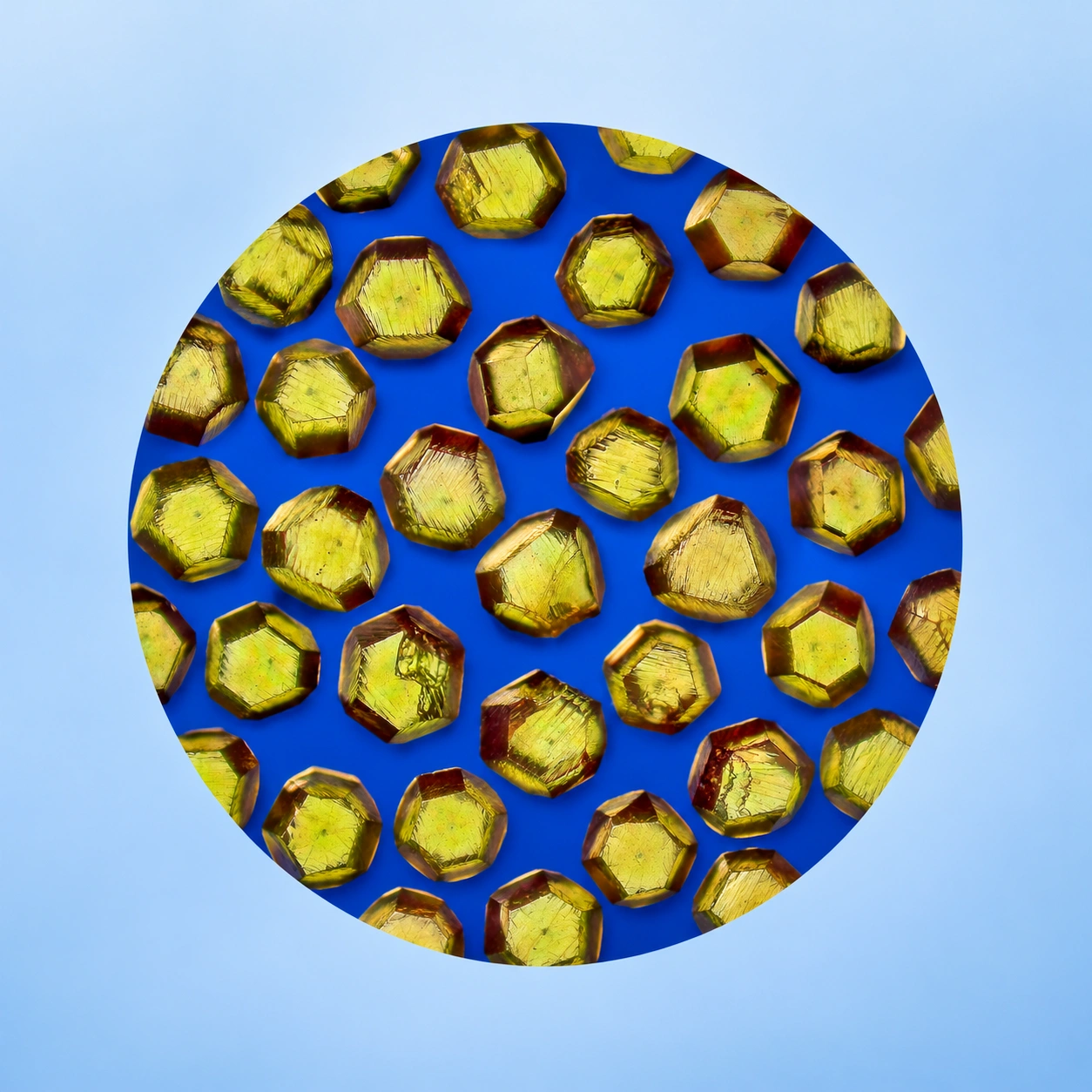
Product Overview
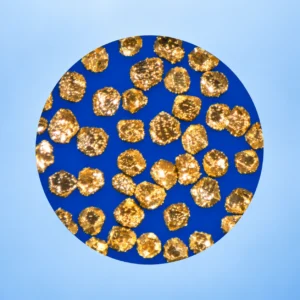
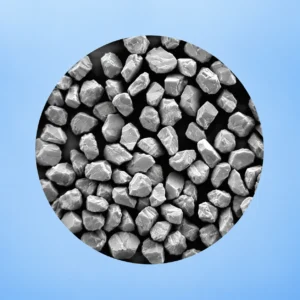
SinoDiam Surface-Etched Diamond Grit is a specialty industrial diamond abrasive with a modified crystal surface, positioned for manufacturers evaluating mechanical grain retention in bonded and electroplated diamond tools.
Unlike titanium-, nickel- or titanium carbide-coated diamond, this product uses a non-metallic surface-treatment approach rather than intentionally depositing a new metal layer on the diamond crystal.
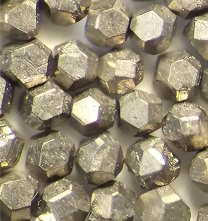
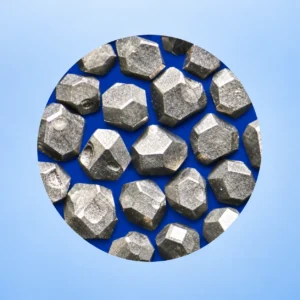
The existing SinoDiam catalogue describes a pit-like, textured diamond surface. Such surface features may create additional contact and mechanical engagement between the abrasive particle and a compatible bond matrix.
Surface texturing can be relevant when manufacturers need to evaluate diamond-grain pull-out, bonding characteristics and abrasive exposure in their finished tools. However, a rougher particle surface does not automatically guarantee stronger retention or longer tool life.
Primary application directions include selected metal-bond diamond segments, electroplated diamond grinding tools and related abrasive-tool manufacturing systems. Resin-bond, ceramic-bond and hybrid formulations may be evaluated separately when the modified surface is appropriate for the matrix and production process.
Effective surface etching requires a balance between the desired texture and the integrity of the original diamond crystal. Excessive etching can introduce unwanted defects or weaken certain particles. Treatment conditions and resulting surface morphology should therefore be characterized rather than assumed.
The historical SinoDiam product catalogue references 325/400 mesh and coarser diamond grit. Current mesh availability, base diamond grades, surface-treatment specifications and relevant technical test data should be confirmed for each application.
For supplier qualification, SinoDiam recommends comparing treated and untreated diamond under equivalent abrasive size, base grit, bond formulation and working conditions.
Please provide the required mesh size, base diamond grade, tool bond, manufacturing process, target workpiece and estimated quantity when requesting technical information or a quotation.
Technical Specifications
The historical catalogue identifies a pit-like surface and a broad mesh-size range. The exact etching route, treatment severity, surface roughness, resulting particle strength and individual mesh availability must be confirmed using current technical records. No fixed improvement in adhesion, grinding current, noise, surface roughness or tool life is guaranteed by this description.
Surface Etching Technology & Diamond Crystal Morphology
Diamond surface etching changes the original crystal surface. The resulting particle behavior depends on the treatment process, crystallographic orientation, initial defects and extent of material removal.
Pit-Like Surface Features
Suitable etching conditions may create microscopic depressions, steps or irregular surface textures. The size and distribution of these features should be verified through representative inspection of the actual treated grit.
Mechanical Matrix Engagement
Surface irregularities may increase mechanical engagement between the diamond particle and a compatible bond. The actual retention effect depends on the bond material, matrix penetration and tool-manufacturing conditions.
Crystal Integrity & Strength
Etching removes or modifies material at the diamond surface. Excessive treatment may introduce stress concentrators, enlarge existing defects or weaken particles. An appropriate treatment must balance texture with crystal integrity.
Selective Surface Modification
Different crystal faces, defects or particle regions can respond differently to an etching process. A textured surface is not necessarily uniform across all particles or crystal facets.
Surface Cleanliness
Cleaning and residual contamination should be considered separately from surface roughening. Etching may require suitable post-treatment cleaning and inspection depending on the actual process chemistry.
Abrasive Exposure & Wear
Finished-tool performance depends on retention, grain exposure, diamond fracture and matrix wear. A treated surface may influence these mechanisms, but a particular cutting or grinding result cannot be predicted from etch texture alone.
Surface cleaning, activation and material-removing etching are not interchangeable processes. The exact SinoDiam treatment method and resulting surface structure should be verified before making process-specific claims.
Recommended Applications
Surface-etched diamond can be evaluated where the external geometry of diamond particles may influence abrasive retention or matrix interaction. The treatment must be selected around the finished tool rather than the surface texture alone.
Electroplated Diamond Grinding Wheels
Evaluate treated diamond grit in compatible electroplated wheel systems. Determine whether the modified particle surface supports the required nickel deposit, crystal exposure and abrasive retention.
Electroplated Diamond Tools
Potential evaluation for selected fixed-abrasive tools requiring controlled diamond anchoring. Bath chemistry, surface cleanliness, plating conditions and particle retention must be checked together.
Metal-Bond Cutting Segments
Evaluate in selected sintered metal-bond diamond segments where surface texture and matrix engagement may be relevant. Base diamond strength and processing conditions remain important.
Stone Cutting & Grinding Tools
For compatible diamond tool formulations used on granite, natural stone and engineered stone. Compare cutting rate, segment wear, crystal pull-out and operating conditions through application trials.
Concrete Grinding Tools
Technical evaluation in selected metal-bond concrete grinding applications. Aggregate abrasiveness, bond hardness, abrasive exposure and tool wear must be considered alongside surface treatment.
Technical Ceramic Grinding
Selected diamond tools for grinding hard and brittle ceramic materials may be evaluated where grit retention and surface quality matter. Final suitability depends on the workpiece and wheel design.
Resin-Bond Abrasive Tools
Additional evaluation direction where diamond surface texture may influence interaction with a suitable resin matrix. The effect should not be assumed equivalent to spiny nickel-coated diamond.
Ceramic / Vitrified-Bond Tools
Selected ceramic-bond formulations may be assessed for mechanical grain retention. Firing conditions, bond chemistry, particle integrity and post-firing abrasive exposure require separate verification.
Applications listed above are technical selection directions, not guaranteed end-use approvals. No automatic reduction in noise, motor current, surface roughness or tool wear should be inferred from the etched surface.
Mesh Size Selection & Surface Characterization
The appropriate etched diamond specification must account for particle size, base crystal properties and the degree of surface modification. Different mesh fractions may respond differently to a given etching treatment.
Key Characterization Requirements
01 / Base Diamond Grade: Select the original diamond according to toughness, shape, crystal quality and the intended tool. Etching does not make different base grades mechanically equivalent.
02 / Mesh Size: Define the nominal particle-size fraction and grading convention. The historical SinoDiam catalogue describes 325/400 mesh and coarser sizes; the current offering must be verified.
03 / Surface Morphology: Review representative microscopy for etch-pit presence, depth, distribution and surface irregularity. A verbal description of “pit-like texture” does not replace real inspection data.
04 / Treatment Severity: Assess whether the etching process produces useful surface texture without introducing excessive material loss or undesirable weakening.
05 / Crystal Strength: Where relevant, compare treated and untreated particles for toughness, friability or other appropriate mechanical characteristics.
06 / Cleanliness & Residues: Confirm whether the intended tool manufacturing process requires checks for residual treatment chemicals, surface contamination or post-treatment cleaning effectiveness.
07 / Grading After Treatment: Clarify whether the particle-size specification is measured before or after surface treatment. Etching may alter particle mass and external dimensions.
08 / Inspection Methods: SEM imaging, suitable optical microscopy, surface-topography assessment and application-specific strength testing may be considered depending on the required specification.
This product overview does not establish a universal etch depth, roughness value, retained sharpness percentage or surface texture tolerance. Such values should only be published when supported by current product-specific test data.
Bond Compatibility & Tool Manufacturing Considerations
Surface-etched diamond may interact differently with electroplated, sintered, resin and ceramic matrices. The treatment must be evaluated in the actual manufacturing process.
Electroplated Bonds
The modified diamond surface may affect the interaction between the abrasive and deposited metal. Assess bath compatibility, particle cleanliness, metal deposition, plating thickness and finished-grain retention. Do not assume that every etching treatment improves electroplating.
Sintered Metal Bonds
Surface texture may contribute to mechanical engagement in suitable metal matrices. The actual effect depends on the alloy formulation, pressing and sintering process, diamond strength and matrix wear behavior.
Phenolic Resin Bonds
Selected phenolic resin formulations can be evaluated for interaction with etched diamond surfaces. Resin chemistry, wetting, curing conditions and coating-free particle geometry influence the result.
Polyimide & Hybrid Bonds
Additional evaluation is possible where surface morphology and abrasive retention are relevant. The matrix chemistry and manufacturing cycle must be checked independently from metal or electroplated tools.
Ceramic / Vitrified Bonds
Firing conditions and ceramic matrix chemistry can affect diamond integrity and the retention mechanism. Compatibility must be validated through representative manufacturing and grinding tests.
Application Qualification
Use matched treated and untreated abrasives in equivalent tools. Compare particle pull-out, grinding or cutting rate, wear, workpiece condition and cost per finished component.
A textured surface does not guarantee a specific adhesion improvement or make surface-etched diamond superior to metal-coated diamond in every system. The preferred choice depends on the complete abrasive-tool formulation.
Surface-Etched vs. Uncoated & Metal-Coated Diamond
Choose a surface treatment based on the role of the interface in the finished tool. Surface etching and coating are different technologies and should be assessed using separate technical specifications.
01 / Etched vs. Untreated Diamond
Use the same base diamond and particle-size fraction where possible. Compare surface morphology, crystal strength and matrix retention to establish the effect of etching.
02 / Etched vs. Nickel-Coated Diamond
Nickel coating adds a metallic layer, while etching changes the original diamond surface. Different resin or electroplating systems may respond differently to these approaches.
03 / Etched vs. Titanium-Coated Diamond
Titanium coating introduces a reactive metallic interface. Surface etching instead modifies particle topography. The two products should not be considered automatically interchangeable in sintered or brazed systems.
04 / Etched vs. TiC-Coated Diamond
TiC coating adds or creates a carbide-based surface layer. Surface etching modifies the diamond crystal surface. The relevant interface chemistry, morphology and processing conditions differ.
Five Surface Treatments — Technical Comparison
| Treatment | Surface Approach | Selection Focus | ||
|---|---|---|---|---|
| Titanium (Ti) | Metallic titanium-based coating | Selected metal-bond interfaces and suitable reactive processing conditions | ||
| Nickel N30 | Nickel surface coating | Selected resin and multi-bond abrasive retention | ||
| Nickel N56 | Catalogue-described textured / spiny nickel coating | Mechanical anchoring in selected resin-bond tools | ||
| Titanium Carbide (TiC) | Carbide-based surface layer | Specialized interface chemistry and matrix compatibility | ||
| Surface-Etched | Modified diamond crystal surface without an intentionally added metallic layer | Surface texture, crystal integrity and mechanical matrix engagement | ||
This comparison is a selection guide rather than a ranking of strength, retention, heat resistance or tool life. Material specifications and suitable applications must be confirmed individually.
SinoDiam Coated & Surface-Treated Diamond Selection
SinoDiam offers metallic and carbide coatings alongside non-metallic diamond surface treatment. Each approach should be selected for a defined tool matrix and processing requirement.
Current Product
Explore Other Coatings & Treatments
Surface etching is distinct from metal or carbide coating. No universal grade interchangeability, coating equivalence or performance improvement is implied.
Frequently Asked Questions
1. What is surface-etched diamond grit?
2. Is surface-etched diamond a metal-coated diamond?
3. What is the purpose of pit-like surface texture?
4. Does every surface-etched diamond have identical pits?
5. Does etching always increase diamond strength?
6. Is surface etching the same as acid cleaning?
7. Can surface-etched diamond be used in electroplated tools?
8. Is etched diamond suitable for sintered metal-bond tools?
9. Can surface-etched diamond be used in resin bonds?
10. Can surface-etched diamond be used in ceramic bonds?
11. What mesh sizes are available?
12. Does surface etching increase matrix adhesion by 40%?
13. Does etched diamond reduce grinding noise by 15 dB?
14. Does surface-etched diamond reduce processing current or energy use?
15. Does etched diamond guarantee a smoother finish or longer tool life?
16. How does etched diamond compare with N56 spiny nickel-coated diamond?
17. What tests are useful when qualifying surface-etched diamond?
18. What information is needed for a quotation?
SINODIAM INTERNATIONAL · SURFACE-TREATED DIAMOND TECHNICAL SUPPORT
Request Surface-Etched Diamond Specifications & Quotation
Looking for surface-etched industrial diamond grit for selected electroplated tools, metal-bond cutting segments, diamond grinding wheels or specialized bonded abrasive manufacturing?
Share your required diamond mesh size, base diamond grade, desired surface-treatment characteristics, bond or plating system, manufacturing conditions, workpiece material, expected quantity and destination country.
SinoDiam can discuss current surface-etched diamond specifications and the technical information needed to evaluate surface morphology, crystal integrity, abrasive retention and compatibility with your manufacturing process.