Product Overview
SND-MPL Synthetic Micron Diamond Powder for Precision Polishing is a specialty industrial diamond abrasive in SinoDiam’s Micron Diamond Powder family. It is positioned for precision lapping, polishing and selected fine-finishing applications where particle-size grading, abrasive morphology, surface condition and workpiece quality are important selection factors.
Unlike general-purpose micron diamond grades selected mainly by broad grinding and polishing requirements, SND-MPL focuses on precision-polishing applications in which isolated scratches, particle agglomeration and inconsistent abrasive contact may affect the finished surface.
Application targets include optical glass, sapphire, selected gemstones, technical ceramics and other suitable hard-and-brittle materials. The correct powder specification depends on the workpiece, required finish, micron-size fraction, polishing method and abrasive formulation.
The historical SinoDiam catalogue has described this product using polycrystalline-like and surface-engineered terminology. These descriptions should be treated as material-characterization references until the actual particle microstructure and manufacturing process are confirmed. The designation SND-MPL does not, by itself, establish that the powder consists of true polycrystalline diamond particles.
For precision finishing, particle-size distribution, oversized-particle content, cleanliness, agglomeration and dispersion can be as important as the nominal micron size. A suitable powder must be evaluated within the complete polishing process.
SND-MPL may be considered for diamond paste, free-abrasive lapping compounds, selected polishing slurries and compatible bonded polishing tools. Each carrier and bond system requires its own evaluation.
SND-MPL is supplied as micron diamond powder, not as a finished diamond polishing compound, polycrystalline diamond compact or ready-to-use polishing pad.
Contact SinoDiam with your target micron fraction, workpiece material, surface-quality requirements, polishing carrier or bond formulation and expected quantity to discuss current product specifications.
Technical Specifications
SND-MPL is positioned as a specialty precision-polishing micron diamond powder. Current micron fractions, PSD limits, surface treatments, actual particle microstructure, impurity data and polishing performance must be confirmed by grade-specific technical records. No fixed surface roughness, scratch-free result, process yield or tool-life advantage is guaranteed.
Particle Characteristics & Precision Polishing Behavior
Precision-polishing abrasives should be evaluated by their complete particle characteristics, rather than by nominal size or marketing descriptions alone.
Particle Morphology & Contact Geometry
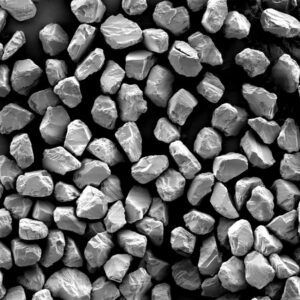
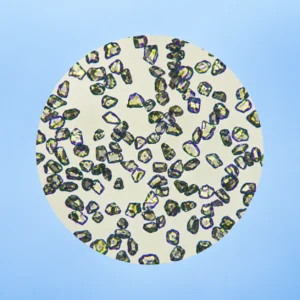
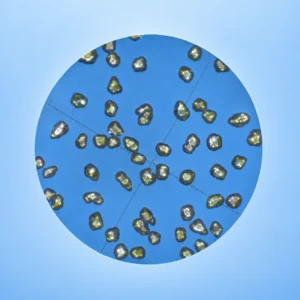
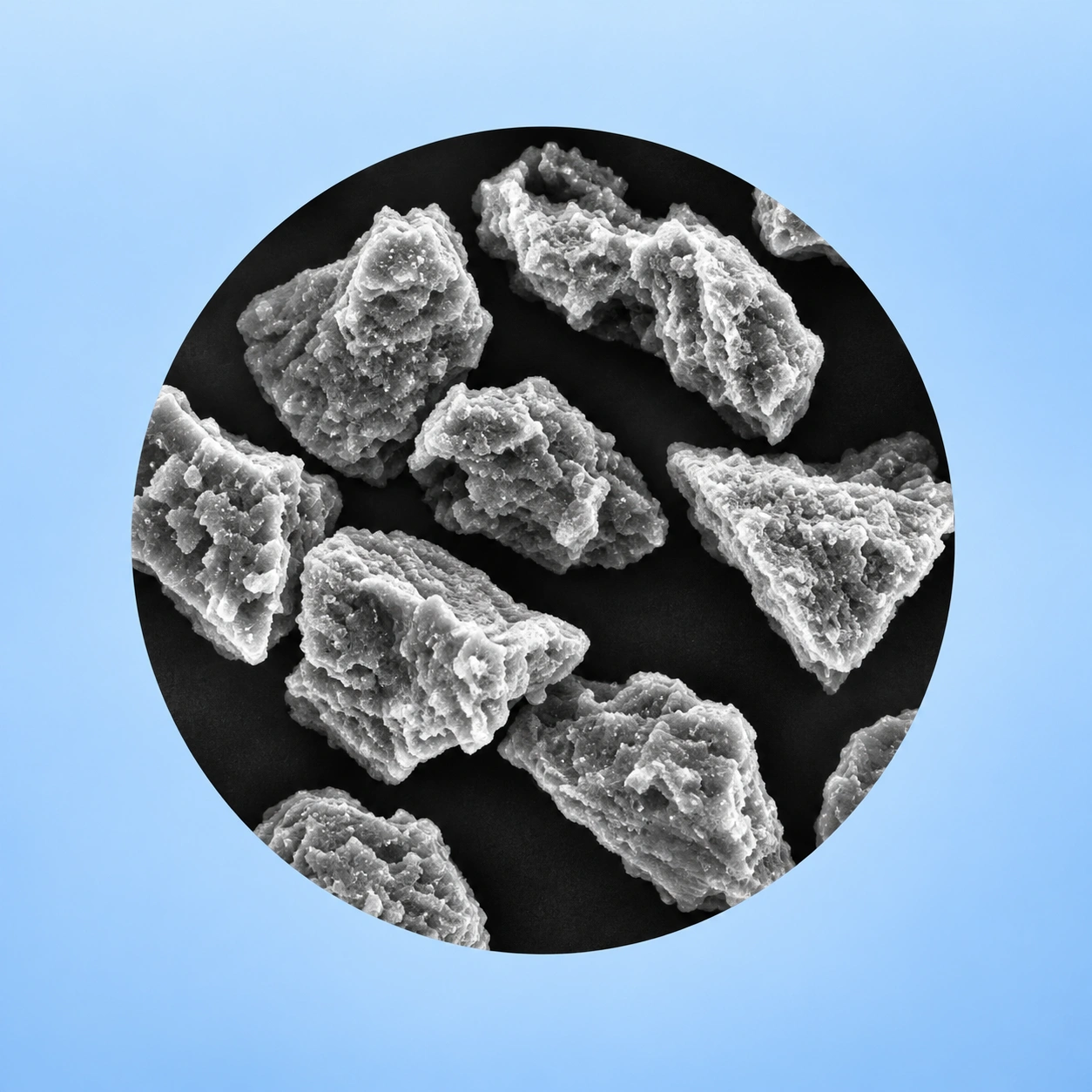
Diamond particle shape affects how abrasive grains engage a workpiece during lapping and polishing. Representative microscopy can help characterize crystal outlines, fractured surfaces and any specialized surface texture.
Particle Size Distribution
The distribution of particle sizes can influence abrasive contact, material removal and surface uniformity. The required grading should be matched to the workpiece and the intended polishing stage.
Oversized-Particle Control
For scratch-sensitive surfaces, isolated oversized abrasive particles can be important even when the main PSD appears acceptable. Suitable oversize inspection criteria should be defined for the specific application.
Particle Agglomeration
Fine diamond particles may form clusters during powder handling, mixing or storage. Agglomeration can affect effective abrasive size and contact behavior, making dispersion tests relevant to precision polishing.
Surface Cleanliness & Wetting
Residual surface contaminants and the surface chemistry of diamond particles can influence wetting and dispersion. The appropriate cleanliness and carrier requirements depend on the polishing formulation.
Surface Integrity & Process Validation
Workpiece finish depends on the powder, polishing medium, applied load, workpiece properties and process conditions. Surface roughness, visible scratches and subsurface damage should be assessed using suitable inspection methods.
The possible presence of engineered particle surfaces does not establish a particular chemical treatment, micro-edge count or polycrystalline structure. Those claims require actual SND-MPL production and characterization records.
Recommended Precision Polishing Applications
SND-MPL is positioned for specialized lapping and polishing evaluations where abrasive grading and the finished surface are critical. Each application requires the appropriate particle-size specification and process validation.
Optical Glass Lapping & Polishing
For evaluating diamond abrasives in selected optical glass preparation and finishing operations. Abrasive size, potential oversized grains and workpiece damage should be assessed against the required optical-surface specification.
Sapphire Surface Finishing
For application trials involving sapphire windows, substrates or other sapphire components. Polishing methods, crystal orientation, material removal and surface-integrity requirements should be reviewed individually.
Gemstone Precision Polishing
For evaluating selected gemstone lapping and finishing operations. The correct powder and carrier depend on the gemstone, polishing lap, abrasive concentration and required surface appearance.
Technical Ceramic Finishing
For specialized grinding, lapping or polishing of suitable engineering ceramics. Particle grading and process conditions should be selected to balance removal rate, surface quality and workpiece integrity.
Diamond Paste & Lapping Compounds
For developing precision diamond pastes and compounds where particle-size distribution, abrasive concentration, carrier rheology and dispersion are important to the finished formulation.
Selected Wafer-Substrate Lapping
For preliminary evaluation in compatible wafer-substrate preparation processes. Silicon, silicon carbide and other substrate materials have different processing requirements. Semiconductor-grade suitability and final surface quality must be qualified separately.
These are candidate applications, not verified scratch-free, semiconductor-grade or optical-grade performance claims. Highly sensitive finishing processes may require a specialized polishing system or a different abrasive grade.
Micron Size Selection & Oversize Particle Control
For precision polishing, the nominal particle-size designation is only one part of the abrasive specification. The shape of the distribution, rare oversized particles and possible agglomeration should also be considered.
What Should Be Checked in a PSD Report?
Nominal Micron Fraction: Confirm the selected size designation and the corresponding grading standard. Similar nominal sizes from different suppliers may have different actual distribution limits.
D10, D50 and D90: These values help describe particle-size distribution when measured under a defined convention. The measurement method, distribution basis and sample preparation must be comparable.
Distribution Width: Review the spread of particle sizes relative to the required finishing operation. A narrower distribution may be helpful in certain applications, but no single PSD profile is optimal for every process.
Oversized-Particle Detection: Ordinary PSD statistics may not adequately reveal extremely rare oversized particles. Scratch-sensitive applications may require a supplementary inspection method with an agreed detection limit.
Agglomerate Assessment: Determine whether apparent large particles are individual abrasive grains or clusters formed during handling and dispersion. Different formulations can produce different agglomeration behavior.
Measurement Method: Particle sizing and sample preparation should be appropriate for the micron fraction being evaluated. Results from different instruments or protocols are not automatically interchangeable.
The actual SND-MPL micron-size offering, measured PSD, oversize limits and detection procedures require confirmation. No particular particle-size tolerance or scratch-free result is claimed without grade-specific testing.
Polishing Slurry, Paste & Bond Compatibility
The same diamond powder can behave differently in various liquid carriers or bonded polishing systems. The complete formulation determines how abrasive particles contact the workpiece.
Water-Based Polishing Slurries
Evaluate wetting, particle separation, sedimentation and compatibility with the selected water-based formulation. Powder surface properties alone do not guarantee stable aqueous dispersion.
Oil-Based Diamond Compounds
Oil-based carriers may require different surface and dispersion characteristics. Mixing, abrasive loading, sedimentation and application behavior should be verified with the finished compound.
Precision Diamond Pastes
For paste formulation trials where abrasive particle size, carrier viscosity, particle dispersion and contamination control influence the polishing operation and finished surface.
Resin-Bond Polishing Tools
SND-MPL may be assessed in selected resin-bond polishing pads and abrasive tools. Bond chemistry, diamond concentration, particle retention and grain exposure must be evaluated for the specific manufacturing process.
Vitrified & Metal-Bond Systems
Other bonded-tool systems may have different processing temperatures, chemical environments and retention requirements. Compatibility should be considered only after appropriate technical validation.
Polishing Process Qualification
Compare material-removal rate, workpiece surface roughness, visible scratches, possible subsurface damage, abrasive consumption and process consistency under matched conditions.
SND-MPL is supplied as diamond powder. Polishing slurry stability, paste properties and bonded-pad performance depend on the complete manufactured product and should not be inferred solely from the powder grade.
How to Compare SND-MPL with Other Precision Polishing Diamonds
Customers comparing specialty micron diamond powders should review relevant technical specifications and finished-process results. A claim of polycrystalline-like morphology or surface engineering is not a substitute for measured particle characterization.
01 / Particle Structure
Determine whether the product contains monocrystalline, polycrystalline, surface-modified or agglomerated diamond particles. Use representative microscopy and material documentation when the distinction matters to the application.
02 / Particle Size & Oversize
Compare equivalent micron fractions, the same grading basis, measured PSD and agreed oversize-control methods. Precision finishing may be sensitive to rare large particles.
03 / Cleanliness & Dispersion
Evaluate surface contaminants, particle wetting, agglomeration and slurry stability using the intended carrier and comparable test methods. Relevant values should be supported by actual analysis.
04 / Workpiece Surface Quality
Measure the finished surface using appropriate techniques and compare removal rate, scratches, roughness and surface integrity under equivalent polishing conditions.
How Does SND-MPL Differ from SND-M15 and SND-MAG?
SND-M15 — Premium General-Purpose
SND-M15 is positioned for a broad range of demanding micron diamond lapping and polishing applications, including evaluation of particle grading and surface characteristics.
SND-MPL — Specialty Precision Polishing
SND-MPL focuses specifically on polishing applications where particle-size tails, possible surface modification, cleanliness, dispersion and scratch-sensitive workpieces require detailed assessment.
SND-MAG — Agglomerated Micron Diamond
SND-MAG is organized around agglomerated abrasive structures. Its effective particle behavior depends on agglomerate formation, strength, breakdown and dispersion in the polishing process.
Selection Is Application-Dependent
These grades should be compared at relevant particle sizes using the actual polishing formulation and workpiece. None is automatically a direct replacement for another or guaranteed to give a better finish.
No direct technical equivalence to Hyperion, Engis or other branded polishing diamonds is implied. Supplier comparisons should use comparable measurements and workpiece test results.
SinoDiam Micron Diamond Product Selection
Select SinoDiam micron diamond powder by its intended application. General-purpose grades provide Economy, Standard and Premium options, while specialty products address PCD/PDC feedstock, diamond wire, precision polishing and agglomerated abrasive requirements.
General-Purpose Micron Diamond Grades
Specialty Micron Diamond Products
Specialty micron products are classified by manufacturing process, not by a simple overall quality ranking. Confirm individual particle specifications and application suitability.
The general-purpose and specialty products use different selection criteria. SND-MPL’s precision-polishing positioning does not establish that it is true polycrystalline diamond or guarantee a particular scratch rate. Verify the current grade-specific material specifications.
Frequently Asked Questions
1. What is SND-MPL micron diamond powder?
2. What is the difference between SND-MPL and SND-PL?
3. Is SND-MPL true polycrystalline diamond?
4. Does SND-MPL have chemically passivated or etched particle surfaces?
5. Which materials can SND-MPL be used to polish?
6. Is SND-MPL suitable for optical glass polishing?
7. Can SND-MPL be used for sapphire polishing?
8. Does SND-MPL guarantee scratch-free polishing?
9. What micron sizes are available for SND-MPL?
10. Why is oversize-particle control important in precision polishing?
11. Can SND-MPL be used in water-based or oil-based polishing slurries?
12. How does SND-MPL differ from SND-M15?
13. How does SND-MPL differ from SND-MAG?
14. Is SND-MPL qualified for semiconductor wafer polishing?
15. What information should I provide when requesting an SND-MPL quotation?
SINODIAM INTERNATIONAL · PRECISION POLISHING DIAMOND SUPPORT
Request SND-MPL Specifications & Quotation
Looking for specialty micron diamond powder for optical glass, sapphire, gemstone, technical ceramic or other precision lapping and polishing applications?
Share your required micron fraction, particle-size distribution and oversize requirements, workpiece material, polishing formulation, target surface quality, trial quantity and delivery destination.
SinoDiam can discuss available SND-MPL product specifications, particle-characterization requirements and the appropriate evaluation approach for your polishing process.