Product Overview
SND-MAG Agglomerated Micron Diamond Powder for Precision Lapping & Polishing is a specialty industrial diamond abrasive in SinoDiam’s Micron Diamond Powder product family. It is positioned for manufacturers evaluating agglomerated diamond structures in controlled grinding, lapping and polishing applications.
Unlike conventional micron diamond powders consisting primarily of individual abrasive particles, agglomerated diamond powder contains larger secondary particles formed from multiple finer diamond grains. These structures introduce additional selection factors related to particle aggregation, morphology, structural integrity and abrasive breakdown.
The key technical distinction is between the primary diamond particles and the secondary agglomerates. Primary particles determine the characteristics of the individual diamond grains, while the size, shape and integrity of the agglomerates influence how the abrasive structure interacts with a workpiece or polishing medium.
SND-MAG is positioned for evaluation in precision lapping, fine grinding and polishing of selected hard-and-brittle materials. Candidate applications include sapphire, silicon carbide, optical glass, engineering ceramics and compatible substrate-processing operations.
Depending on the actual aggregate structure and polishing conditions, gradual abrasive wear or agglomerate breakdown may expose additional diamond cutting points. This is a potential mechanism for agglomerated abrasives, not a guaranteed self-renewal rate or established performance value for every SND-MAG size fraction.
SND-MAG may be assessed in polishing slurries, diamond compounds and selected bonded abrasive tools. Actual compatibility depends on agglomerate size, aggregate stability, liquid-carrier chemistry, bond retention and the complete process.
Agglomerated diamond is not automatically equivalent to true polycrystalline diamond. A collection of particles joined in an agglomerate is structurally different from a continuously bonded polycrystalline diamond grain unless the actual manufacturing and material-characterization data establish otherwise.
For grade selection, customers should specify both the required primary particle size and agglomerate size wherever applicable, together with the workpiece, polishing method, carrier or bonding system and target surface requirements.
Technical Specifications
The information above identifies the intended technical selection criteria for SND-MAG. Actual primary particle sizes, aggregate sizes, PSD, morphology, manufacturing process, binder content, strength, cleanliness and chemical specifications require current grade-specific confirmation. Historical values are not treated as verified supply or performance guarantees.
Agglomerate Structure & Abrasive Behavior
Understanding how an agglomerated diamond abrasive behaves requires examining both its constituent diamond grains and its secondary aggregate structure.
Multi-Particle Agglomerate Structure
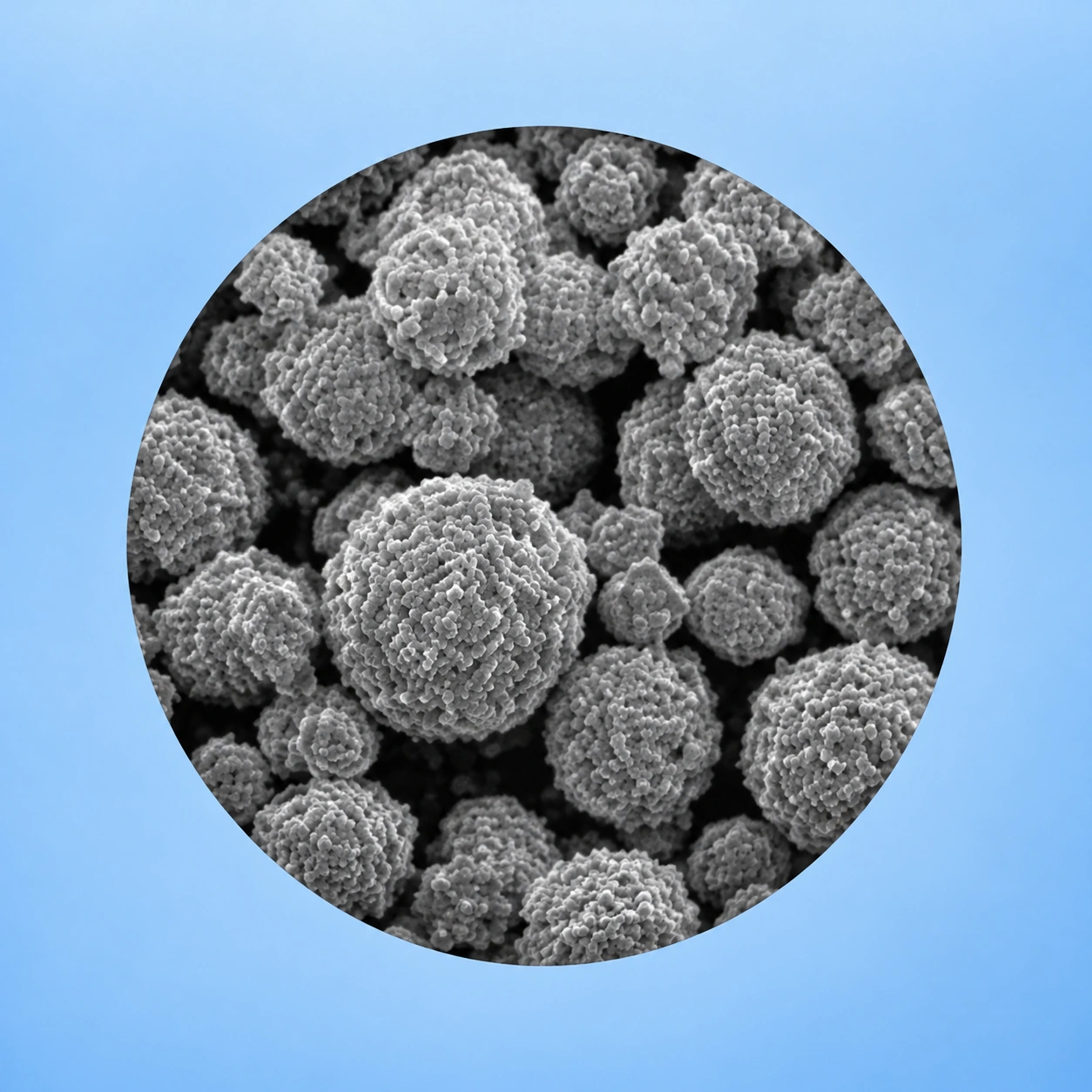
An agglomerate is composed of smaller abrasive particles assembled into a larger secondary structure. The number, arrangement and bonding of its constituent grains can influence contact geometry and wear behavior.
Primary Diamond Grain Characteristics
The original diamond grains contribute their own particle size, morphology and material properties. These characteristics should be evaluated separately from the final agglomerate diameter.
Aggregate Shape & Surface Texture
Rounded or near-spherical agglomerates may provide a different contact pattern from sharp individual diamond particles. Actual shape uniformity and surface texture should be confirmed through representative microscopy.
Agglomerate Integrity
The ability of an aggregate to maintain its structure under handling and polishing loads can influence effective abrasive size and contact behavior. Required integrity depends on the process.
Controlled Breakdown & Edge Renewal
Under suitable conditions, aggregate wear or partial breakdown may reveal additional diamond particles and abrasive contact points. Excessively rapid disintegration or excessive resistance to breakdown may both be undesirable.
Workpiece Surface Interaction
Surface finish and material removal depend on the agglomerate structure, polishing pressure, relative motion, carrier or pad system and workpiece properties. No specific scratch reduction or removal-rate improvement is guaranteed by the product designation alone.
The structural characteristics above describe relevant agglomerated-abrasive mechanisms. The actual SND-MAG microstructure, aggregate strength and progressive breakdown behavior should be established through representative product characterization and application testing.
Primary Particle Size, Agglomerate Size & PSD
When selecting SND-MAG, customers should distinguish the individual diamond particle-size specification from the size distribution of the assembled agglomerates. These dimensions serve different functions and should not be treated as interchangeable.
What Should Be Evaluated in the Particle Size Specification?
Primary Particle Size: Request the individual diamond grain-size range or distribution when available. This helps describe the abrasive particles that make up the agglomerate.
Secondary Agglomerate Size: Specify the desired aggregate size and distribution. A larger secondary particle does not necessarily consist of correspondingly large individual diamond crystals.
D10, D50 and D90: Where available, these values may describe the primary particle distribution, the agglomerate distribution or both. The report must clearly identify which particle population was measured.
Size Distribution Width: Evaluate whether the aggregate-size distribution is suitable for the polishing system. An excessively broad distribution may create inconsistent abrasive contact in some applications.
Aggregate Oversize Content: Oversized agglomerates may be relevant to scratch-sensitive workpieces. The required limits and detection method should be selected according to the actual surface-quality requirements.
Measurement Stability: Dispersion and sample preparation can break apart weak aggregates. The measurement protocol should therefore distinguish intact agglomerates from dispersed primary particles wherever that distinction matters.
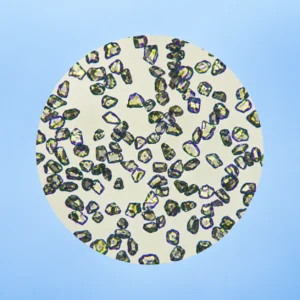
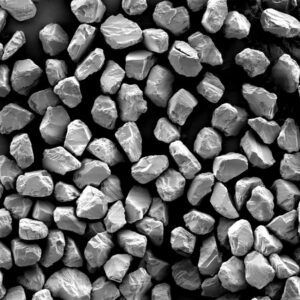
Particle Morphology: Representative optical microscopy or SEM images can help characterize agglomerate shape, size and texture beyond a nominal particle-size designation.
SinoDiam’s historical SND-MAG catalogue lists several micron-size examples, but their relationship to primary-particle and secondary-agglomerate dimensions has not been independently confirmed for this revision. No size is presented here as guaranteed current availability. Request the applicable product specification for each inquiry.
Recommended Lapping & Polishing Applications
SND-MAG is positioned for evaluating agglomerated diamond abrasives in controlled surface-processing systems. The following are candidate applications requiring suitable particle specifications, carrier or bond formulations and process trials.
Sapphire Substrate Lapping
For evaluating agglomerated diamond in selected sapphire lapping and polishing stages. Particle-size selection, aggregate stability, polishing pressure and crystal orientation should be considered in the process design.
Silicon Carbide Surface Processing
A candidate for selected SiC wafer thinning, lapping or substrate-preparation operations. Abrasive structure, removal rate, surface damage and contamination controls require application-specific qualification.
Advanced Technical Ceramics
For precision grinding and polishing evaluations involving selected engineering ceramics. Workpiece brittleness, grain size, polishing medium and target surface integrity should guide abrasive selection.
Optical & Functional Glass
For investigating suitable agglomerated diamond abrasives in glass lapping and polishing. The process should be assessed for material removal, visible scratches, surface roughness and any relevant subsurface damage.
Precision Polishing Slurries
For developing polishing slurries using selected aggregate sizes and carrier systems. Effective dispersion, sedimentation, aggregate integrity and contact behavior should be tested in the actual formulation.
Specialized Polishing Pads & Tools
For evaluation in suitable bonded polishing pads and related tools. Aggregate retention, breakdown behavior, bonding chemistry, manufacturing conditions and the target workpiece should be considered together.
Sapphire, SiC, ceramic, glass and substrate-processing uses are application-evaluation directions, not semiconductor-production qualifications. No fixed wafer size, surface roughness, scratch rate, removal rate or manufacturing yield is guaranteed.
Slurry Dispersion, Aggregate Stability & Bond Compatibility
Agglomerated diamond behaves differently from fully dispersed individual micron particles. The abrasive must be evaluated within the complete slurry, paste or bonded-tool system.
Water-Based Polishing Slurries
Aqueous formulations require evaluation of agglomerate wetting, suspension behavior, settling, particle separation and compatibility with the selected additives. Aggregate size and density may influence sedimentation.
Oil-Based Diamond Compounds
Oil-based formulations may produce different wetting and aggregate-stability behavior. Carrier chemistry, viscosity, mixing conditions and abrasive concentration should be evaluated for the intended application.
Aggregate Stability During Mixing
Some agglomerated structures may be damaged by high-shear mixing or inappropriate dispersion methods. The selected preparation process should maintain the aggregate characteristics needed for polishing.
Polishing-Pad Interaction
Agglomerate contact, retention and breakdown may depend on pad material, surface texture, polishing pressure and motion. These variables should be included when comparing abrasive formulations.
Resin-Bond Abrasive Evaluation
SND-MAG may be evaluated in selected resin-bond polishing tools. Bond chemistry, aggregate integrity, abrasive concentration, grain exposure and manufacturing conditions require separate validation.
Vitrified & Other Bond Systems
Vitrified and other bonded abrasive systems may involve processing temperatures and chemical conditions that affect aggregate integrity or any bonding aid. Compatibility must be validated before production adoption.
SND-MAG should not be described as universally stable in water-based or oil-based liquids. Nor should superior grain retention or universal vitrified-bond compatibility be assumed without product-specific technical trials.
How to Compare SND-MAG with Other Agglomerated Diamond Powders
Manufacturers comparing agglomerated diamond abrasives should use both primary-particle and secondary-aggregate data. Testing should focus on the intended lapping or polishing process rather than the aggregate designation alone.
01 / Primary Diamond Particles
Compare the constituent diamond particle size, morphology, source-material characteristics and available purity data. Similar agglomerate sizes can contain different primary diamond powders.
02 / Agglomerate Size & Structure
Evaluate secondary particle-size distribution, aggregate shape, microstructure, surface texture and any bonding or agglomeration aids used in production.
03 / Aggregate Integrity & Breakdown
Compare handling stability, mechanical response and abrasive breakdown under representative polishing loads. The desired behavior depends on the carrier or tool system and the target workpiece.
04 / Dispersion & Sedimentation
Evaluate the actual slurry or paste formulation for aggregate distribution, settling, mixing stability and behavior over the intended processing period.
05 / Surface Cleanliness & Impurities
Where contamination is important, compare relevant elemental impurities, residue levels and handling requirements using compatible analytical methods and process-specific acceptance criteria.
06 / Finished-Process Performance
Compare material-removal rate, visible scratches, surface roughness, aggregate wear, tool or slurry consumption and cost per finished component under matched conditions.
How Does SND-MAG Differ from SND-M15 and SND-MPL?
SND-M15 — Premium General-Purpose
SND-M15 is a premium-positioned general-purpose micron diamond grade for precision grinding, lapping and polishing. Selection focuses on particle grading, surface characteristics and the required workpiece finish.
SND-MPL — Specialty Precision Polishing
SND-MPL is positioned for selected scratch-sensitive polishing applications where particle-size tails, abrasive morphology, surface condition and dispersion requirements are important.
SND-MAG — Agglomerated Abrasive
SND-MAG is distinguished by its secondary agglomerated particle structure. Primary particle size, aggregate size, integrity and breakdown behavior are central to its technical selection.
Selection by the Actual Process
No grade is automatically superior across all applications. Use comparable particle specifications and evaluate the finished workpiece under the intended polishing or lapping conditions.
This comparison framework does not establish technical equivalence with Grish spherical diamond powder, Huifeng HFD-CA or any other supplier’s agglomerated grade. Supplier-specific particle dimensions and published performance values must not be attributed to SND-MAG.
SinoDiam Micron Diamond Product Selection
Explore SinoDiam micron diamond powders according to general-purpose grade positioning or specialized manufacturing application. Agglomerated powders, precision polishing diamonds, diamond-wire abrasives and PCD/PDC feedstocks should be evaluated using different technical criteria.
General-Purpose Micron Diamond Grades
Specialty Micron Diamond Products
Specialty products are grouped by their main technical applications. They are not simply different levels of the same abrasive-quality scale.
SND-MAG is an agglomerated diamond powder, not a finished polishing slurry or an automatically equivalent true polycrystalline diamond product. Actual dimensions, structure and application suitability require grade-specific technical confirmation.
Frequently Asked Questions
1. What is SND-MAG Agglomerated Micron Diamond Powder?
2. What is the difference between primary particles and agglomerates?
3. Is agglomerated diamond the same as polycrystalline diamond?
4. Is SND-MAG spherical diamond powder?
5. How do agglomerated diamond particles work during polishing?
6. What particle sizes are available for SND-MAG?
7. Why are both primary and aggregate particle-size distributions important?
8. Does SND-MAG guarantee scratch-free polishing?
9. Can SND-MAG be used for sapphire polishing?
10. Is SND-MAG suitable for silicon carbide wafer lapping?
11. Can SND-MAG be used in water-based or oil-based slurries?
12. Can aggressive mixing damage the agglomerates?
13. Can SND-MAG be used in resin or vitrified-bond tools?
14. How is SND-MAG different from SND-M15 and SND-MPL?
15. What is the best way to compare SND-MAG with another supplier?
16. What information is required for an SND-MAG quotation?
SINODIAM INTERNATIONAL · AGGLOMERATED DIAMOND TECHNICAL SUPPORT
Request SND-MAG Specifications & Quotation
Looking for agglomerated micron diamond powder for sapphire processing, silicon carbide lapping, precision ceramics, optical glass or specialized polishing compounds?
Tell us your target workpiece, desired primary diamond grain size, secondary agglomerate size, PSD requirements, slurry or bond formulation, polishing conditions and expected quantity.
SinoDiam can discuss current SND-MAG material specifications, available characterization data and the appropriate technical evaluation approach for your application.