Product Overview
SND-M15 Premium Micron Diamond Powder is SinoDiam’s premium-positioned industrial diamond abrasive for precision lapping, polishing and fine-grinding applications. The grade is intended for manufacturers evaluating diamond abrasives where particle-size distribution, grain characteristics, surface quality and process consistency are important.
Within SinoDiam’s general-purpose micron diamond family, SND-M15 occupies the Premium Grade position above SND-M10 Standard and SND-M05 Economy. The grade hierarchy provides an initial selection framework, but individual crystal properties and application performance must be confirmed through technical specifications and comparable tests.
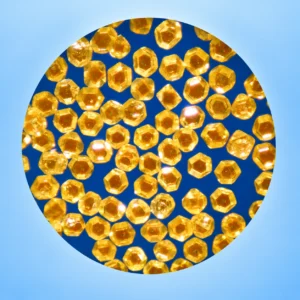
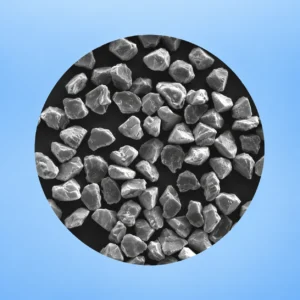
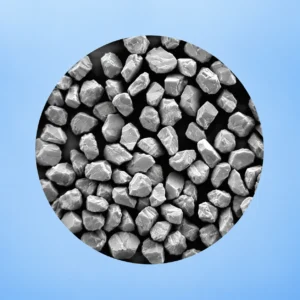
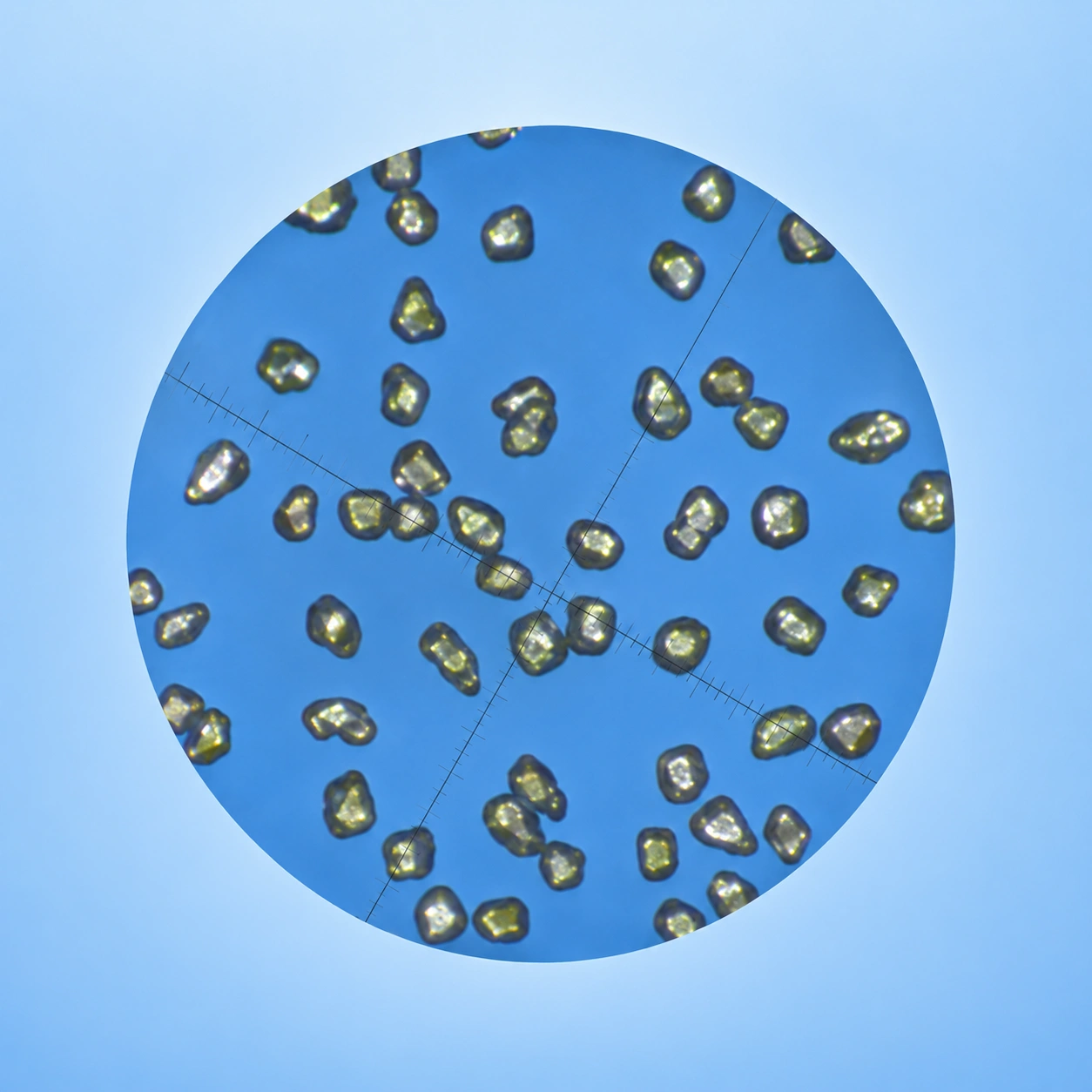
Existing SinoDiam product information describes SND-M15 as having relatively blocky particle morphology and hydrophilic surface characteristics. These features are relevant to grain contact behavior, abrasive interaction with the workpiece and formulation evaluation in water-based polishing systems. The actual particle morphology and wettability should be verified using representative grade-specific data.
SND-M15 is positioned for evaluation in optical glass finishing, technical ceramic lapping, selected gemstone polishing and precision abrasive-tool manufacturing. It may also be considered for suitable diamond compounds, polishing slurries and specialized PCD finishing operations where the powder specifications match the process.
For precision applications, customers should compare more than nominal micron size. Particle-size distribution, the presence of oversized particles, surface cleanliness, agglomeration and dispersion behavior can all influence finished-surface quality.
A premium-positioned micron diamond grade is not automatically the correct selection for every process. Coarser or more irregular abrasive particles may be preferred for certain material-removal operations, while a different specialty grade may be needed for highly sensitive surface-finishing applications.
Contact SinoDiam with the target micron fraction, grading method, workpiece, polishing carrier or bond system, surface-quality requirements and production conditions for grade-specific technical guidance.
Technical Specifications
The grade position, relatively blocky morphology and hydrophilic character reflect the existing SinoDiam catalogue description. Actual particle shape, surface wettability, individual micron fractions, PSD, oversize limits, feedstock origin and chemical impurity values require current grade-specific verification. No numerical purity, dispersion, surface-roughness or tool-life guarantee is implied.
Particle Characteristics & Precision Abrasive Behavior
Relatively Blocky Particle Morphology
The existing product description identifies a blocky-oriented particle shape. Grain morphology can influence workpiece contact, cutting behavior and abrasive retention. The actual distribution of particle shapes should be checked through representative microscopy or image analysis.
Particle-Size Consistency
For precision lapping and polishing, particle-size distribution affects abrasive contact and surface uniformity. Customers should evaluate the nominal size together with measured PSD characteristics and the relevant grading standard.
Oversize Particle Control
Small concentrations of oversized particles can be important where isolated scratches or surface damage are unacceptable. The required oversize limits and detection method should be defined according to the finished-workpiece specification.
Hydrophilic Surface Evaluation
SND-M15 is described as having hydrophilic surface characteristics. Its wetting, mixing and dispersion behavior should be evaluated in the intended water-based carrier, taking account of dispersants, pH, ionic conditions and abrasive concentration.
Surface Cleanliness & Agglomeration
Surface contamination and particle agglomeration may affect paste preparation, slurry behavior and polishing consistency. Appropriate testing should consider the carrier system, storage conditions and the required surface integrity.
Premium-Grade Application Position
SND-M15 is intended for applications where detailed abrasive selection and repeatable processing are important. Premium positioning does not by itself establish a numerical advantage in purity, particle uniformity or grinding efficiency.
Recommended Applications
SND-M15 is positioned for precision lapping, polishing and fine grinding of selected hard-and-brittle workpieces. Each application requires the appropriate micron fraction, abrasive formulation and validation of the finished process.
Optical Glass Lapping & Finishing
For evaluating precision abrasive systems used in selected optical glass grinding and lapping operations. Particle-size grading, possible oversized grains, workpiece damage and the required surface finish should guide material selection.
Technical Ceramic Precision Grinding
A candidate for precision finishing of selected engineering ceramics where abrasive contact, material removal and surface integrity must be balanced. The ceramic composition and grinding conditions remain important selection factors.
Gemstone Lapping & Polishing
For selected gemstone processing and precision polishing applications. Abrasive size, polishing sequence, lap material and gemstone characteristics affect the achievable finish and material-removal behavior.
Diamond Paste & Polishing Compounds
For evaluating premium-positioned micron diamond in precision lapping compounds and polishing pastes. Carrier viscosity, abrasive loading, particle separation and possible agglomeration must be checked in the finished formulation.
Water-Based Polishing Slurries
The catalogue-described hydrophilic surface character makes aqueous formulation assessment relevant. Actual wettability, dispersion stability, settling behavior and compatibility with dispersing additives should be tested for each slurry system.
Specialized PCD Tool Finishing
For application trials in selected PCD cutting-tool finishing or lapping processes. The grade should not automatically be treated as PCD sintering feedstock; specialized feedstock requirements should be evaluated using SinoDiam SND-M/PCD.
These applications are evaluation directions rather than certified performance capabilities. No fixed Ra value, scratch-free finish, dimensional tolerance or material-removal improvement is guaranteed. Highly sensitive semiconductor, sapphire and optical processes may require additional specialty-grade assessment.
Micron Size Selection & Particle Size Distribution
Precision polishing requires more than choosing a nominal micron-size range. The complete particle population, grading method, potential oversize contamination and workpiece sensitivity should be considered when selecting SND-M15.
What Should Be Compared in a PSD Report?
Nominal Micron Fraction: Specify the requested particle-size designation and the grading standard used to define it. Similar product labels from different suppliers do not always represent identical particle populations.
D10, D50 and D90: Where measured data are available, these values help describe the distribution. Their interpretation depends on the measurement method and whether the reported distribution is based on volume, number or another convention.
Oversize Particle Limits: For applications sensitive to isolated scratches, review the acceptable oversized-particle concentration, detection threshold and inspection method. A routine PSD measurement may not reveal extremely rare oversized particles.
Distribution Width: Compare the spread of the particle-size distribution using the same measurement basis. A narrower PSD may support more uniform abrasive contact in some applications, but the required distribution depends on the process.
Dispersion During Measurement: Sample preparation and agglomeration can affect measured particle sizes. The measurement protocol should be considered when comparing powder suppliers.
Representative Particle Morphology: Micrographs or image-analysis results can help customers understand shape differences that are not fully represented by particle-size values alone.
The available SND-M15 size list, measured PSD and oversize limits must be confirmed through current technical documentation. Historical whole-series size ranges should not be presented as guaranteed availability for every SND-M15 fraction.
Surface Characteristics, Dispersion & Polishing Formulations
Surface properties are especially relevant when micron diamond powder is incorporated into liquid polishing compounds. Appropriate wetting does not automatically guarantee a stable or scratch-free slurry.
Water-Based Polishing Slurries
SND-M15’s catalogue-described hydrophilic character supports evaluation in aqueous polishing formulations. Wetting, particle separation, slurry stability and compatibility with additives must be confirmed for the specified process.
Diamond Pastes & Lapping Compounds
Polishing-compound development should consider carrier rheology, abrasive concentration, particle size, dispersion and storage behavior. The finished formulation should be tested on the target workpiece.
Resin-Bond Precision Abrasives
SND-M15 may be evaluated in selected resin-bond grinding and finishing tools. Grain retention, abrasive exposure, bond formulation and manufacturing conditions must be matched to the application.
Other Bond Systems & Carriers
Oil-based compounds, metal-bond tools, vitrified bonds and electroplated systems have different compatibility requirements. No universal bond or liquid-carrier compatibility should be assumed without technical trials.
How to Compare SND-M15 with Other Premium Micron Diamond Powders
For technical purchasing, compare products using equivalent particle-size specifications and tests relevant to the finished workpiece. Premium branding alone is not sufficient evidence of superior polishing quality or consistency.
Compare PSD & Oversize Control
Evaluate nominal size, measured distribution, grading method and oversize information. If scratch risk is critical, request a suitable inspection or control method rather than relying solely on standard PSD statistics.
Compare Particle Morphology
Review representative microscopy or shape measurements. Blocky, irregular and polycrystalline abrasive particles may behave differently in lapping and polishing, even when nominal sizes match.
Compare Wettability & Dispersion
Where water-based polishing is intended, compare powder wetting, dispersibility, settling behavior and compatibility with the selected liquid formulation under equivalent testing conditions.
Compare Actual Finishing Results
Use comparable workpieces and processes to measure removal rate, surface roughness, visible scratches, subsurface damage where relevant, abrasive consumption and cost per finished component.
The above criteria help customers compare premium micron diamond powders. They do not establish that SND-M15 has a measured purity, PSD, hydrophilicity or performance advantage over SND-M10, Hyperion products or another manufacturer’s grades.
SinoDiam Micron Diamond Product Selection
Explore SinoDiam micron diamond powders according to general-purpose grade position and specialty manufacturing application. Choose the product family before comparing individual particle sizes, morphology and process requirements.
General-Purpose Micron Diamond Grades
Specialty Micron Diamond Products
Specialty micron products are organized by their intended manufacturing process, not by an implied higher quality level. Their individual specifications should be reviewed separately.
SND-M05, SND-M10 and SND-M15 represent general-purpose grade positions. SND-M/PCD, SND-MDW, SND-MPL and SND-MAG represent different specialty processes. Confirm the micron fractions, grade-specific material properties and application suitability before purchasing.
Frequently Asked Questions
1. What is SND-M15 Premium Micron Diamond Powder?
2. How is SND-M15 different from SND-M05 and SND-M10?
3. What particle morphology does SND-M15 have?
4. Is SND-M15 hydrophilic?
5. Is SND-M15 suitable for water-based diamond polishing slurries?
6. Which workpiece materials can SND-M15 process?
7. What micron sizes are available for SND-M15?
8. What are D10, D50 and D90, and why do they matter?
9. Can a narrow PSD guarantee scratch-free polishing?
10. Can SND-M15 be used for PCD tool finishing?
11. Can SND-M15 be used in resin, metal, vitrified or electroplated bonds?
12. Does SND-M15 guarantee a higher surface finish or longer tool life than SND-M10?
13. When should I choose SND-MPL instead of SND-M15?
14. What information should I provide for an SND-M15 quotation?
SINODIAM INTERNATIONAL · PREMIUM MICRON DIAMOND TECHNICAL SUPPORT
Request SND-M15 Specifications & Quotation
Looking for premium micron diamond powder for precision lapping, optical glass finishing, technical ceramics, gemstone polishing or specialized diamond compounds and slurries?
Share your required micron fraction, PSD or oversize requirements, workpiece material, water-based or other carrier system, target finish, processing conditions and estimated quantity.
SinoDiam can discuss current grade-specific specifications, the appropriate abrasive evaluation method and suitable options within the Micron Diamond Powder product family.