Product Overview
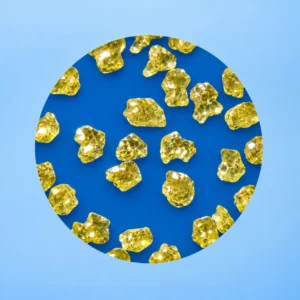
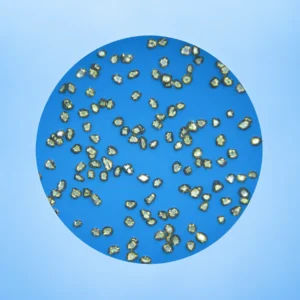
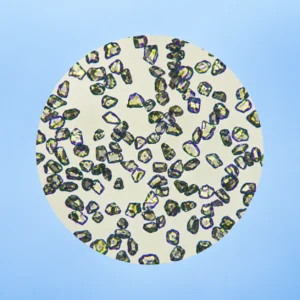
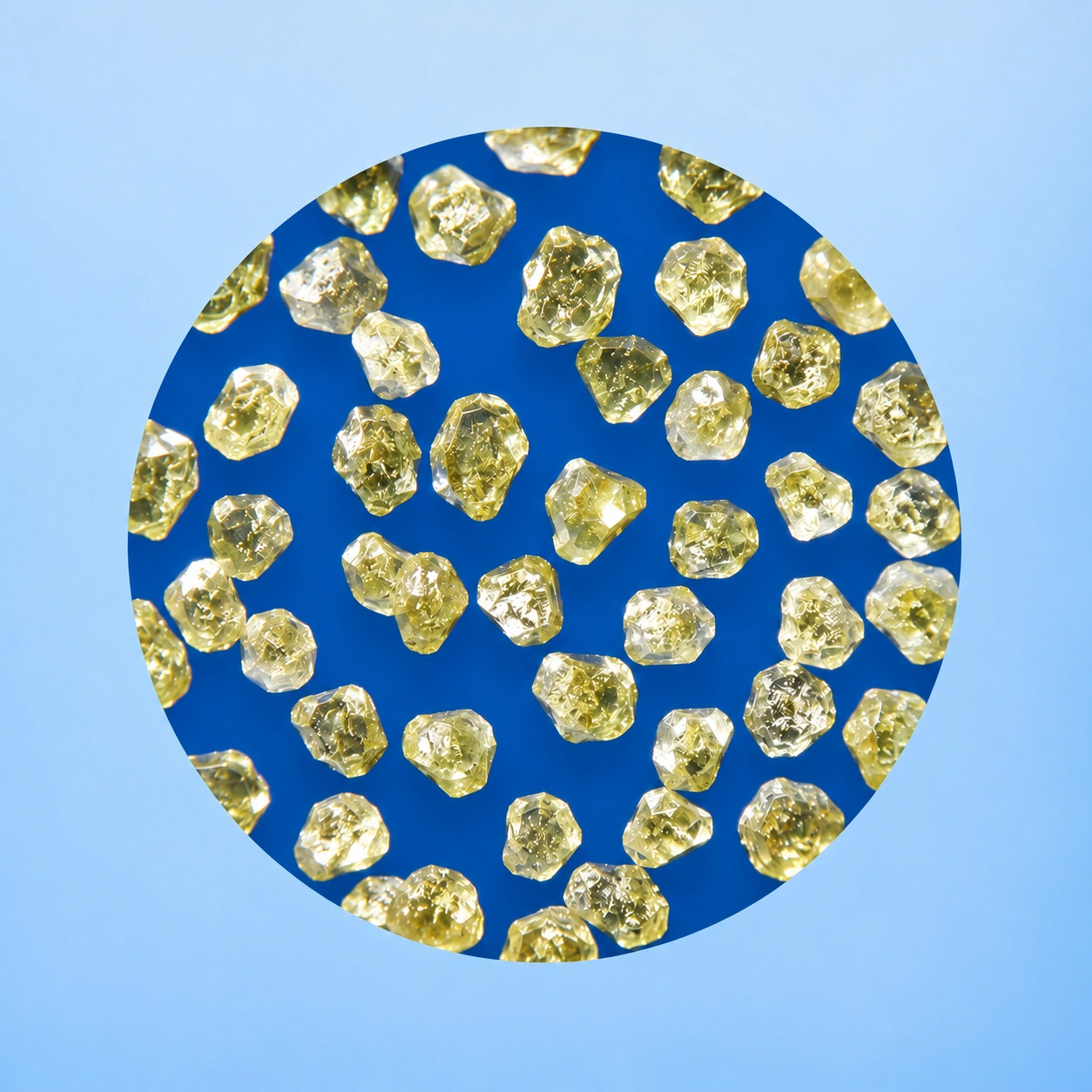
SND-R20 Low-Friability High-Toughness RVG Diamond Powder is a synthetic diamond abrasive positioned for resin-bond grinding wheels requiring greater abrasive grain integrity, controlled fracture and reliable cutting behavior under demanding grinding conditions.
Within the SinoDiam SND-R series, SND-R20 occupies the low-friability, higher-toughness position. Compared with the more friable SND-R05, SND-R10 and SND-R15 grades, it is intended for wheel manufacturers seeking a greater degree of crystal durability while retaining the ability to renew cutting edges under suitable grinding loads.
Lower-friability diamond grains generally resist fracture more strongly than highly friable abrasives. Under sufficient local grinding stress, controlled microfracturing can still generate fresh cutting edges. This balance is relevant to maintaining abrasive action while managing grain breakdown and grinding-wheel consumption.
SND-R20 is recommended for evaluation in resin-bond grinding wheels used for cemented tungsten carbide, cermets, technical ceramics and selected polycrystalline diamond (PCD) tooling applications. The suitability of the grade must be evaluated against the workpiece, wheel formulation and operating conditions.
When considering SND-R20, grinding-wheel manufacturers should evaluate crystal toughness, grain retention, dressing requirements, grinding force, material removal rate, wheel form retention, surface integrity and G-Ratio together rather than selecting by friability alone.
Technical Specifications
SND-R20
RVG Synthetic Diamond Grit
Low Friability / Higher Toughness
Tougher End of the SND-R Series
Gray
Confirm by Product Micrograph
Resin Bond
Phenolic / Polyimide
Vitrified Bond – Trial Required
Confirm by Individual Specification
Carbide / Cermets / Ceramics
PCD Grinding Tools
Low friability and higher toughness describe the intended relative position of SND-R20 within the SinoDiam series. Actual crystal morphology, friability test results, particle-size distribution and available mesh specifications must be confirmed using product-specific technical records. These classifications do not constitute a quantified performance guarantee.
Crystal Characteristics & Grinding Behavior
Low Friability & Higher Grain Toughness
SND-R20 is positioned for applications requiring greater resistance to abrasive grain fracture than more friable SND-R grades. The actual difference in fracture strength depends on particle size, crystal structure and the applicable test method.
Controlled Cutting-Edge Renewal
Compared with highly friable grains, tougher diamonds may require greater local stress to develop fresh cutting edges through microfracturing. Appropriate grinding loads and bond design are essential to maintain effective cutting behavior.
Grain Integrity & Retention
Greater crystal integrity can be relevant to grinding-wheel designs that prioritize abrasive durability and retention. Actual grain retention is determined by crystal surface characteristics, bond formulation and wheel manufacturing conditions.
Form Retention & Wheel Life Evaluation
SND-R20 is intended for evaluation where wheel geometry, abrasive consumption and grinding performance must be balanced. Improvements in wheel life or G-Ratio require validation in the finished grinding-wheel system.
Recommended Applications
The following are potential applications for a tougher, lower-friability resin-bond diamond grade. Final suitability of SND-R20 must be established through product-specific grinding tests.
Cemented Carbide Tool Grinding
For evaluation in grinding wheels used for tungsten carbide inserts, cutting tools and precision carbide components. Relevant performance factors include material removal rate, grain durability, dressing behavior and wheel consumption.
PCD Tool Grinding
Potential use in specialized resin-bond diamond wheels for sharpening and grinding polycrystalline diamond tools. Selection should consider PCD grade, wheel formulation, thermal conditions, cutting action and wheel wear.
Technical Ceramic Grinding
For application trials involving selected engineering ceramics where controlled abrasive wear, dimensional accuracy and surface integrity are important. Grinding forces and subsurface damage should be evaluated together.
Cermet Grinding
A candidate grade for resin-bond abrasive tools processing selected cermets. The required balance of crystal toughness, cutting-edge renewal and grinding force depends on material composition and wheel operating conditions.
Precision Profile Grinding
For evaluating resin-bond wheels in applications where wheel shape, profile accuracy and abrasive consumption are important. The actual form-retention performance depends on the complete wheel design.
Demanding Resin Bond Wheel Applications
For grinding-wheel manufacturers seeking to compare tougher diamond grains against more friable alternatives in higher-load or longer-duty grinding operations involving diamond-compatible workpieces.
Workpiece selection note: Diamond is generally suited to cemented carbide, PCD, ceramics, glass and appropriate hard non-ferrous materials. For most hardened ferrous steels, CBN is normally preferred because diamond can experience accelerated thermochemical wear.
Mesh Size Selection & Grinding Requirements
Diamond grit size affects active cutting-edge density, grinding force, stock removal, workpiece finish and the wear behavior of the abrasive wheel. The most suitable mesh specification depends on the grinding operation and the complete bonding system.
Evaluate for stock-removal operations where the grinding load, wheel structure and workpiece permit larger abrasive particles.
Evaluate for applications balancing removal rate, wheel form retention, surface quality and abrasive consumption.
Evaluate for precision grinding and finishing operations where smaller cutting points and surface integrity are important.
The previous SinoDiam catalogue states a nominal 60/70–325/400 mesh range. Individual SND-R20 mesh availability and the relevant US mesh or FEPA grading designation must be confirmed. The selection categories above are guidance rather than a list of verified stocked sizes.
Resin Bond Compatibility & Wheel Design
SND-R20 is primarily positioned for resin-bond grinding-wheel manufacturing. Phenolic and polyimide resin formulations may be evaluated according to wheel construction, manufacturing conditions, workpiece material and required grinding performance.
Because tougher diamond grains can resist fracture more strongly, the bond system must be selected to provide appropriate abrasive exposure, retention and cutting-edge renewal. A grain that is too resistant to fracture for the operating conditions may become dull, while weak bond retention may cause premature grain loss.
Important Wheel Design Considerations
- Resin chemistry, curing conditions and bond hardness.
- Diamond concentration and particle-size distribution.
- Grain retention, crystal exposure and controlled microfracturing.
- Grinding pressure, wheel speed, coolant and thermal conditions.
- Dressing method and wheel profile requirements.
- Material removal rate, grinding energy and surface integrity.
- Wheel form retention, G-Ratio and total grinding cost.
Vitrified-bond applications require separate validation of firing conditions, bond chemistry and abrasive stability. Compatibility should not be assumed for every vitrified-bond formulation.
Why Select a Lower-Friability Diamond Grade?
Greater Crystal Integrity
A tougher diamond grade can be considered when premature grain fracture limits abrasive life or reduces grinding-wheel efficiency in a particular application.
Higher Grinding-Load Evaluation
Lower-friability grains may be evaluated in demanding grinding conditions where individual cutting points experience higher mechanical loads. Actual suitability depends on grinding stress and wheel design.
Wheel Form Retention
For profile-sensitive grinding processes, crystal durability can be one factor influencing wheel geometry and dimensional consistency. Bond characteristics and dressing remain critical.
Balanced Tool Economics
Selection should consider removal rate, dressing intervals, abrasive wear, grinding ratio and cost per finished component. Greater crystal toughness does not automatically guarantee better performance.
SinoDiam SND-R Series Grade Selection
The four SND-R resin-bond diamond grades are positioned for different combinations of friability, cutting-edge renewal, crystal integrity and grinding-wheel performance.
Low Friability / Higher Toughness · Current Grade
The tougher-positioned SND-R grade, intended for evaluating grain integrity, controlled fracture, demanding grinding loads and wheel form retention.
The series positioning is intended for product selection. Specific comparative performance, crystal-strength measurements and direct equivalence with competitors require grade-specific test results.
Frequently Asked Questions
1. What is SND-R20 resin bond diamond powder?
2. What does low friability mean in diamond abrasives?
3. How does SND-R20 differ from SND-R15?
4. How does SND-R20 differ from SND-R05?
5. Does lower friability mean better wheel life?
6. Can SND-R20 still self-sharpen?
7. Is SND-R20 suitable for tungsten carbide grinding?
8. Can SND-R20 be evaluated for PCD tool grinding?
9. What resin-bond systems can be considered?
10. Can SND-R20 be used in vitrified-bond wheels?
11. What mesh sizes are available for SND-R20?
12. Is SND-R20 equivalent to RB-200 or another low-friability grade?
13. What information is required for a quotation?
SINODIAM INTERNATIONAL · TECHNICAL SUPPORT
Request SND-R20 Technical Specifications & Quotation
Developing a resin-bond diamond grinding wheel for demanding carbide, ceramic, cermet or PCD-tool applications? SinoDiam can discuss the SND-R20 higher-toughness grade position according to your application requirements.
Share your requested mesh size, workpiece composition, bond formulation, wheel design, grinding parameters, trial or order quantity and delivery destination.