Product Overview
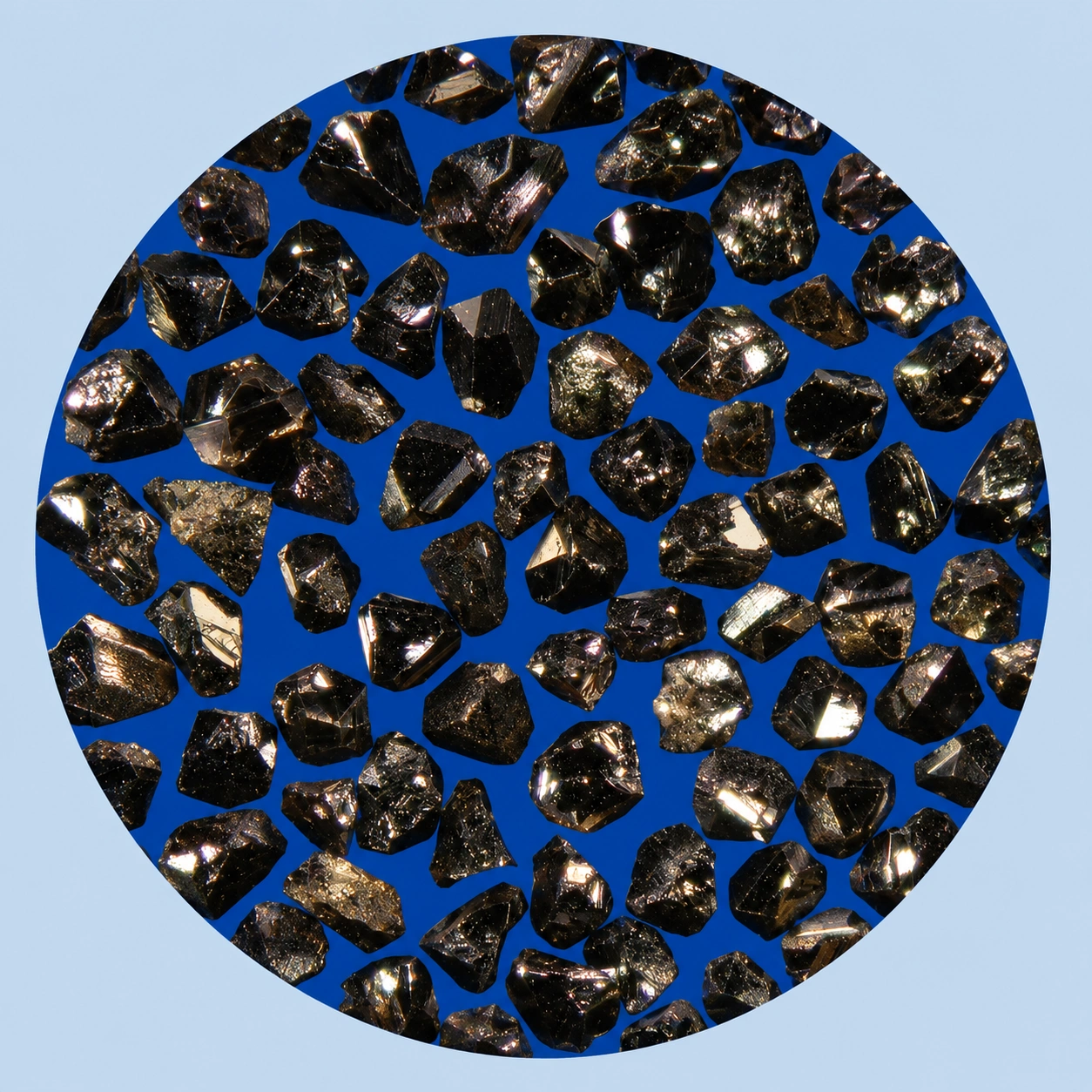
SinoDiam CBN-B20 Bright Black Blocky Cubic Boron Nitride is a synthetic CBN abrasive grit positioned for manufacturers of grinding wheels, abrasive tools and related industrial grinding systems requiring the evaluation of relatively high-toughness CBN crystals.
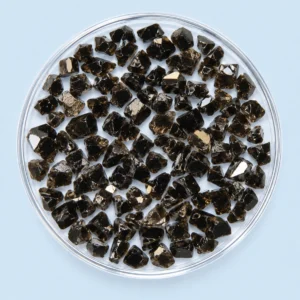
CBN-B20 is described in the SinoDiam product catalogue by its bright black appearance, blocky crystal morphology and high-toughness grade positioning. These characteristics make the grade a potential candidate for applications where crystal integrity, resistance to premature grain fracture and abrasive retention are important.
Unlike friable CBN grades that may be evaluated for more active grain fracture, B20 is positioned for grinding conditions where grain strength and mechanical durability are significant selection considerations. However, higher crystal toughness does not automatically produce longer wheel life, greater grinding efficiency or better surface quality.
Cubic boron nitride is widely used for grinding many hardened steels and suitable ferrous alloys. CBN generally offers more favorable chemical behavior than diamond in numerous ferrous-metal grinding applications, although actual suitability depends on workpiece composition, heat treatment, contact temperature and grinding conditions.
Primary application directions include grinding of selected hardened tool steels, high-alloy steels, high-speed steels, cast irons and other suitable ferrous components. Workpiece hardness and microstructure, removal requirements, thermal loading and finished-surface targets must be considered during grade selection.
CBN-B20 may be evaluated in vitrified-bond, metal-bond and electroplated grinding tools. These systems use different grain-retention mechanisms and manufacturing processes. Bond compatibility must therefore be established separately for each tool construction.
The relatively blocky crystal structure may be relevant where abrasive grains are exposed to higher mechanical loading. Actual fracture resistance depends on internal crystal characteristics, particle size, bond support and grinding forces. Crystal appearance alone cannot establish a numerical toughness value or operating limit.
The historical SinoDiam catalogue references 50/60 through 325/400 mesh CBN-B20 abrasives. Current size availability, grading tolerances, friability, crystal toughness and technical documentation must be confirmed for the requested fraction.
For technical evaluation or quotation, please provide your required CBN mesh fraction, bond system, tool manufacturing process, workpiece material and hardness, grinding conditions, estimated order quantity and delivery destination.
Technical Specifications
CBN-B20
Bright Black Blocky Cubic Boron Nitride
Synthetic Cubic Boron Nitride
SinoDiam
Bright Black
Blocky / Relatively Regular
High — Catalogue Classification
Vitrified / Metal / Electroplated
Selected Higher-Load Grinding
50/60–325/400 Mesh — Verify
Confirm Current Product Specification
Confirm Mesh Classification & Limits
Request Grade-Specific Data
Request Applicable Test Results
Evaluate by Grade & Mesh Fraction
Verify Temperature / Time / Atmosphere
Selected Hardened Tool & Alloy Steels
HSS / Suitable Cast Irons / Ferrous Alloys
Confirm Ceramic Composition & Firing
Confirm Matrix & Sintering Conditions
Confirm Plating & Grain Exposure
Evaluate in Finished Tool
Follow Rated Wheel & Machine Limits
Application-Specific Requirements
Confirm Through Grinding Trials
Request Current Product Data
Bright black color, blocky crystal morphology and high-toughness positioning are catalogue descriptions. This page does not establish a verified 1,300°C temperature limit, a universal maximum RPM, a fixed surface roughness or any guaranteed tool-life improvement. Quantitative material and finished-tool performance must be confirmed by the applicable specifications and testing.
Bright Black Blocky CBN Crystal Structure & Grinding Behavior
The selection of a blocky CBN abrasive depends on crystal morphology, mechanical strength, particle-size distribution and its interaction with the chosen bond system.
Bright Black CBN Crystals
CBN-B20 is identified by its bright black appearance. Crystal color is a product identification characteristic and should not be treated as an independent measurement of purity, hardness or toughness.
Blocky Grain Geometry
The catalogue describes relatively blocky CBN crystals. Their geometry may be relevant where abrasive integrity and mechanically supported grain contact are important to the tool design.
High-Toughness Positioning
CBN-B20 is positioned as a high-toughness grade. Actual resistance to impact or fracture depends on crystal characteristics, particle size and the test method used for evaluation.
Resistance to Premature Breakdown
Relatively tough grains may be evaluated where excessive fracture is undesirable. The preferred fracture behavior must nevertheless support effective cutting-point exposure during grinding.
Abrasive Retention & Protrusion
Grinding performance depends on how the bond supports and exposes each CBN particle. Grain geometry, concentration, matrix properties and manufacturing conditions influence retention.
Process-Specific Thermal Evaluation
Grinding and tool manufacturing may expose CBN grains to elevated temperatures. Thermal compatibility depends on temperature, exposure time, atmosphere and contact with bond constituents.
Does Blocky CBN Always Perform Better Than Friable CBN?
No. A more fracture-resistant blocky grade may be useful where grain integrity matters, while a friable grade may be advantageous where controlled fracture renews cutting edges. Excessive toughness can contribute to unfavorable cutting behavior in some wheel systems if worn grains do not renew effectively. The preferred grade depends on the entire grinding application.
CBN-B20 Bond Compatibility: Vitrified, Metal & Electroplated
CBN-B20 is positioned for selected abrasive tools manufactured with vitrified, metal or electroplated bonds. Each tool system has distinct requirements for grain integrity, retention, manufacturing conditions and abrasive exposure.
Vitrified-Bond CBN Tools
Evaluate CBN-B20 where ceramic-bond tools require relatively tough abrasive grains. Bond chemistry, firing conditions, porosity and wheel conditioning must be matched to the specific grade.
Metal-Bond CBN Tools
Metal-bond grinding tools require appropriate grain retention within the selected matrix. Evaluate CBN-B20 with the intended powder metallurgy, sintering or other tool-manufacturing conditions.
Electroplated CBN Tools
Single-layer electroplated tools depend on the deposited metal structure for grain retention. Abrasive exposure, nickel deposit geometry and the expected grinding load should be evaluated together.
Bond-System Engineering Considerations
Vitrified Bond: Thermal Processing
Assess the ceramic formulation, firing atmosphere, temperature, processing duration and grain-bond interactions. The presence of a high-toughness CBN grade does not independently establish firing compatibility.
Metal Bond: Matrix Selection
Evaluate matrix composition, sintering conditions, abrasive concentration, grain distribution and grain exposure. Mechanical retention should be validated using the finished tool.
Electroplated Bond: Grain Anchoring
Confirm the relationship among abrasive size, plating thickness, particle protrusion and expected operating forces. A blocky grain shape alone cannot guarantee retention.
Tool Structure & Cooling
Consider wheel porosity, chip accommodation, coolant delivery, dressing requirements and machine conditions. These factors influence cutting forces and grinding-zone temperature.
Multi-Bond Positioning Requires Individual Qualification
A CBN-B20 grain suitable for one metal-bond tool is not automatically qualified for every vitrified firing cycle or electroplated process. Tool manufacturers should verify crystal integrity, abrasive retention and finished-tool performance under the actual manufacturing and grinding conditions.
CBN-B20 Mesh Size Selection for Grinding Applications
The historical SinoDiam catalogue references CBN-B20 abrasive fractions from 50/60 to 325/400 mesh. The following size examples support initial selection discussions but do not establish current stock, universal recommendations or guaranteed grinding outcomes.
Higher-Load Grinding Evaluation
Consider for suitable abrasive-tool designs requiring relatively large CBN grains. Evaluate grain support, grinding forces, bond retention and acceptable surface damage.
General Precision Grinding
Evaluate intermediate grit fractions where the wheel design must balance material removal, abrasive exposure, grain integrity and surface requirements.
Fine Grinding Evaluation
Consider for selected fine-grinding applications where a smaller abrasive fraction is required. Confirm particle-size distribution, wheel structure and appropriate dressing conditions.
Important Mesh-Size Specification Factors
Mesh Grading & Distribution
Specify the grading standard and acceptance limits. Two CBN powders with the same nominal mesh designation may differ in their actual particle distributions.
Toughness by Grit Fraction
Mechanical behavior can vary with abrasive size. Request representative toughness or friability measurements where grain fracture is an important application parameter.
Bond Retention & Grain Exposure
Match the CBN fraction to the bond system, manufacturing method and tool geometry. Coarser or finer grains may require different abrasive exposure and retention conditions.
Surface Finish & Material Removal
Finished-surface quality and grinding efficiency depend on workpiece properties, grit size, wheel condition, dressing, coolant and operating parameters rather than grain size alone.
Should Coarser CBN-B20 Be Used for Every Heavy-Duty Grinding Process?
No. Larger abrasive grains and higher-toughness crystals do not automatically establish the best grinding system. Wheel design, workpiece hardness, material-removal allowance, contact geometry and thermal requirements must guide grit selection. For some processes, an intermediate or finer grit may provide a better overall result.
Historical catalogue mesh examples are selection references only. Confirm the current CBN-B20 size list, grading limits and available documentation before ordering.
Recommended Applications of CBN-B20
CBN-B20 is positioned for selected grinding applications where relatively tough CBN grains and appropriate bond retention are important. Workpiece chemistry, heat treatment and operating conditions must be reviewed before selecting the grade.
Hardened Tool Steel Grinding
Evaluate CBN-B20 for appropriate grinding of hardened tool steels. Consider heat treatment, stock removal, grinding-zone temperature, wheel design and the required surface integrity.
High-Alloy Steel Components
Selected high-alloy steel parts may be candidates for CBN grinding. Match the grade and bond system to hardness, material structure and grinding requirements.
High-Speed Steel Tool Grinding
Evaluate CBN-B20 in suitable tools for grinding high-speed steel components. Grain integrity, tool geometry, dressing and edge-quality targets are important selection considerations.
Cast Iron Grinding
Some cast iron grinding applications may justify CBN abrasive tools. Graphite structure, workpiece hardness, grinding load and tool design influence the appropriate abrasive selection.
Vitrified & Metal-Bond CBN Wheels
Evaluate CBN-B20 for selected wheel formulations where crystal toughness, bond retention and machining duty must be considered together.
Electroplated Grinding & Profiling Tools
Potential applications include suitable electroplated CBN wheels and profile tools requiring control of grain exposure, plating retention and grinding geometry.
These are application-evaluation directions, not universal approvals. CBN-B20 does not guarantee superior results on all hardened steels, cast irons or high-alloy materials. Grinding trials should establish suitability for the specific workpiece and tool.
High-Load Grinding & Thermal Process Considerations
CBN-B20’s higher-toughness positioning is relevant to selected demanding grinding operations. Actual operating capability must be determined by the finished grinding tool, not by loose abrasive-grain appearance alone.
Mechanical Grinding Load
Contact force, abrasive protrusion, wheel structure and machine stiffness influence stress on individual CBN grains. Evaluate whether the selected grade maintains useful cutting behavior.
Crystal Fracture & Tool Wear
Excessive grain fracture can increase abrasive consumption. Insufficient cutting-edge renewal can also reduce efficiency. Compare the chosen grade under representative load conditions.
Grinding-Zone Temperature
Temperature depends on workpiece properties, grinding conditions, coolant delivery, wheel sharpness and heat transfer. No fixed permissible temperature is established for CBN-B20 by this page.
Workpiece Surface Integrity
Hardened ferrous components may be sensitive to grinding burn, residual stress or metallurgical changes. Verify surface integrity rather than relying solely on surface roughness.
Wheel Speed & Safety
Permissible wheel speed depends on the rated finished wheel, diameter, construction and grinding equipment. Follow all manufacturer operating limits and relevant safety requirements.
Grinding Process Qualification
Use controlled trials to evaluate material removal, grinding forces, wheel wear, dressing frequency, thermal damage and process economics against the relevant reference tool.
Important: B20 Does Not Establish a Universal 1,300°C or 8,000 RPM Rating
Temperature resistance and operating speed are different technical concepts. The actual CBN thermal response depends on the material and exposure environment, while safe wheel speed is determined by the finished grinding tool and machine. Numerical limits must come from validated, application-specific specifications.
CBN-B20 vs. A10, A20 & B10 — Grade Comparison
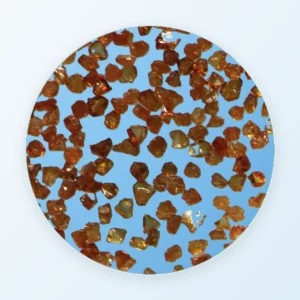
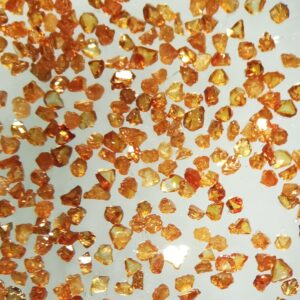
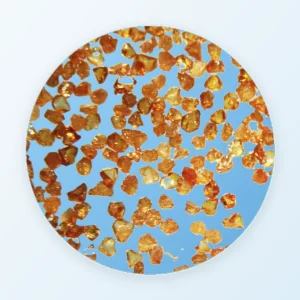
SinoDiam’s four CBN grades differ in catalogue-described crystal morphology, toughness positioning and intended grinding-tool applications. Use this comparison as an initial selection framework.
| CBN Grade | Crystal Characteristics | Primary Evaluation Focus |
|---|---|---|
| CBN-A10 | Amber · Irregular · Medium Toughness | Resin-bond grinding and controlled grain-fracture evaluation |
| CBN-A20 | Amber · Relatively Regular · High Toughness | Vitrified, metal and electroplated grinding systems |
| CBN-B10 | Black · Irregular · Friable · Low Toughness | Resin-bond precision grinding and cutting-edge renewal evaluation |
| CBN-B20 | Bright Black · Blocky · High Toughness | Selected higher-load grinding and compatible multi-bond tools |
The descriptions above are catalogue positioning, not independently verified numerical toughness rankings. Color, crystal shape and mesh designation alone cannot establish relative tool life, abrasive purity, thermal stability or final grinding performance.
How to Select CBN-B20 for Industrial Grinding Tools
Select CBN-B20 by matching the abrasive specification with the workpiece, bond-manufacturing process and expected operating conditions.
Identify the Workpiece
Specify the steel or cast iron grade, hardness, heat treatment, geometry, removal allowance and required dimensional or surface tolerances.
Define the Tool & Bond System
Identify whether the tool uses vitrified, metal or electroplated bonding. Provide its manufacturing method, grain-retention requirements and operating configuration.
Select Mesh & Toughness
Confirm the required grit size, grading limits, abrasive concentration, crystal toughness and any additional morphology or inspection requirements.
Validate the Finished Tool
Evaluate grinding forces, material removal, wheel wear, workpiece burn, surface integrity, dressing behavior and cost under defined production or laboratory conditions.
CBN-B20 or CBN-A20 for Higher-Load Grinding?
Both grades have high-toughness catalogue positioning, but they differ in crystal color and morphology. B20 is described as bright black and blocky, while A20 is amber and relatively regular. The preferred material should be selected through mesh-specific toughness data, bond compatibility and comparative grinding tests rather than a universal assumption that B20 always outperforms A20.
SinoDiam CBN Grade Selection
Explore all four SinoDiam cubic boron nitride grades according to abrasive behavior, intended bond systems and grinding requirements.
Current Product
Current Grade · Bright Black Blocky
CBN-B20 — High-Toughness CBN for Higher-Load Grinding
Bright black, blocky CBN abrasive positioned for selected vitrified, metal and electroplated grinding-tool systems where crystal integrity, bond retention and higher grinding loads are important evaluation factors.
Primary selection focus: blocky crystal morphology, grain toughness, bond compatibility and finished-tool performance.
Explore Other CBN Grades
CBN-A10 →
Amber irregular CBN with medium-toughness positioning for selected resin-bond grinding tools.
CBN-A20 →
Relatively regular amber CBN with high-toughness positioning for selected vitrified, metal and electroplated applications.
CBN-B10 →
Black friable CBN for selected resin-bond precision grinding tools where controlled abrasive fracture is relevant.
Explore SinoDiam Advanced Superabrasives →
The current CBN-B20 product URL uses /product/cnb-b20/. This existing URL is intentionally retained. A future spelling correction should be handled with an appropriate 301 redirect to avoid broken internal links.
Frequently Asked Questions — CBN-B20
1. What is CBN-B20 Bright Black Blocky CBN?
CBN-B20 is SinoDiam’s bright black, blocky cubic boron nitride abrasive with high-toughness catalogue positioning. It is intended for evaluation in selected higher-load grinding applications and suitable vitrified, metal and electroplated tools.
2. What does blocky CBN crystal morphology mean?
Blocky describes a relatively compact crystal shape. It is a morphology characteristic, not a guarantee of strength, impact resistance or abrasive retention. Actual crystal properties should be verified using representative product samples.
3. Does bright black CBN indicate higher purity?
No. Color is a product-identification characteristic. Purity, internal crystal structure, toughness and friability must be established through appropriate material specifications and testing.
4. Why is CBN-B20 positioned for higher-load grinding?
The grade is described as relatively blocky and high-toughness. These attributes make it a candidate where grain integrity under mechanical loading matters. The actual suitable load range depends on mesh size, bond support, tool design and grinding conditions.
5. Is CBN-B20 suitable for vitrified-bond grinding wheels?
Vitrified bond is a primary application direction. Compatibility must be confirmed for the particular ceramic composition, firing conditions, abrasive concentration and finished-wheel requirements.
6. Can CBN-B20 be used in metal-bond tools?
Yes, metal-bond applications are an intended evaluation direction. The actual matrix, sintering conditions, grain distribution and bond retention must be qualified for the selected tool.
7. Is CBN-B20 appropriate for electroplated grinding tools?
Electroplated tools are a possible application. Suitable results depend on CBN particle size, plating geometry, deposited metal quality, abrasive protrusion and the operating load.
8. What materials can CBN-B20 grind?
Potential workpieces include selected hardened tool steels, alloy steels, high-speed steels, cast irons and other suitable ferrous materials. Material composition, hardness and grinding conditions determine actual suitability.
9. Is CBN-B20 suitable for all cast iron grades?
No. Cast irons differ in graphite structure, matrix, hardness and machining behavior. Some applications may use CBN, while other abrasives may be more appropriate. Evaluate the specific cast iron and tool system.
10. What mesh sizes are available for CBN-B20?
The historical SinoDiam catalogue references grit fractions from 50/60 through 325/400 mesh. The current list, grading standard, PSD limits and availability must be confirmed for each requested fraction.
11. Can CBN-B20 withstand 1,300°C?
A universal 1,300°C material-performance rating is not established by this description. Thermal behavior depends on exposure temperature, time, atmosphere and contact materials. Request validated thermal data for applications where temperature limits are important.
12. Does CBN-B20 support grinding above 8,000 RPM?
Loose abrasive grain does not establish a universal wheel RPM limit. Permissible operating speed depends on the rated finished grinding tool, its diameter and construction, the machine and applicable safety requirements.
13. Does CBN-B20 guarantee a 40% increase in tool life?
No universal tool-life improvement is established. Finished-wheel durability must be compared under defined conditions using equivalent tool constructions, workpieces, coolants and grinding parameters.
14. Can CBN-B20 guarantee Ra 1.0 µm or a mirror finish?
No. Surface roughness and finish are results of the complete grinding process. Grit size, wheel dressing, machine conditions, workpiece, coolant and grinding parameters all influence the result.
15. What is the difference between CBN-B20 and CBN-B10?
B20 is described as a bright black, blocky, high-toughness grade positioned for selected higher-load conditions. B10 is a black friable grade primarily positioned for resin-bond precision grinding and controlled grain-fracture evaluation.
16. What is the difference between CBN-B20 and CBN-A20?
Both have relatively high-toughness catalogue positioning. B20 is bright black and blocky, while A20 is amber and relatively regular. Their actual performance differences must be established with matched product data and tool tests.
17. Does higher CBN toughness always improve grinding efficiency?
No. Increased toughness may reduce premature fracture, but some grinding conditions benefit from controlled grain breakdown and cutting-edge renewal. The preferred behavior depends on the workpiece, bond and operating parameters.
18. Can CBN-B20 replace another manufacturer’s high-toughness CBN?
Do not select a substitute based only on color, mesh size or catalogue toughness classification. Compare PSD, morphology, friability, purity where relevant, bond compatibility and actual grinding results.
19. Is CBN-B20 the same as PCBN cutting material?
No. CBN-B20 is a discrete abrasive grit intended for abrasive-tool manufacturing. PCBN is a consolidated polycrystalline cubic boron nitride cutting-material system used in selected machining applications. Their product forms and selection requirements are different.
20. What information is required for a CBN-B20 quotation?
Please provide the required mesh fraction, bond system, tool construction, workpiece material and hardness, intended grinding conditions, any special toughness or PSD requirements, estimated order quantity and delivery destination.
SINODIAM INTERNATIONAL · CBN ABRASIVE TECHNICAL SUPPORT
Request CBN-B20 Bright Black Blocky CBN Specifications & Quotation
Looking for bright black, blocky cubic boron nitride abrasive grit for selected higher-load grinding wheels, vitrified-bond tools, metal-bond tools or electroplated abrasive applications?
Share your required CBN mesh fraction, bond system, tool manufacturing process, workpiece material and hardness, grinding requirements, estimated order quantity and delivery destination.
SinoDiam can discuss current CBN-B20 specifications and the technical information needed to evaluate crystal morphology, toughness, particle-size distribution, bond compatibility and finished-tool grinding performance.