CBN-B20 – Product Overview
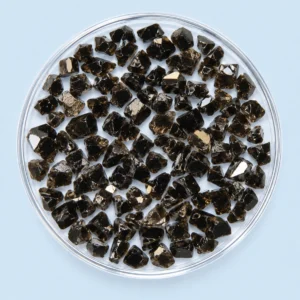
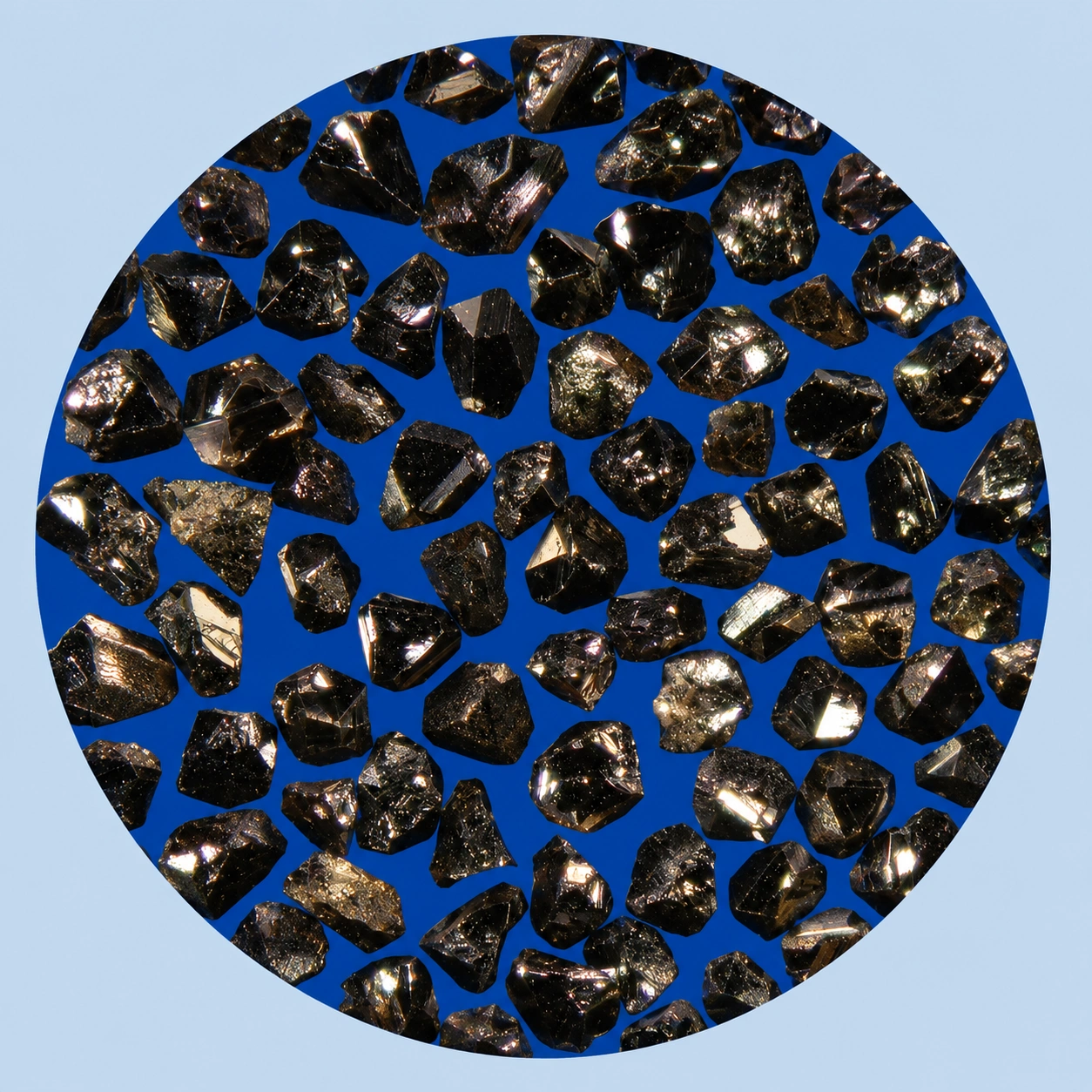
SinoDiam CBN-B20 is a bright black, blocky cubic boron nitride abrasive grit positioned for higher-load ferrous-metal grinding applications. Its comparatively robust crystal morphology makes it a candidate for abrasive-tool formulations in which grain integrity, bond retention and controlled wheel wear are important.
CBN-B20 is intended for evaluation in selected vitrified-bond, metal-bond and electroplated grinding tools. The appropriate bond system and grit fraction depend on the wheel design, manufacturing process, workpiece and operating conditions.
The existing SinoDiam catalogue lists 50/60–325/400 mesh as the grade range. Confirm individual available fractions and the applicable particle-size specification before ordering.
Key Features & Crystal Characteristics
Bright Black, Blocky Morphology
A blocky crystalline appearance distinguishes B20 within the SinoDiam CBN portfolio. Particle shape is a useful starting point for discussing grit strength and bond retention.
High Relative Toughness
B20 is classified as a high-toughness grade relative to the SinoDiam catalogue range. This designation is qualitative unless supported by a specified toughness test.
Multi-Bond Evaluation
Consider B20 for selected vitrified, metal and electroplated tool designs, subject to manufacturing compatibility and performance testing.
Ferrous Grinding Focus
CBN is commonly used in grinding systems for selected hardened steels, tool steels and other suitable ferrous materials; workpiece and process requirements determine suitability.
CBN-B20 Technical Specifications
These details summarize the grade’s current catalogue positioning. They are not independent test results or guarantees of finished grinding-wheel performance.
Recommended Bond Systems
Vitrified-Bond Tools
Review grit morphology, ceramic bond chemistry, firing temperature, porosity and dressing requirements. Particle integrity must be evaluated under the chosen manufacturing conditions.
Metal-Bond Tools
Check matrix composition, processing temperature, grain retention and exposure, along with the targeted wear balance for the workpiece.
Electroplated Tools
Assess selected mesh fraction, coating process, grain protrusion, deposit thickness and retention under the anticipated grinding load.
Other Formulations
Other bond types should be considered only after reviewing the application and validating the grade’s suitability. Resin-oriented grades such as B10 may be better starting points for some applications.
Applications & Material Selection
CBN-B20 may be considered for the manufacture of grinding wheels and related abrasive tools intended for selected hardened ferrous workpieces. Typical evaluation directions include:
Hardened Steel Grinding
Selected hardened steels and tool steels where wheel design and abrasive grain integrity are important.
Alloy and High-Speed Steel Processing
Suitable evaluations depend on alloy composition, heat treatment, grinding conditions and coolant strategy.
Higher-Load Grinding
An option for formulation trials in which the desired balance among grain strength, wheel wear and grinding force needs to be established.
Precision Grinding Systems
For applications where dimensional consistency and surface finish are controlled primarily by the full abrasive-tool and machine system, not the grit grade alone.
How to Select CBN-B20
- Identify the workpiece: material grade, hardness, heat treatment and surface condition.
- Define the bond system: vitrified, metal or electroplated, including manufacturing constraints.
- Specify the grit fraction: choose a suitable mesh size and confirm its availability and distribution.
- Describe the process: wheel speed, feed, contact conditions, coolant and target surface requirements.
- Validate the formulation: assess cutting efficiency, wheel wear, dressing and workpiece quality under controlled trials.
A stated wheel RPM or finished surface roughness is not a universal property of an individual CBN grit. Such outcomes must be defined and measured for the finished wheel, workpiece and grinding setup.
Compare Other SinoDiam CBN Grades
Frequently Asked Questions
What is CBN-B20?
CBN-B20 is a bright black, predominantly blocky CBN abrasive grit positioned for selected higher-load ferrous grinding tool applications.
How is B20 different from B10?
Within the SinoDiam series, B20 is positioned as a high-toughness, blocky black grit, while B10 is black, more friable and resin-bond-oriented. Selection depends on the intended bond and grain-fracture behavior.
Which bond systems can be evaluated with B20?
Vitrified, metal and electroplated bond systems are the primary evaluation directions. Compatibility must be verified for the specific tool-manufacturing process.
What is the listed mesh-size range?
The existing listing indicates 50/60–325/400 mesh. Individual fractions, particle-size distribution and availability should be confirmed before quotation.
Does B20 guarantee a 1300°C operating temperature?
No. A temperature reference without test method, atmosphere and exposure duration cannot establish a finished-tool service rating. Process-specific thermal behavior should be validated.
Does B20 guarantee 40% longer tool life?
No universal percentage improvement can be guaranteed. Tool life is affected by workpiece, wheel formulation, coolant, operation, and the comparison test conditions.
Can B20 guarantee a given surface roughness or RPM?
No. Finished surface roughness and wheel speed limits depend on the entire wheel, machine, workpiece and process—not an abrasive grain alone.
What should a buyer include in a technical inquiry?
Please provide mesh fraction, bond system, workpiece material, grinding process, expected quantity, destination and any performance requirements.
Technical Support & Request a Quotation
SinoDiam can discuss CBN-B20 selection based on the required mesh size, abrasive-tool bond, workpiece and grinding operation. Share your estimated quantity and delivery destination so the technical and commercial requirements can be reviewed.
Request Technical Information & Quotation
Email: info@diamondmicron.com