Product Overview
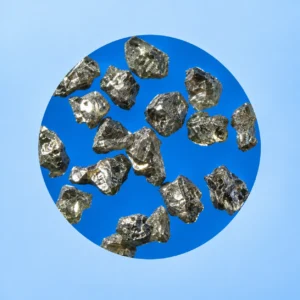
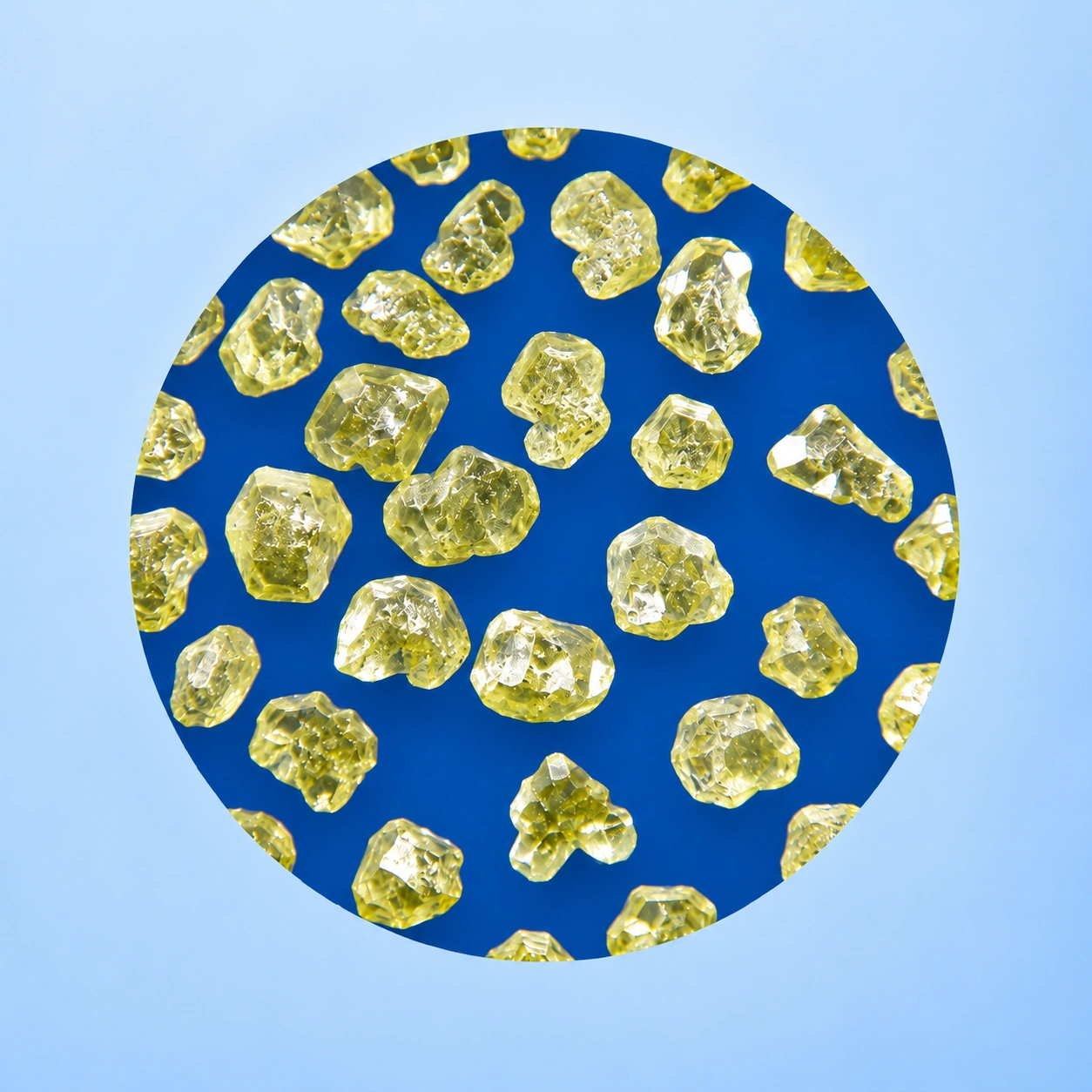
SND-R15 Standard Blocky Medium-Friability RVG Diamond Powder is a synthetic diamond abrasive designed for resin-bond grinding wheels. It combines a standard blocky crystal morphology with medium friability to support a practical balance between grain durability, controlled cutting-edge renewal and grinding-wheel performance.
Within the SinoDiam SND-R series, SND-R15 occupies a less friable position than SND-R05 and SND-R10. Its selection is relevant when grinding-wheel manufacturers require greater abrasive grain integrity while maintaining the ability of individual crystals to undergo controlled microfracturing.
The blocky crystal structure is intended to provide more substantial grain geometry than highly irregular or easily fractured grades. Under appropriate grinding loads, localized fracture may expose fresh cutting edges, helping to maintain a balance between free-cutting action, abrasive retention and wheel wear.
SND-R15 is recommended for evaluation in resin-bond grinding wheels processing cemented tungsten carbide, cermets, technical ceramics, glass and selected hard, brittle materials.
The final selection should be based on workpiece composition, grinding method, particle size, resin-bond formulation, wheel conditioning, material removal requirements, surface finish and target grinding ratio (G-Ratio).
Technical Specifications
SND-R15
RVG Resin Bond Synthetic Diamond
Standard Grade
Standard Blocky
Medium Friability
Resin Bond
Vitrified Bond – Trial Required
Balanced Fracture & Grain Integrity
Carbide / Cermets / Ceramics / Glass
Confirm by Grade & Application
The grade and morphology descriptions represent SinoDiam’s current product positioning. Grinding characteristics are application-selection guidance, not certified performance values. Please confirm available mesh sizes, particle-size grading, crystal strength and bond compatibility against the relevant technical data before production use.
Crystal Characteristics & Grinding Behavior
Standard Blocky Crystal Morphology
SND-R15 is positioned as a standard blocky diamond grade. Its relatively substantial crystal geometry is relevant to grain integrity, abrasive contact and the interaction between the diamond particle and the grinding-wheel bond.
Medium Friability
The medium-friability classification places SND-R15 between more easily fractured abrasives and tougher, lower-friability grades. This positioning is intended for applications requiring a balance between fracture response and grain durability.
Controlled Self-Sharpening
Under suitable grinding conditions, localized microfracturing can expose fresh cutting edges while leaving part of the abrasive grain intact. Actual fracture behavior depends on grinding forces, particle size and bond characteristics.
Wheel Life & Free-Cutting Balance
SND-R15 can be evaluated where abrasive grain integrity, cutting performance, wheel wear and dimensional control must be considered together. Longer wheel life is a potential selection objective, not a guaranteed outcome.
Recommended Applications
The following are relevant application targets for standard blocky, medium-friability resin-bond diamond abrasives. The specific suitability of SND-R15 should be verified in the finished grinding-wheel formulation.
Cemented Carbide Tool Grinding
For evaluating resin-bond diamond wheels used in grinding cemented carbide inserts, cutting-tool edges and carbide tooling components. Important factors include carbide grade, bond hardness, edge integrity, wheel wear and required material removal.
Cermet Grinding
Suitable for application trials involving selected cermet tools and components. Medium-friability, blocky abrasives can be evaluated where cutting-edge renewal must be balanced against grain durability and finished-part quality.
Technical Ceramic Grinding
For evaluating resin-bond grinding wheels used on selected engineering ceramics. Grinding-force management, subsurface damage, wheel conditioning and abrasive wear are important application considerations.
Precision Glass Grinding
Potential use in glass shaping, edge grinding and precision finishing where abrasive size, wheel geometry and operating conditions must be selected for the target surface and dimensional requirements.
Carbide Mold & Die Components
For evaluating precision grinding of carbide mold inserts, punches, dies and wear-resistant tooling components. Grade selection should consider workpiece composition, wheel profile retention and processing efficiency.
General-Purpose Resin Bond Wheel Manufacturing
A standard-grade option for manufacturers developing resin-bond diamond wheels where free-cutting behavior, reasonable grain retention, acceptable wheel wear and overall cost per finished part must be balanced.
Material selection: Diamond abrasives are generally preferred for cemented carbide, glass, technical ceramics and suitable non-ferrous or hard-and-brittle materials. For hardened steels and many other ferrous workpieces, CBN is normally the more appropriate superabrasive.
Mesh Size Selection & Grinding Performance
Diamond particle size affects cutting-point density, grinding force, stock removal, wheel wear and surface finish. The appropriate specification depends on the workpiece, grinding stage and the complete resin-bond wheel design.
Evaluate for higher stock-removal operations where wheel design and workpiece characteristics permit.
Evaluate for balancing cutting action, dimensional requirements and grinding-wheel consumption.
Evaluate for precision grinding and finishing operations where surface and edge quality are important.
SinoDiam’s resin-bond series catalogue currently lists a nominal 60/70–325/400 mesh range. This is a family-level reference and should not be interpreted as confirmation that every size is available for SND-R15. Request the specific mesh designation, grading standard and particle-size distribution before ordering.
Resin Bond Compatibility & Wheel Design
SND-R15 is intended primarily for resin-bond grinding-wheel applications. Phenolic and polyimide resin formulations may be evaluated according to the required bond hardness, curing process, abrasive concentration and grinding operation.
Compared with more easily fractured diamond grades, a medium-friability blocky abrasive may require different grinding loads to renew its cutting edges. The wheel bond should allow an appropriate balance between abrasive retention, crystal fracture and grain release.
Important Wheel Design Considerations
- Resin chemistry, bond hardness and curing conditions.
- Diamond concentration and grain-size distribution.
- Grain retention, abrasive exposure and controlled fracture.
- Wheel shape, dressing and profile-retention requirements.
- Grinding speed, contact pressure, coolant and thermal load.
- Material removal rate, grinding force and surface integrity.
- G-Ratio, wheel consumption and cost per finished part.
Vitrified-bond applications require separate evaluation of firing temperature, bond chemistry, diamond stability and actual tool performance. Compatibility with every vitrified formulation should not be assumed.
Why Select a Medium-Friability Blocky Diamond Grade?
Balanced Abrasive Fracture
A medium-friability grade offers an intermediate selection point between easy microfracturing and greater grain durability. The appropriate balance depends on the workpiece and grinding load.
Grain Integrity
Standard blocky morphology provides a relevant option when abrasive durability and grain retention are important to the finished-wheel design.
Controlled Cutting Performance
Localized cutting-edge renewal can help maintain abrasive action when crystal fracture behavior is matched to the resin bond and operating conditions.
Practical Wheel-Life Evaluation
Compare SND-R15 against alternative grades using grinding forces, material removal, form retention, wheel wear, surface quality and total operating cost.
SinoDiam SND-R Series Grade Selection
Compare the four SinoDiam resin-bond diamond grades according to relative friability, crystal morphology, self-sharpening requirements and wheel-life objectives.
Medium Friability / Standard Blocky · Current Grade
A standard-grade diamond grit positioned for balancing cutting-edge renewal, grain durability, resin-bond retention and grinding-wheel service requirements.
These descriptions indicate relative product positioning within the SinoDiam series. They do not establish direct equivalence with grades from other manufacturers or guarantee wheel performance.
Frequently Asked Questions
1. What is SND-R15 resin bond diamond powder?
2. What does medium friability mean in diamond grit?
3. What are the advantages of blocky diamond crystals?
4. How does SND-R15 differ from SND-R10?
5. How does SND-R15 differ from SND-R05?
6. Which workpiece materials are suitable for SND-R15?
7. Is SND-R15 suitable for grinding hardened steel?
8. Does medium friability guarantee longer wheel life?
9. Can SND-R15 be used in phenolic and polyimide resin bonds?
10. Can SND-R15 be used in vitrified-bond wheels?
11. What mesh sizes are available for SND-R15?
12. Is SND-R15 equivalent to a competitor’s medium-friability diamond grade?
13. What information is needed for a quotation?
SINODIAM INTERNATIONAL · TECHNICAL SUPPORT
Request SND-R15 Technical Specifications & Quotation
Developing a resin-bond grinding wheel that requires a balance between cutting performance, grain durability and tool life? SinoDiam can discuss the SND-R15 standard blocky diamond grade according to your specific workpiece and grinding requirements.
Send us your desired mesh size, workpiece composition, bond system, wheel design, grinding conditions, expected quantity and destination country. Application trials may be recommended before production adoption.