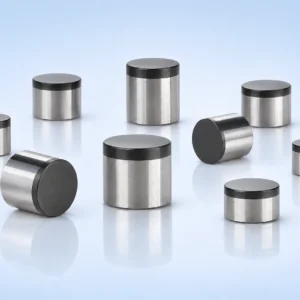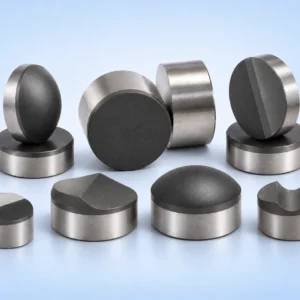

PDC Milling Cutters for Asphalt & Concrete Surface Tools
PDC milling cutters are wear-resistant polycrystalline diamond compact elements for integration into specialized asphalt milling picks and selected concrete surface-processing tools. Confirm cutter shape, carbide support, mounting and impact exposure before selecting a design.
Product Overview
A PDC cutting element combines an abrasion-resistant polycrystalline diamond (PCD) table with a cemented tungsten carbide substrate. It is a component for a compatible tool body, not a complete road milling pick.
Relatively homogeneous asphalt milling, fine milling and selected pavement rehabilitation are primary evaluation areas. Concrete work requires additional review of aggregate, reinforcement, tool geometry and impact loading.
Nominal Size Code References
The size codes below are starting references for technical inquiry. They do not confirm actual diameter, diamond-table thickness, finished geometry, inventory or performance.
| Size group | Nominal reference codes |
|---|---|
| Small | 0808 · 1004 · 1008 · 1204 |
| Medium | 1304 · 1305 · 1306 · 1308 · 1313 |
| Large | 1608 · 1613 · 1616 · 1908 · 1913 · 1916 · 1919 |
Confirm current drawings, material construction and representative trial requirements before ordering.
Cutter Construction & Interface
Polycrystalline diamond table
The hard cutting surface can resist abrasive wear; assess edge integrity and the target pavement.
Cemented carbide substrate
Supports the diamond layer and connects the cutting element to a compatible tool body.
Diamond–carbide interface
Inspect bonding quality, fracture, chipping and thermal-mechanical loads during qualification.
Cutting-edge profile
Tip shape, edge support and contact area determine local stresses in the full milling assembly.
Potential Milling Applications
Application examples must be validated for the actual pavement, machine and complete cutting tool.
Asphalt milling PDC elements
Evaluate in appropriately engineered road-milling picks for relatively homogeneous asphalt.
Fine milling
Assess edge consistency, milling pattern and wear under controlled fine-milling conditions.
Micro-fine milling
Consider geometry and surface finish requirements at reduced milling depth.
Pavement rehabilitation
Evaluate selected surface-layer removal and road-texture correction applications.
Concrete surface milling
Assess only suitable concrete surface processing after reviewing aggregate and shock loads.
Specialized tool manufacturing
Discuss drawings and trial quantities for application-specific wear-resistant tool elements.
Geometry & Tool Integration
A PDC element is not a finished road milling pick; evaluate the entire tool and holder system.
Tip-face geometry
Select the intended diamond cutting-face profile using a dimensioned engineering drawing.
Substrate support
Check stiffness, bearing area and the contact loads transferred through the carbide substrate.
Joining method
Confirm mounting, brazing or other assembly requirements with the tool manufacturer.
Holder and drum compatibility
Machine compatibility belongs to the finished pick, holder and drum—not the loose PDC element.
Impact and edge support
Avoid assuming PDC is suitable for severe impacts, embedded metal or fractured pavement.
Application-Based Selection
Select by surface composition, wear and impact severity rather than assuming that larger codes are always better.
Relatively homogeneous asphalt
Consider PDC when abrasive wear is important and severe intermittent shock can be limited.
Abrasive aggregate composition
Review mineralogy, quartz content and observed wear mechanisms.
Intermittent impacts
Evaluate potholes, fractured layers, debris and local impact peaks before selection.
Concrete and reinforcement
Confirm aggregate hardness and risk of rebar contact; alternatives may be safer.
Qualification & Inquiry Checklist
Confirm current drawings, material construction and representative trial requirements before ordering.
Drawing and tolerances
Request approved cutter dimensions, face profile, table thickness and substrate geometry.
Tool-level trial
Compare wear, chipping, surface quality and downtime under comparable milling conditions.
Order details
Supply machine/tool drawing, pavement description, quantity, delivery location and schedule.
PDC Product Family Comparison
| Product family | Main application | Selection emphasis |
|---|---|---|
| Asphalt & Concrete Milling | Specialized milling elements | Tip geometry, support, pavement and impact |
| Geological & Mining | Exploration and mining drill cutters | Rock type, cutter shape and mounting |
| Oil & Gas GAS Series | Drill-bit cutting elements | Model dimensions, formation and diamond table |
Explore Related PDC Products
Geological & Mining PDC
Separate product family for exploration and selected rock-drilling tools.
Oil & Gas GAS Series
Distinct GAS models for compatible oilfield drill-bit manufacturing.
Frequently Asked Questions
What is a PDC milling cutter?
A polycrystalline diamond compact cutting element designed for integration into specialized road-milling and surface-processing tools.
Is a PDC cutter a complete road milling pick?
No. The cutter must be integrated into a compatible pick body and holder system.
What does PDC mean?
Polycrystalline diamond compact: a polycrystalline diamond table supported by a substrate, commonly cemented tungsten carbide.
Where may PDC be evaluated in asphalt milling?
Relatively homogeneous asphalt, fine milling and some rehabilitation applications with manageable impact loads.
Is it suitable for fine milling?
It may be evaluated when cutting-tip geometry, edge retention and operating conditions are compatible.
Can it be used for micro-fine milling?
Potentially, after reviewing milling depth, tool geometry and the required surface texture.
Is it suitable for concrete milling?
Only selected applications; check aggregate, reinforcement, impact duty and complete tool design.
Can it cut reinforced concrete?
Do not assume suitability. Rebar contact and heavy shock can damage the cutter; review alternatives.
Why is impact exposure important?
Polycrystalline diamond provides abrasion resistance, but repeated impacts can cause edge chipping or fracture.
How is cutter geometry specified?
Use an approved drawing defining face profile, substrate, diameter, height, edge and tolerances.
What nominal size codes are referenced?
The codes run from 0808 and 1004 through several 13xx, 16xx and 19xx references; see the table.
Does a model code prove the actual dimensions?
No. The code does not certify diameter, diamond-table thickness or current supply.
Is the diamond-table thickness fixed?
Not by the size code alone. Request a product-specific drawing and inspection requirements.
Does the cutter fit any milling machine?
No. The assembled pick, holder interface and milling drum determine machine compatibility.
Does it always last longer than carbide?
No fixed service-life advantage is guaranteed. Compare under representative pavement and impact conditions.
What should trials measure?
Record abrasive wear, chipping, tool replacement, milling quality and operating conditions.
Can custom shapes be requested?
Yes, submit a drawing for feasibility, tolerance and availability review.
What should I send for a quotation?
Provide the pavement material, cutter drawing, tool assembly, process loads, quantity and delivery destination.
Technical Support & Request a Quotation
Tell us the road surface, milling method, finished pick drawing, required PDC geometry, expected quantity and destination. Technical suitability and current supply require confirmation.