
Description:
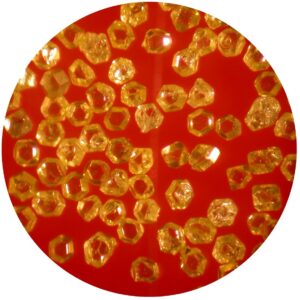
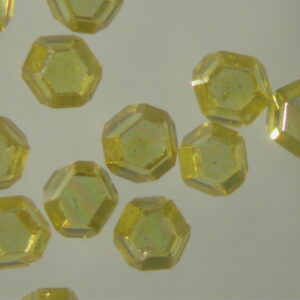
SND860 Saw Grit Diamond is a high-performance synthetic diamond grit (≥99.8% carbon content) featuring a blocky crystal structure—optimized for toughness (Vickers hardness: 7,500–8,000 HV) and impact resistance (can withstand 15–20 N of sudden force without fracturing). Its medium-to-high transparency (80–85% light transmittance) allows for easy quality inspection, while its exceptional thermal stability (up to 1,000°C) ensures durability in high-friction applications without degradation.
Designed for versatility, SND860 excels in tools that demand both durability and adaptability. It reduces tool chipping by 30% during rough geological sampling and maintains consistent cutting efficiency across materials such as sandstone, limestone, and medium-hard rock. Unlike specialized grades (e.g., SND890, for extreme heat), SND860 provides a cost-effective solution—offering 20–25% longer tool life compared to entry-level grits (e.g., SND830) without the premium price tag of higher-tier diamonds.
Available Grit Sizes:
18/20, 20/25, 25/30, 30/35, 35/40, 40/45, 45/50, 50/60, 60/70, 70/80 mesh (particle size range: 0.250mm – 1.00mm), with size tolerance controlled within ±4% of nominal value to ensure uniform tool bonding and consistent performance across batches.
FAQ:
Q1: How does SND860 perform in geological exploration?
A1:
SND860 is highly regarded for geological exploration due to its blocky crystal toughness and excellent impact resistance. It withstands sudden shocks from drilling into uneven rock formations (e.g., sandstone with quartz inclusions) without fracturing, ensuring consistent core sample quality (sample integrity rate ≥95%). Its thermal stability further prevents grit degradation during prolonged drilling sessions (up to 4 hours), reducing the frequency of tool replacements in remote exploration sites.
Q2: Can SND860 be used in high-temperature conditions?
A2:
Yes. SND860 maintains structural integrity and cutting efficiency in temperatures up to 1,000°C—ideal for high-friction applications such as construction cutting (e.g., cutting reinforced concrete in hot climates) or mining (e.g., underground ore extraction where ambient temperatures reach 50–60°C). Unlike lower-tier grits, SND860 does not soften or lose sharpness under these harsh conditions.
Q3: What makes SND860 versatile across industries?
A3:
SND860’s balanced properties (medium-to-high toughness, blocky shape, and ±4% size tolerance) make it adaptable to a variety of tools and materials. It powers metal-matrix blades for cutting asphalt in construction; is used in core bits for medium-hard ores (e.g., iron ore) in mining; and is integrated into resin-bonded tools for delicate sample drilling in geology. Its versatility eliminates the need for multiple specialized grades, simplifying inventory management for businesses.
Q4: Is SND860 compatible with different tool bonding systems?
A4:
Absolutely. SND860 adheres reliably to all common bonding systems: metal matrix (for heavy-duty mining tools), resin (for precise geological sampling bits), and even ceramic bonding (for high-temperature industrial cutting). Its low impurity content (≤0.2%) ensures strong adhesion between grit and bond, preventing detachment during high-speed rotation (up to 3,000 RPM).
SND860 vs. SND880 vs. SND890 Saw Grit Diamond: 3-Way Comparison
| Comparison Dimension | SND860 Saw Grit Diamond | SND880 Saw Grit Diamond | SND890 Saw Grit Diamond |
|---|---|---|---|
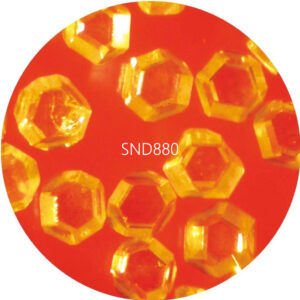
| Core Crystal Structure | Blocky cube-octahedron; optimized for toughness | Complete cube-octahedron with straight, burr-free edges; precision-focused shape | Highly regular cube-octahedron; minimal internal inclusions; ultra-stable structure |
| Key Technical Specs | – Purity: ≥99.8% carbon- Hardness: 7,500–8,000 HV- Thermal resistance: Up to 1,000°C- Size tolerance: ±4%- Impact resistance: Withstands 15–20 N | – Purity: ≥99.9% carbon- Surface finish (after cutting): Ra ≤1.6μm- Thermal resistance: Up to 900°C- Size tolerance: ±3%- Heat reduction: 20% vs. irregular grits | – Purity: ≥99.9% carbon- Hardness: >90 HRC- Thermal resistance: Up to 1,200°C- Size tolerance: ±5%- Compressive strength: >20 GPa |
| Grit Size Range | 18/20 – 50/60 mesh (0.250mm – 1.00mm) | 18/20 – 70/80 mesh (0.212mm – 1.00mm) | 20/25 – 45/50 mesh (0.425mm – 1.00mm) |
| Performance Strength | Balance of toughness & cost-effectiveness: Reduces tool chipping by 30%; 20–25% longer life than entry-level grits | Precision & smoothness: Minimizes waste (<5%); delivers burr-free cuts; ideal for fine work | Extreme durability & heat resistance: 30–40% longer tool life; maintains efficiency in high-friction environments |
| Primary Application Scenarios | General-purpose tough tasks: Geological sampling (sandstone/limestone), Construction (asphalt/concrete cutting), Medium-hard ore mining (iron ore) | Precision-focused tasks: Stone polishing (marble/granite), Ceramic tile coring, Glass edge trimming, Thin-section geological sampling | Heavy-duty, high-stress tasks: Deep mining (ore extraction), Hard rock drilling (granite/basalt), Tunnel construction, Refractory material processing |
| Recommended Tool Types | Metal-matrix blades, general core bits, mining drills | Resin-bonded blades, electroplated core bits, fine wire saws | Metal-matrix heavy-duty blades, industrial core bits, high-torque diamond wires |
| Suitable Industries | Mining (medium-scale), construction, geological exploration (general), infrastructure | Stone processing, ceramic manufacturing, architectural glass, laboratory geology | Mining (large-scale/deep), oil & gas exploration, heavy construction, refractory engineering |
| Cost & Value Position | Mid-tier; cost-effective for high-volume general use | Mid-to-premium; value for precision-critical applications | Premium; investment for extreme-condition durability |
| Key Customer Benefit | “One grit for multiple tasks”—simplifies inventory; avoids overpaying for unneeded performance | “Smooth, consistent results”—reduces rework; improves finished product quality | “Less downtime, more productivity”—fewer tool replacements; reliable in harsh conditions |
Connect to: