
SINODIAM INTERNATIONAL · INDUSTRIAL DIAMOND POWDERS

Saw Grit Diamond Powder

Seven synthetic diamond grades for cutting and drilling tool manufacturing.

Compare SND815–SND890 by crystal morphology, grade positioning, mesh-size range and application requirements. Select a starting grade for saw blades, core bits and metal-bond cutting segments.

7 specialized grades · Grade-specific mesh sizes · Application-led selection

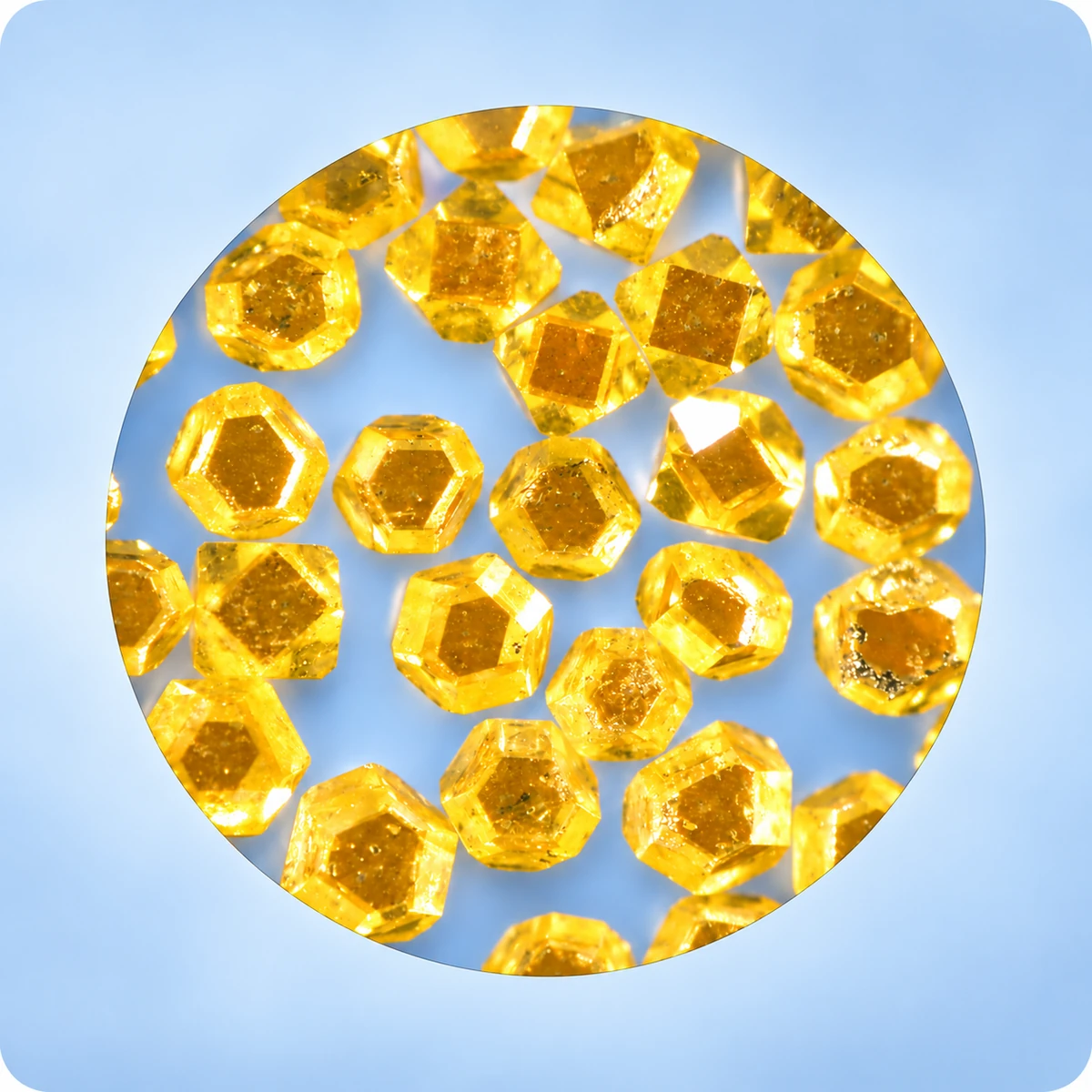
SinoDiam SND860 synthetic saw grit diamond crystals under magnification

Representative SND860 crystal image · morphology varies by grade

WHY SAW GRIT

Synthetic diamond selected for the finished tool

Saw grit diamond is supplied as industrial abrasive crystals for incorporation into the tool matrix. Grade selection should account for the target workpiece, grit morphology, diamond concentration, bonding system and cutting conditions.

Crystal Morphology

Compare semi-cubic, semi-blocky, blocky and cube-octahedral crystals according to the demands of the intended tool.

Grade & Toughness Position

Choose between blending, light-duty, economy, medium-toughness, precision-oriented and premium material options.

Bond & Application Match

Evaluate each grade within the actual tool formulation, rather than treating crystal appearance as a guarantee of tool performance.

SND SERIES · SEVEN GRADES

Explore the Saw Grit Diamond Portfolio

Each grade has a distinct positioning. The listed mesh ranges are the latest product-page reference information; individual sizes, availability and particle distribution require order-level confirmation.

GRADE 01 · BLENDING GRADE

SND815

Blending flexibility

A blending-oriented synthetic saw grit diamond for manufacturers evaluating formulation flexibility and abrasive material cost. Ratios and grade combinations must be validated in the finished bond system.

Crystal: Semi-Regular Granular

Listed Mesh: 18/20–70/80 mesh

View SND815 Product Details →

GRADE 02 · LIGHT-DUTY GRADE

SND820

Light-duty cutting

An economical, semi-cubic diamond grit for less demanding cutting and grinding conditions. Select by actual load, workpiece and tool design rather than price alone.

Crystal: Semi-Cubic

Listed Mesh: 18/20–70/80 mesh

View SND820 Product Details →

GRADE 03 · ECONOMY GRADE

SND830

Routine toolmaking

An economy-grade, semi-blocky diamond grit for cost-conscious general-purpose tools, where extreme toughness is not a primary requirement.

Crystal: Semi-Blocky

Listed Mesh: 18/20–50/60 mesh

View SND830 Product Details →

GRADE 04 · MEDIUM-TOUGHNESS GRADE

SND840

Balanced tool performance

A medium-toughness grade with developed cube-octahedral crystals for general-purpose metal-bond tools that require a practical balance of wear characteristics and formulation economics.

Crystal: Complete Cube-Octahedral

Listed Mesh: 18/20–70/80 mesh

View SND840 Product Details →

GRADE 05 · MEDIUM-HIGH TOUGHNESS GRADE

SND860

Toughness-oriented selection

A predominantly blocky synthetic diamond grit for metal-bond cutting and drilling tools where crystal toughness, bond retention and cutting loads must be considered together.

Crystal: Predominantly Blocky

Listed Mesh: 18/20–70/80 mesh

View SND860 Product Details →

GRADE 06 · PRECISION GRADE

SND880

Precision-oriented cutting

A precision-oriented grade with regular cube-octahedral crystal geometry and defined edges for controlled abrasive selection in saw blades, core bits and selected diamond wire tools.

Crystal: Well-Developed Cube-Octahedral

Listed Mesh: 18/20–70/80 mesh

View SND880 Product Details →

GRADE 07 · PREMIUM GRADE

SND890

Crystal regularity & thermal stability

A premium grade with highly regular cube-octahedral crystals for demanding metal-bond cutting and drilling tools where crystal integrity and high thermal stability are important.

Crystal: Highly Regular Cube-Octahedral

Listed Mesh: 18/20–45/50 mesh

View SND890 Product Details →

TECHNICAL COMPARISON

Saw Grit Grades at a Glance

Compare grade positioning, morphology and listed mesh range before reviewing the individual technical product pages.

Grade
Position
Crystal Morphology
Listed Mesh Range
Selection Focus
SND815
Blending Grade
Semi-Regular Granular
18/20–70/80 mesh
Blending flexibility
SND820
Light-Duty Grade
Semi-Cubic
18/20–70/80 mesh
Light-duty cutting
SND830
Economy Grade
Semi-Blocky
18/20–50/60 mesh
Routine toolmaking
SND840
Medium-Toughness Grade
Complete Cube-Octahedral
18/20–70/80 mesh
Balanced tool performance
SND860
Medium-High Toughness Grade
Predominantly Blocky
18/20–70/80 mesh
Toughness-oriented selection
SND880
Precision Grade
Well-Developed Cube-Octahedral
18/20–70/80 mesh
Precision-oriented cutting
SND890
Premium Grade
Highly Regular Cube-Octahedral
18/20–45/50 mesh
Crystal regularity & thermal stability

This table is for preliminary selection, not a ranking of guaranteed tool life or cutting speed. The actual result depends on bond formulation, grit distribution, workpiece and machine operating conditions.

APPLICATION SELECTION

Where Saw Grit Diamond Is Used

SND grades support different cutting and drilling tool formulations. Individual application suitability must be validated for the intended workpiece and process.

Saw Blade Segments

Metal-bond cutting segments for stone, masonry, concrete and related construction materials; review toughness, crystal retention and cutting duty.

Diamond Core Bits

Core-drilling segments for suitable construction and geological applications; evaluate impact loads, matrix wear and required grit size.

Selected Grinding Tools

For applications where the particular Saw Grit grade and bonding system have been evaluated; do not assume universal compatibility with all grinding systems.

Blended Tool Formulations

SND815 may be evaluated as part of a blend with higher-grade diamonds. Use trials to determine the optimal proportion and tool performance.

GRADE SELECTION

How to Choose the Right SND Grade

Start with the tool and material requirements. No individual product grade is universally suitable for every cutting or drilling task.

STEP 01

Define the workpiece

Describe the target material, abrasiveness, hardness and expected changes in the cutting conditions.

STEP 02

Identify the tool design

Specify saw blade, core bit, cutting segment or another tool; include intended segment geometry and diamond concentration.

STEP 03

Review bond and process

Confirm metal-bond formulation or other verified bond type, manufacturing thermal cycle and intended wear behavior.

STEP 04

Select grade and mesh

Choose a grade according to its crystal morphology and toughness position; confirm the mesh range and size distribution.

STEP 05

Validate performance

Compare candidate formulations by representative tool testing, considering productivity, wear, breakage risk and cost.

TECHNICAL FAQ

Frequently Asked Questions

Key points about grade selection, mesh sizes, bond systems and interpreting technical data.

What is synthetic saw grit diamond powder?

Saw grit diamond refers to synthetic industrial diamond crystals used by manufacturers of abrasive cutting and drilling tools. Product selection is based on crystal morphology, mesh size, toughness and compatibility with the finished tool.

How do the seven SinoDiam SND grades differ?

SND815 is blending-oriented; SND820 is light-duty; SND830 is economy; SND840 has medium toughness; SND860 has medium-high toughness; SND880 is precision-oriented; and SND890 is the premium grade emphasizing regular crystal morphology and thermal stability.

Which SND grades have the widest listed mesh range?

The currently listed ranges for SND815, SND820, SND840, SND860 and SND880 extend from 18/20 to 70/80 mesh. SND830 is listed here as 18/20–50/60 mesh, while SND890 is listed as 18/20–45/50 mesh. Confirm individual sizes against the latest specification.

Is SND890 rated for continuous operation at 1200°C?

No continuous operating-temperature claim should be inferred from a supplier-listed thermal-stability reference. Temperature performance must be assessed with the applicable test method, atmosphere, exposure time, bond and finished-tool design.

Can SND815 be blended with tougher diamond grades?

SND815 is positioned for blending with selected higher-grade diamond materials. Trial proportions sometimes discussed in product development are not guaranteed formulas; final blends require matrix-specific validation and application testing.

Are all Saw Grit grades suitable for resin and electroplated bonds?

Not necessarily. Saw Grit is primarily presented here for cutting and drilling tool manufacturing, especially metal-bond applications. Suitability for resin, electroplated or other bond systems must be reviewed for the specific grade and tool.

What information should be included in an inquiry?

Please provide the SND grade, mesh-size requirement, workpiece material, finished tool type, bond formulation, estimated quantity, destination country and any relevant manufacturing or performance requirements.

SINODIAM · TECHNICAL SUPPORT

Discuss Your Saw Grit Diamond Requirements

SinoDiam supports diamond tool manufacturers with application-led material selection for cutting, coring and related industrial processes. Share the required SND grade, mesh size, workpiece, tool type, bond system, estimated quantity and destination country.

Request Technical Information & Quotation

Email: info@diamondmicron.com

Nach oben scrollen